I

Time went on. It was over a month since Mr Morley’s death, and there was still no news of Miss Sainsbury Seale.
Japp became increasingly wrathful on the subject. ‘Dash it all, Poirot, the woman’s got to besomewhere .’
時が過ぎていった。ミスター=モーリーの死からすでに1か月以上が経っていたが、セインズベリー=シールについては、いまだ何の手がかりもなかった。
ジャップ警部はこの件について、ますます苛立ちを募らせていた。「まったく、ポワロ、あの女はどこかにいるはずだろう!」

‘Indubitably,mon cher .’
「間違いないですよ、モンシェール(我が友よ)」
‘Either she’d dead or alive. If she’s dead, where’s her body? Say, for instance, she committed suicide—’
「彼女は生きているか、死んでいるかのどちらかだ。もし死んでいるのなら、遺体はどこにある?たとえば、彼女が自殺したとすれば——」
‘Another suicide?’
「また自殺ですか?」
‘Don’t let’s get back to that.
You still say Morley was murdered—I say it was suicide.’
「その話に戻るのはやめよう。君はいまだにモーリーは殺されたと思っているようだが——俺は自殺だと思ってる」
‘You haven’t traced the pistol?’
「拳銃の出所は分かってないんですか?」
‘No, it’s a foreign make.’
「分かっていないが、外国製だ」
‘That is suggestive, is it not?’
「それは意味ありげじゃないですか?」
‘Not in the way you mean. Morley had been abroad. He went on cruises, he and his sister. Everybody in the British Isles goes on cruises. He may have picked it up abroad. They like to feel life’s dangerous.’
「君が言うような意味はないね。モーリーは外国に行っていたからな。クルーズ旅行だよ、妹と一緒にね。ブリテン島に住んでいる人間は誰もがクルーズに出かけるさ。彼は海外で手に入れたのかもしれんな。みんな命の危険を感じるのがするのが好きなんだよ」
He paused and said:
‘Don’t sidetrack me. I was saying that if —only if, mind you—that blasted woman committed suicide, if she’d drowned herself for instance, the body would have come ashore by now. If she was murdered, the same thing.’
彼は一呼吸置いてから言った。
「話を逸らすなよ。俺が言ってたのは、もしだぞ——あくまで“もし”だが——あのいまいましい女が自殺したとする。たとえば川に身を投げたとして、今ごろ遺体は岸に上がってるはずだ。殺されたとしても同じことだ」
‘Not if a weight was attached to her body and it was put into the Thames.’
「いや、もし、遺体に重りをつけてテムズ川に沈められたのなら、上がってこないかもしれませんよ」
‘From a cellar in Limehouse, I suppose! You’re talking like a thriller by a lady novelist.’
「ライムハウスの地下室から1投げ込んだってわけか! まるで女流作家のスリラー小説みたいな話だな」
‘I know—I know. I blush when I say these things!’
「わかってます——わかってますよ。こういうことを口にするたび、恥ずかしくなります!」
‘And she was done to death by an international gang of crooks, I suppose?’
「それで、国際的なギャングの一味に殺されたってわけだろ?」
Poirot sighed. He said:
‘I have been told lately that there really are such things.’
ポワロはため息をついて言った。
「最近、実際にそういう連中がいると聞いたんですよ」
‘Who told you so?’
「誰に聞いたんだ?」
‘Mr Reginald Barnes of Castlegarden Road, Ealing.’
「イーリングのキャッスルガーデン・ロードに住んでいるレジナルド・バーンズ氏にね」
‘Well, he might know,’ said Japp dubiously. ‘He dealt with aliens when he was at the Home Office.’
「彼なら知ってるかもな」と、ジャップはやや疑わしげに言った。「内務省にいたときは外国人を扱ってたから」
‘And you do not agree?’
「そうは思いませんか?」
‘It isn’t my branch—oh yes, there are such things—but they’re rather futile as a rule.’
「俺の担当じゃないからな——まあ、確かにそういう連中はいる——だが、たいていの場合、あまり役には立たないんだ」
There was a momentary silence as Poirot twirled his moustache.
しばらく沈黙の間、ポワロは口ひげを捻りながら黙り込んでいた。
Japp said:
‘We’ve got one or two additional bits of information. She came home from India on the same boat as Amberiotis.
But she was second class and he was first, so I don’t suppose there’s anything in that, although one of the waiters at the Savoy thinks she lunched there with him about a week or so before he died.’
ジャップが言った。
「いくつか追加の情報がある。彼女はアンベリオティスと同じ船でインドから帰ってきた。
だが、彼は一等、彼女は二等だったから、何かあったとは思わん——だが、サヴォイ=ホテルのウェイターの一人が、彼女がアンベリオティスと一緒に昼食を取っていたのを1週間くらい前に見たと言ってるがな」
‘So there may have been a connection between them?’
「それは、二人の間には何か関係があったかもしれませんね?」
‘There may be—but I can’t feel it’s likely. I can’t see a Missionary lady being mixed up in any funny business.’
「あったかもしれん——だが、それはあまりありそうこよとは思えん。宣教師の女性が怪しげな事件に関わっているなんてな」
‘Was Amberiotis mixed up in any “funny business”, as you term it?’
「アンベリオティスは“怪しげな事件”に関わっていたのですか?」
‘Yes, he was. He was in close touch with some of our Central European friends. Espionage racket.’
「ああ、そうだ。奴は中央ヨーロッパ2の友人たちと密接に連絡を取り合ってた。スパイ活動組織だ」
‘You are sure of that?’
「それは確かなのですか?」
‘Yes. Oh, he wasn’t doing any of the dirty work himself. We wouldn’t have been able to touch him. Organizing and receiving reports—that was his lay.’
「確かだ。まあ、奴自身が汚れ仕事をしていたわけじゃない。それで我々では手出しできなかったんだ。組織を指揮し、報告を受け取る——奴はそういう役割だった」
Japp paused and then went on:
‘But that doesn’t help us with the Sainsbury Seale. She wouldn’t have been in on that racket.’
ジャップは一息ついてから続けた。
「だがそれじゃセインズベリー=シールの件にはつながらない。彼女が組織に関わっていたとは思えない」
‘She had lived in India, remember. There was a lot of unrest there last year.’
「彼女はインドに住んでいたことがあります——覚えてますよね。去年はインドで騒動も多かったですよ」
‘Amberiotis and the excellent Miss Sainsbury Seale—I can’t feel that they were team-mates.’
「アンベリオティスと、優秀なミス・セインズベリー=シール……二人が仲間だったとは思えんね」
‘Did you know that Miss Sainsbury Seale was a close friend of the late Mrs Alistair Blunt?’
「セインズベリー=シールは、故アリステア=ブラント夫人と親しかったことはご存知でしたか?」
‘Who says so? I don’t believe it. Not in the same class.’
「誰がそんなことを? 信じられん。身分が違いすぎる」
‘She said so.’
「彼女自身が言ったんですよ」
‘Who’d she say that to?’
「誰に言ったんだ?」
‘Mr Alistair Blunt.’
「アリステア=ブラント氏に」
‘Oh! That sort of thing. He must be used to that lay. Do you mean that Amberiotis was using her that way? It wouldn’t work. Blunt would get rid of her with a subscription. He wouldn’t ask her down for a week-end or anything of that kind. He’s not so unsophisticated as that.’
「ほう、その手の話か。ブラント氏はそういう手合いには慣れてるはずだ。君はアンベリオティスが彼女をその活動に使っていたって言いたいのか? それは通用せんよ。ブラントなら、寄付金でも渡して片付けるさ。彼女を週末とかその種の何かに招待したりはせんよ。彼はそんな世間知らずではない」
This was so palpably true that Poirot could only agree. After a minute or two, Japp went on with his summing up of the Sainsbury Seale situation.
この点については、ポワロも否定できず同意するしかなかった。数分の沈黙のあと、ジャップはセインズベリー=シールの件をまとめにかかった。
‘I suppose her body might have been lowered into a tank of acid by a mad scientist—that’s another solution they’re very fond of in books!
But take my word for it, these things are all my eye and Betty Martin3. If the woman is dead, her body has just been quietly buried somewhere.’
「彼女の遺体が、狂った科学者によって酸のタンクに沈められたという説もあるが——小説の中でなら好まれる解決なんだがな!
だがな、断言するが、そんなの、全部でっち上げだ。もし彼女が死んでいるなら、どこかに静かに埋められただけだよ」
‘But where?’
「しかし、どこにです?」
‘Exactly. She disappeared in London. Nobody’s got a garden there—not a proper one. A lonely chicken farm, that’s what we want!’
「それなんだ。彼女はロンドンで姿を消した。ロンドンじゃ誰も庭なんて持っていやしない——(死体を埋めることのできる)まともな庭なんて。人気のない養鶏場とか、そういうのが必要なんだよ!」
A garden!
Poirot’s mind flashed suddenly to that neat prim garden in Ealing with its formal beds.
How fantastic if a dead woman should be buried there!
He told himself not to be absurd.
「庭だ!」
ポワロの心に、イーリングにあるあのきちんと整えられた小さく几帳面な(バーンズ氏の)庭——幾何学的な花壇のある庭——の光景がふとよぎった。
もしその庭に死体が埋められていたとしたら‥‥そんな馬鹿な!
彼は自分に馬鹿げたことを考えるなと言い聞かせた。
‘And if she isn’t dead,’ went on Japp, ‘where is she? Over a month now, description published in the Press, circulated all over England—’
「だが、もし彼女が死んでいないなら」とジャップは話を続けた——「彼女はどこにいる? もう1か月以上になる。人相書きは新聞に掲載され、イギリス中に回ってるんだが——」
‘And nobody has seen her?’
「彼女を見かけた人は誰もいないのですか?」
‘Oh yes, practically everybody has seen her!
You’ve no idea how many middle-aged faded-looking women wearing olive green cardigan suits there are.
She’s been seen on Yorkshire moors, and in Liverpool hotels, in guest houses in Devon and on the beach at Ramsgate!
My men have spent their time patiently investigating all these reports—and one and all they’ve led nowhere, except to getting us in wrong with a number of perfectly respectable middle-aged ladies.’
「いやいや、ほとんど“全員”が彼女を見かけたことがあると言ってるんだ!
オリーブ色のカーディガンスーツを着た、中年でややくたびれた感じの女性がどれだけいるか、君には想像もつかんだろう。
彼女は、ヨークシャーの荒地にも、リバプールのホテルにも、デヴォンのゲストハウスにも、ラムズゲートの海辺にも“現れた”よ!
うちの部下たちは、そういった通報を全部ていねいに調べたんだが——どれもこれも空振りでね——ただ、いたって真面目な中年女性たちに疑いの目を向けることになっただけさ」
‘And yet,’ went on Japp, ‘she’s a real person all right.
I mean, sometimes you come across a dummy, so to speak—someone who just comes to a place and poses as a Miss Spinks—when all the time there isn’t a Miss Spinks.
But this woman’s genuine —she’s got a past, a background! We know all about her from her childhood upwards!
She’s led a perfectly normal, reasonable life—and suddenly, hey presto—vanish!’
「しかしな——」とジャップは続けた——「彼女は歴とした実在の人間なんだよ。つまり、たまに“架空の人物”に出くわすことがある——例えば“ミス・スピンクス”を名乗って現れるが——そんな人物は最初から存在しない、というようなケースだ。
だが、あの女は実在するんだ——経歴があるし、身元もしっかりしてる! 子ども時代から彼女のことは全部わかってる。
彼女は、まったく普通のまともな人生を送ってきたのに——それが突然、へい、プレスト(あら不思議!)——姿を消したんだ!」
‘There must be a reason,’ said Poirot.
「何か理由があるはずです」とポワロは言った。
‘She didn’t shoot Morley, if that’s what you mean. Amberiotis saw him alive after she left—and we’ve checked up on her movements after she left Queen Charlotte Street that morning.’
「彼女がモーリーを撃ったからとか、もし言いたいなら、それは違うぞ。
アンベリオティスは、彼女が出ていったあとでモーリーと会っているからな——それにあの朝、彼女がクイーン=シャーロット=ストリートを出たあとの動きも、全部確認済みだ」
Poirot said impatiently: ‘I am not suggesting for a moment that she shot Morley. Of course she did not. But all the same—’
ポワロは我慢できずに言った。「モーリーを撃ったなどとは、これっぽっちも考えていませんよ。もちろん、彼女にはできません。
だが、それでもやはり——」
Japp said: ‘If you are right about Morley, then it’s far more likely that he told her something which, although she doesn’t suspect it, gives a clue to his murderer.
In that case, shemight have been deliberately got out of the way.’
ジャップが口を挟んだ。「もし君が言うように、モーリーが殺されたのだとしたら、彼女はモーリーから何かを聞かされたんだ——本人には自覚がなくても、それが犯人につながる手がかりになりうるようなことを。
その場合、彼女は意図的に“消された”可能性がある」
Poirot said: ‘All this involves an organization, some big concern quite out of proportion to the death of a quiet dentist in Queen Charlotte Street.’
ポワロは言った。「これら一連の出来事には、何かの組織が関わっていますよ——静かなクイーンシャーロット街の歯科医の死とは全く不釣り合いな、何かしらの大きな勢力が」
‘Don’t you believe everything Reginald Barnes tells you! He’s a funny old bird—got spies and communists on the brain.’
「レジナルド・バーンズの言うことを、全部真に受けるなよ!彼は変わったじいさんでな——スパイとか共産主義者とか、そういうので頭が一杯なんだよ」
Japp got up and Poirot said: ‘Let me know if you have news.’
ジャップが立ち上がり、ポワロは言った。「進展があれば教えてください」
When Japp had gone out, Poirot sat frowning down at the table in front of him.
ジャップが出ていったあと、ポワロはしかめ面で、目の前のテーブルをじっと見つめながら黙考していた。

He had definitely the feeling of waiting for something. What was it?
彼にははっきりと「何かを待っている」という感覚があった。それは何なのか?
He remembered how he had sat before, jotting down various unrelated facts and a series of names.
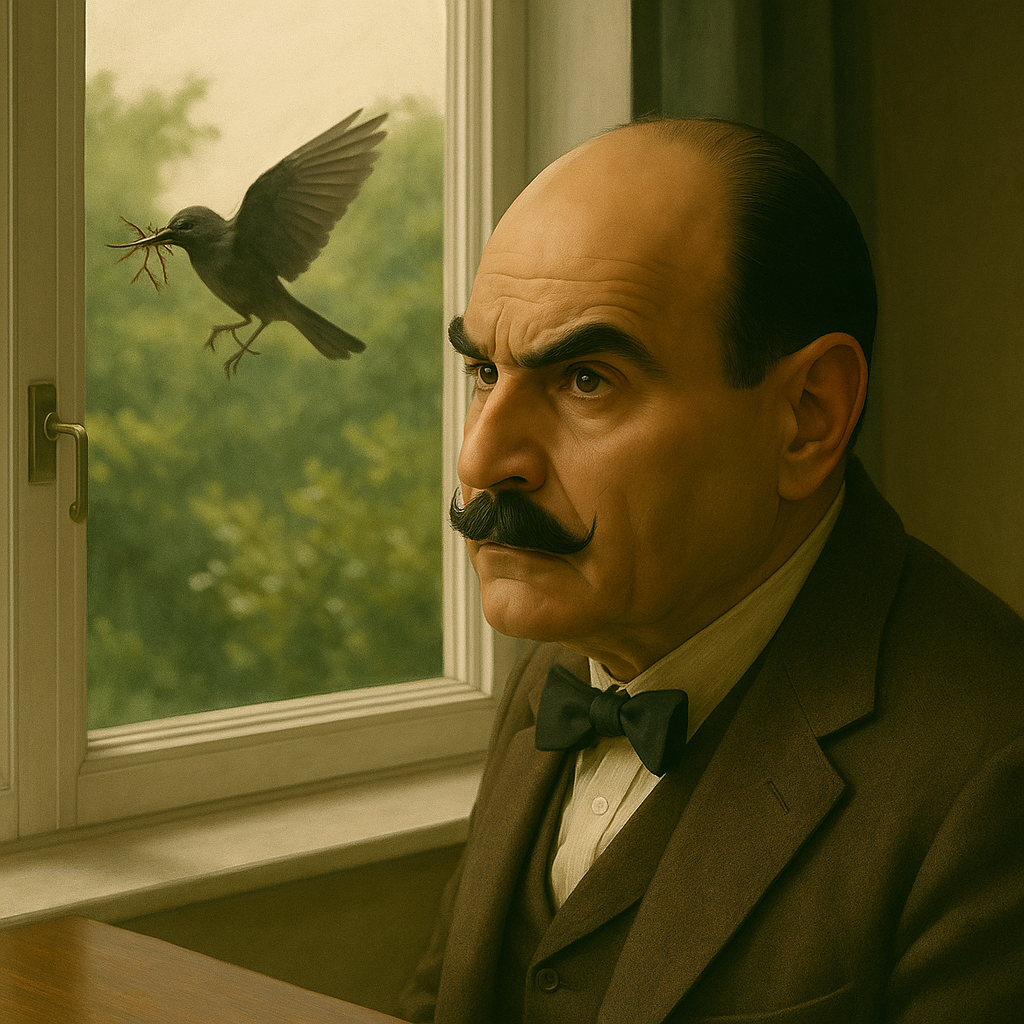
A bird had flown past the window with a twig in its mouth.
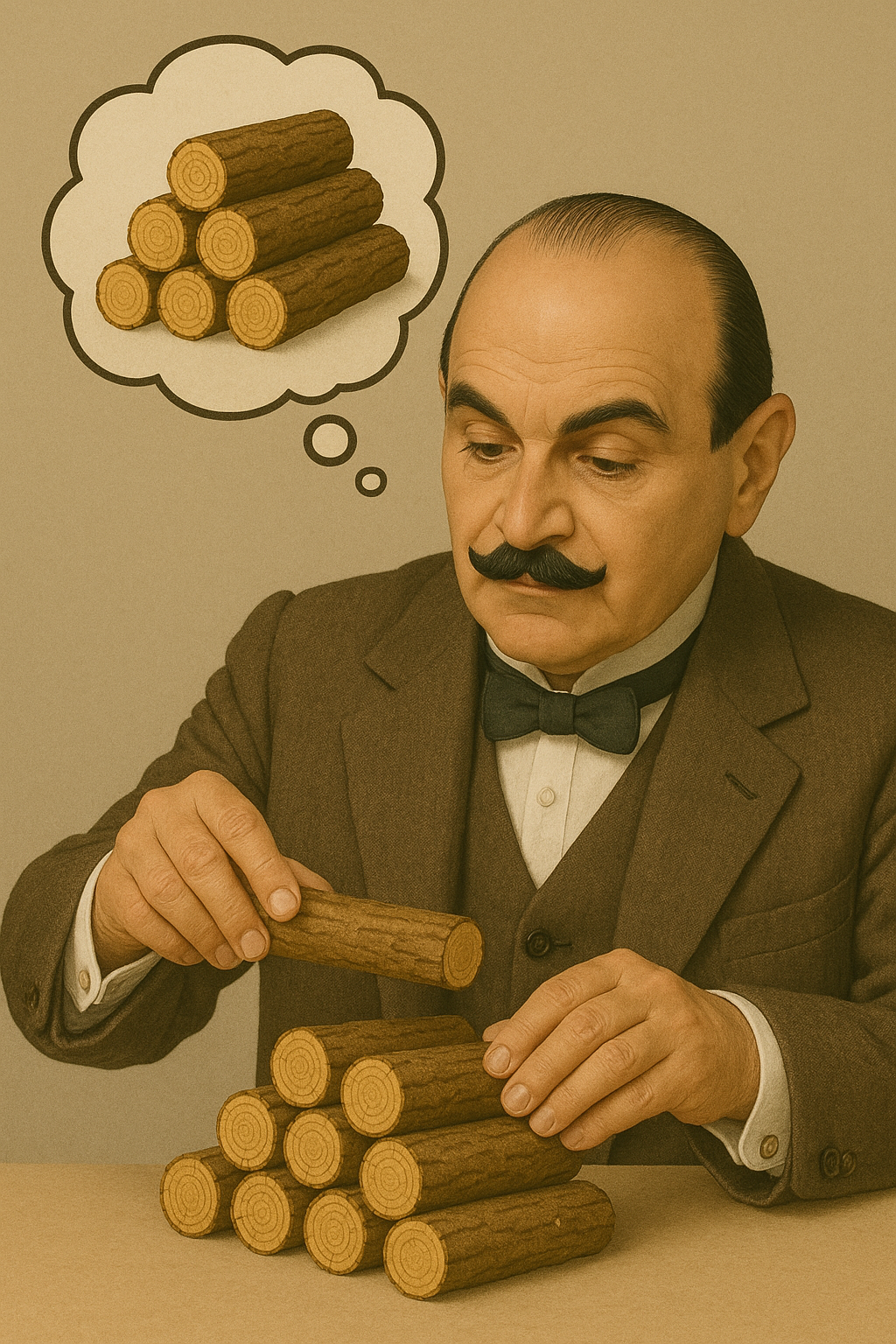
He, too, had been collecting twigs.Five, six, picking up sticks …
彼は思い出した——以前にもこうして座りながら、バラバラの事実や名前の一覧を書き留めていたことを。
そのとき、窓の外を一本の小枝をくわえた鳥が飛んでいったのだった。
自分もまた、小枝を集めていたのだ。
ごお、ろく、薪をひろって……
He had the sticks—quite a number of them now. They were all there, neatly pigeonholed in his orderly mind—but he had not as yet attempted to set them in order. That was the next step—lay them straight.
What was holding him up?
He knew the answer.
He was waiting for something.
Something inevitable, fore-ordained, the next link in the chain. When it came—then—then he could go on…
今やその「薪(情報)」は揃っている——かなりの数の薪が。彼の整然とした頭の中では、それぞれがきちんと引き出しに分類整理(pigeonholed)されている——だが、まだそれらを秩序正しく並べようとはしていなかった。
次にすべきことは——”きちんと並べる”ことだ。
では、なぜそれができずにいるのか?
その答えは彼には分かっていた。
彼は「何か」を待っていた。
避けることのできない、運命付けられた何か——鎖の次の輪を。
それが来たとき——そのときこそ——彼は先へ進めるのだ……
II
It was late evening a week later when the summons came.
Japp’s voice was brusque over the telephone.
一週間後の遅い夕暮れ時に、ついに連絡が来た。
電話の向こうのジャップの声は挨拶もなしだった。

‘That you, Poirot? We’ve found her . You’d better come round. King Leopold Mansions. Battersea Park. Number 45.’
「ポワロか? 見つけたぞ、彼女を。 今すぐ来た方がいい。キング・レオポルド・マンション。バタシー・パーク。45号室だ」
A quarter of an hour later a taxi deposited Poirot outside King Leopold Mansions.
It was a big block of mansion flats looking out over Battersea Park. Number 45 was on the second floor.
15分後、タクシーはキング・レオポルド・マンションの前でポワロを降ろした。
それはバタシー・パークを見下ろすように建てられた、大規模なマンション・フラットの一角だった。
45号室は2階にあった。

Japp himself opened the door.
His face was set in grim lines.
‘Come in,’ he said. ‘It’s not particularly pleasant, but I expect you’ll want to see for yourself.’
ジャップ自身がドアを開けた。
その顔は緊張にこわばっていた。
「入れ」と彼は言った。「気持ちのいいもんじゃないが、君なら自分の目で見たいだろうからな」
Poirot said—but it was hardly a question:
‘Dead?’
ポワロは言った——それは質問とはいえなかった。
「死んでるんですね?」
‘What you might describe as very dead!’
「君が見ても、間違いなく死んでるよ!」
Poirot cocked his head at a familiar sound coming from a door on his right.
ポワロは、右手のドアの向こうから聞こえてくる”聞き覚えのある音”に耳を傾けた。
‘That’s the porter,’ said Japp. ‘Being sick in the scullery sink! I had to get him up here to see if he could identify her.’
「守衛だよ」とジャップが言った。「流し台で吐いてるんだ! 身元確認できるかどうか、ここに呼んで見てもわなきゃならんかったからな」
He led the way down the passage and Poirot followed him.
His nose wrinkled.
ジャップは廊下の奥へ歩き出し、ポワロもその後をついていった。
ポワロは鼻をひくつかせた。
‘Not nice,’ said Japp. ‘But what can you expect? She’s been dead well over a month.’
「そりゃまあ、気持ちのいいもんじゃないさ」とジャップは言った。「だが仕方ない。死後すでに一か月以上は経ってるんだからな」
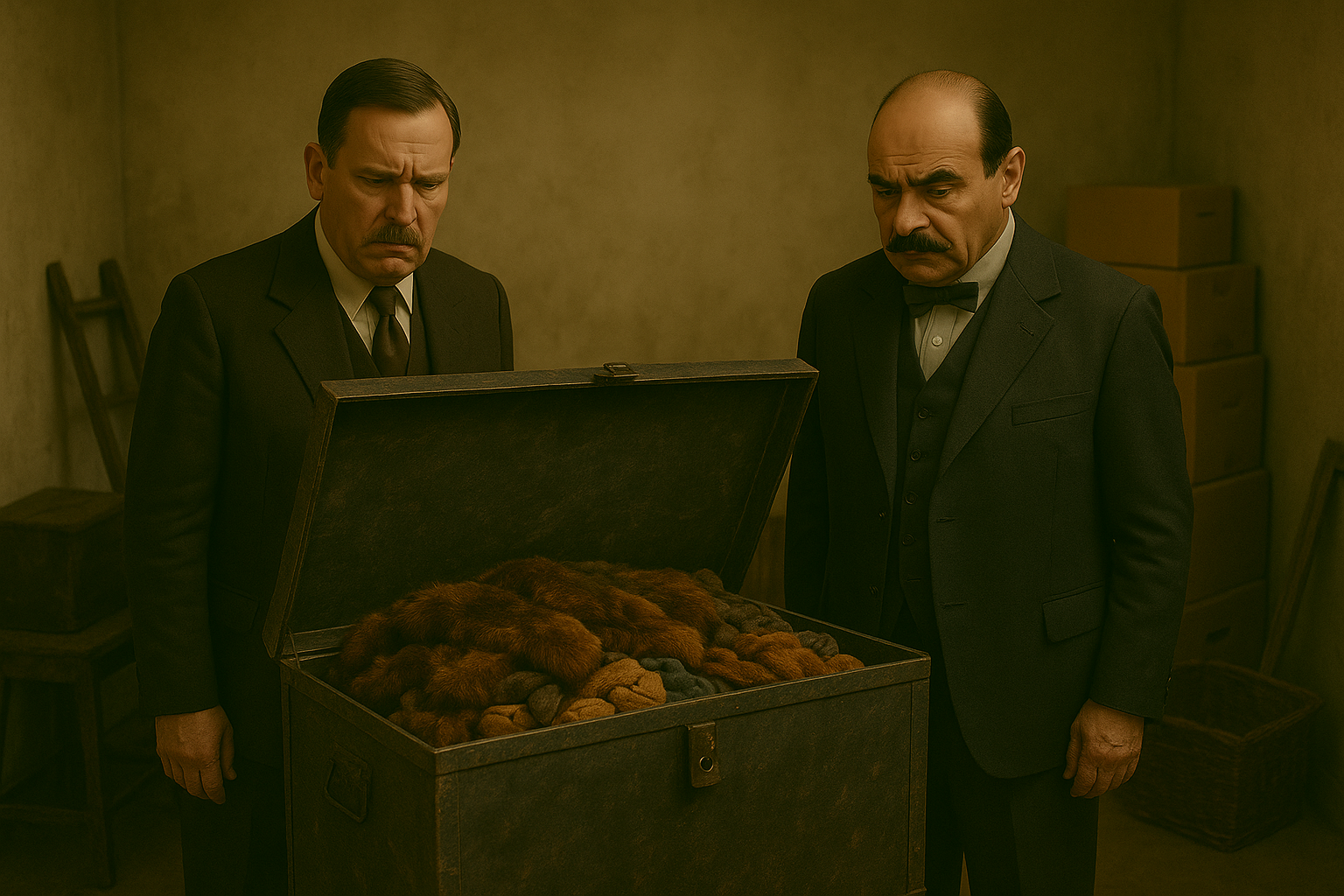
The room they went into was a small lumber and box room.
In the middle of it was a big metal chest of the kind used for storing furs. The lid was open.
Poirot stepped forward and looked inside.
二人が入ったのは、がらくたや箱が積まれた小さな物置部屋だった。
その中央に、毛皮の保管に使われるような金属製の大型の収納箱が置かれていた。蓋は開いていた。
ポワロは一歩前に出て、中を覗き込んだ。
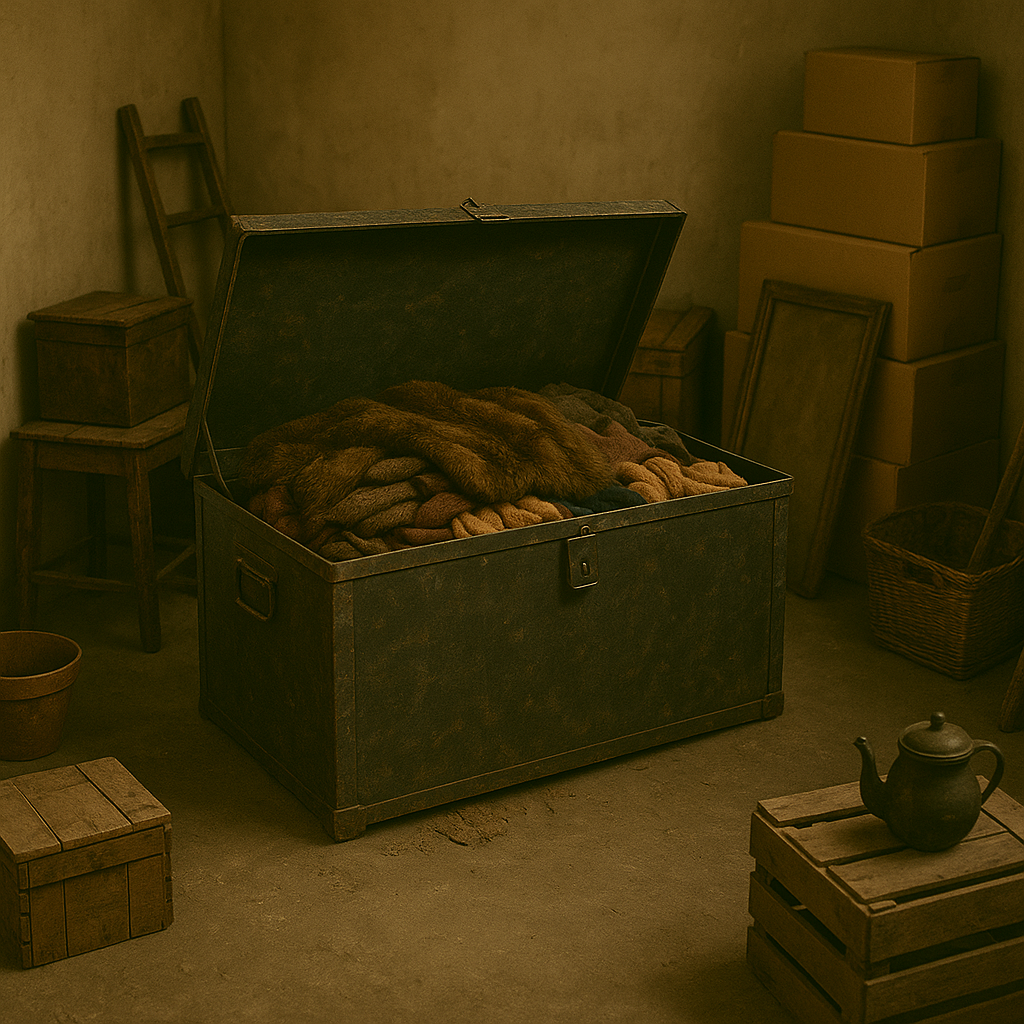

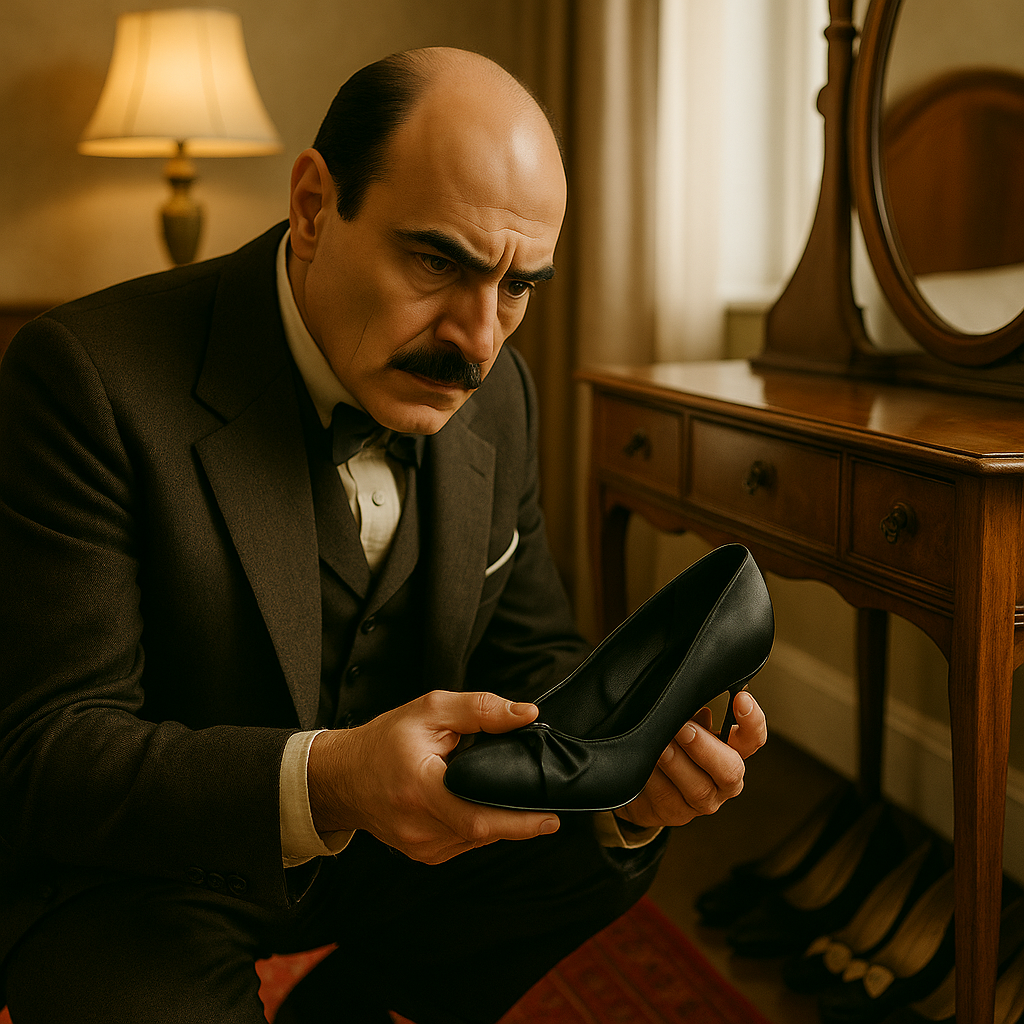
He saw the foot first, with the shabby shoe on it and the ornate buckle.
His first sight of Miss Sainsbury Seale had been, he remembered, a shoe buckle.
彼が最初に目にしたのは、履き古した靴を履いた足と、その装飾のついたバックルだった。
セインズベリー=シールにあった時に、彼の目に最初に入ったのは、やはり靴のバックルだったことを思い出した。
His gaze travelled up, over the green wool coat and skirt till it reached the head.
He made an inarticulate noise.
彼の視線は、緑色のウールの外套とスカートの上を移動し、やがて顔にたどり着いた。
ポワロは言葉では言い表せない声を漏らした。
‘I know,’ said Japp. ‘It’s pretty horrible.’
「……だろうな」とジャップが言った。「ひどい有様だ。」
The face had been battered out of all recognizable shape.
Add to that the natural process of decomposition, and it was no wonder that both men looked a shade pea green as they turned away.
その顔は、もはや誰とも判別がつかないほどひどく損壊されていた。
そこに加え、死体の自然な腐敗過程もあって、二人が顔を背けたとき、その顔色が青白く緑がかっていたのも無理はなかった。
‘Oh well,’ said Japp. ‘It’s all in a day’s work—our day’s work. No doubt about it, ours is a lousy job sometimes. There’s a spot of brandy in the other room. You’d better have some.’
「まあね」とジャップは言った。「これも一日の仕事のうちさ——俺たちの日常業務ってわけだ。間違いない、俺たちの職業ってのは、時々ほんとに嫌になるよ。向こうの部屋にブランデーがある。一杯やったらいい」
The living-room was smartly furnished in an up-to-date style—a good deal of chromium and some large square-looking easy chairs upholstered in a pale fawn geometric fabric.
居間は、時代の先端を行くスタイルでスマートに家具が配置されていた——クロームが多用され、大きくて四角ばった安楽椅子には、淡い黄褐色の幾何学模様の布が張られていた。5
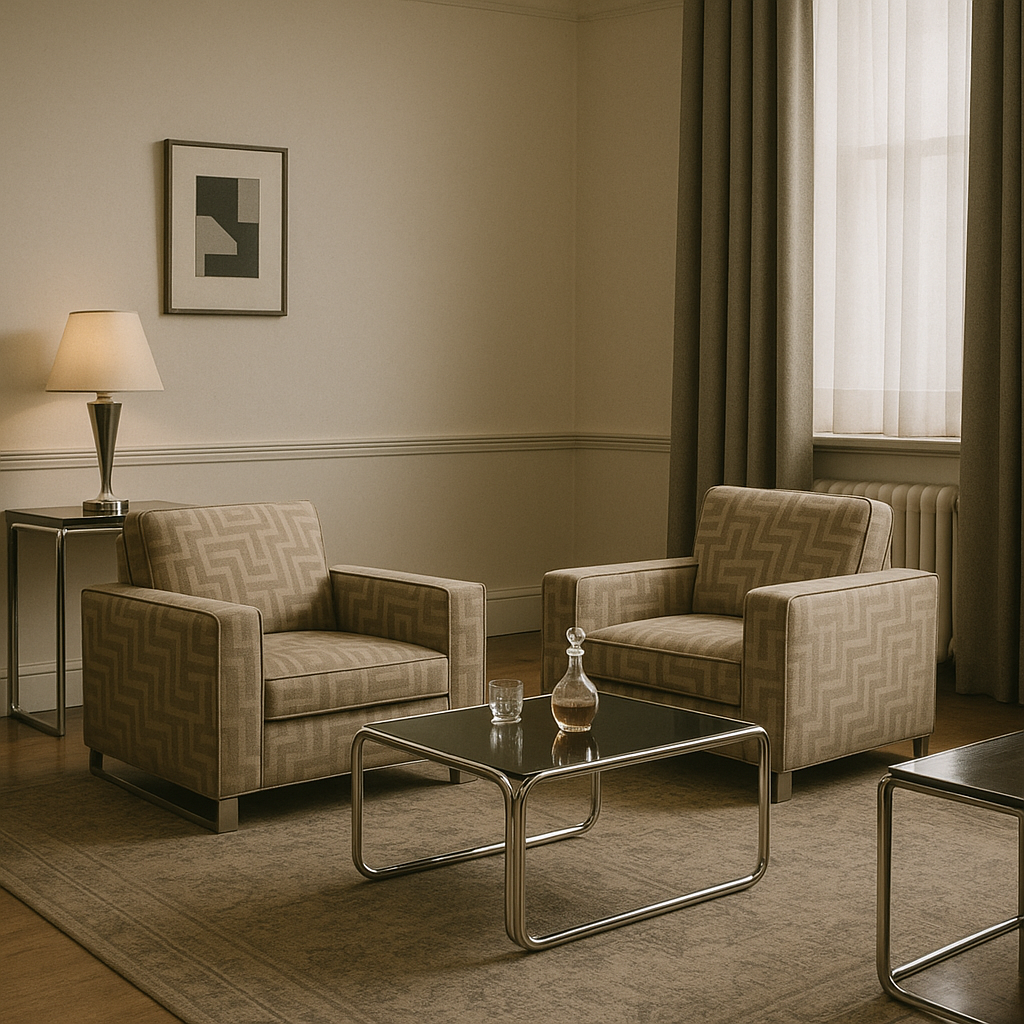
Poirot found the decanter and helped himself to some brandy.
As he finished drinking, he said: ‘It was not pretty, that! Now tell me, my friend, all about it.’
ポワロはデキャンタを見つけ、ブランデーを一杯ついだ。飲み終えると、こう言った。「ひどいもんですね、あれは! さて、ジャップさん、すべて話してください」
Japp said:
‘This flat belongs to a Mrs Albert Chapman. Mrs Chapman is, I gather, a well-upholstered smart blonde of forty-odd. Pays her bills, fond of an occasional game of bridge with her neighbours but keeps herself to herself more or less. No children. Mr Chapman is a commercial traveller.
‘Sainsbury Seale came here on the evening of our interview with her. About seven-fifteen. So she probably came straight here from the Glengowrie Court. She’d been here once before, so the porter says.
You see, all perfectly clear and above-board—nice friendly call. The porter took Miss Sainsbury Seale up in the lift to this flat. The last he saw of her was standing on the mat pressing the bell.’
ジャップが話し始めた。「このフラットは、アルバート・チャップマン夫人のものだ。チャップマン夫人は、聞いたところによると、肉付きのいい、賢そうなブロンドの四十代ってとこだな。支払いもきちんとしていて、近所の人と時々ブリッジを楽しむが、たいていは家の中だ。子どもはいない。旦那はセールスマンだ。
あのセインズベリー=シールがここに来たのは、俺たちが彼女に会った日の夕方、7時15分頃だ。たぶん、グレングォリー・外套から直接ここに来たんだろう。ポーターの話じゃ、彼女は以前にも一度ここに来たことがあるらしい。
つまり、すべては至って普通で、怪しいところはない——ただの親しげな訪問さ。ポーターがエレベーターで彼女をこのフラットまで案内した。彼が最後に見たのは、玄関マットの上でベルを押している彼女の姿だった」
Poirot commented: ‘He has taken his time to remember this!’
ポワロがコメントした。「彼も、ずいぶん思い出すのに時間がかかったようですね!」
‘He’s had gastric trouble, it seems, been away in hospital while another man took on temporarily for him.
It wasn’t until about a week ago that he happened to notice in an old paper the description of a “wanted woman” and he said to his wife, “Sounds quite like that old cup of tea who came to see Mrs Chapman on the second floor.She had on a green wool dress and buckles on her shoes.”
「彼は胃の具合が悪くてな、入院してたらしい。その間は一時的に他の男が働いてた。
退院してまだ一週間も経っていないが、古い新聞をパラパラ見てると、”指名手配の女”の古い記事を見て、女房にこう言ったそうだ——『おい、二階のチャップマン夫人を訪ねてきたあの変なおばさんに似てるぞ。緑のウールの服に、靴に飾りがついてたな。』と。
And after about another hour he registered again—“Believe she had a name, too, something like that. Blimey, it was —Miss Something or other Seale!”
‘After that,’ continued Japp,
‘it took him about four days to overcome his natural distrust of getting mixed up with the police and come along with his information.
それからしばらくして、また思い出したらしい——『確か名前もそんなような‥‥。そうだ、ミスなんとか‥‥ミスなんとかシールだった!』って思い出したらしい。それからだよ」とジャップは続けた——
「警察に関わることへの本能的な警戒心を克服するのに四日もかかったらしい。で、やっと情報を持ってきたってわけさ。
‘We didn’t really think it would lead to anything. You’ve no idea how many of these false alarms we’ve had. However, I sent Sergeant Beddoes along—he’s a bright young fellow. A bit too much of this high-class education but he can’t help that. It’s fashionable now.
我々は最初、大したことじゃないと思ってた。こういう間違い通報は山ほどあるんでね。でも、ベッドーズ巡査を行かせたんだ——彼は頭の切れる若いやつでね。上流階級の教育をちょっと受け過ぎてるって感じだが、まあ、それは仕方ないさ。今どきの流行りだからな」
‘Well, Beddoes got a hunch at once that we were on to something at last. For one thing this Mrs Chapman hadn’t been seen about for over a month. She’d gone away without leaving any address. That was a bit odd. In fact everything he could learn about Mr and Mrs Chapman seemed odd.
‘He found out the porter hadn’t seen Miss Sainsbury Seale leave again. That in itself wasn’t unusual. She might easily have come down the stairs and gone out without his seeing her.
「さて、ベッドーズはすぐにこれは本物の手がかりだと直感した。というのも、このチャップマン夫人という人物が、ここ1か月以上まったく姿を見せていなかったからだ。住所も残さず出かけていた。それはちょっと妙だった。というより、チャップマン夫妻についてわかったことはすべてが妙だった。
彼は、ポーターがミス=セインズベリー=シールが再び出ていくのを見ていなかったことを突き止めた。それ自体は珍しいことではない。彼女が階段を下りて、そのまま外に出ていったとしても、ポーターが気づかないこともあり得る。

But then the porter told him that Mrs Chapman had gone away rather suddenly. There was just a big printed notice outside the door the next morning:
NO MILK. TELL NELLIE I AM CALLED AWAY.
しかしポーターは、チャップマン夫人がやや唐突に出かけたことを話してくれた。翌朝、玄関の外に大きく印刷された紙が貼られていたんだ:
“牛乳は不要。ネリーに伝えてください。急用で呼び出された。”
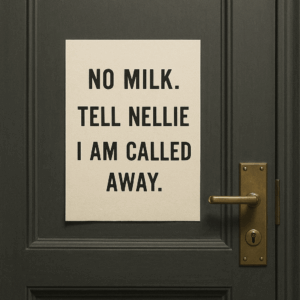
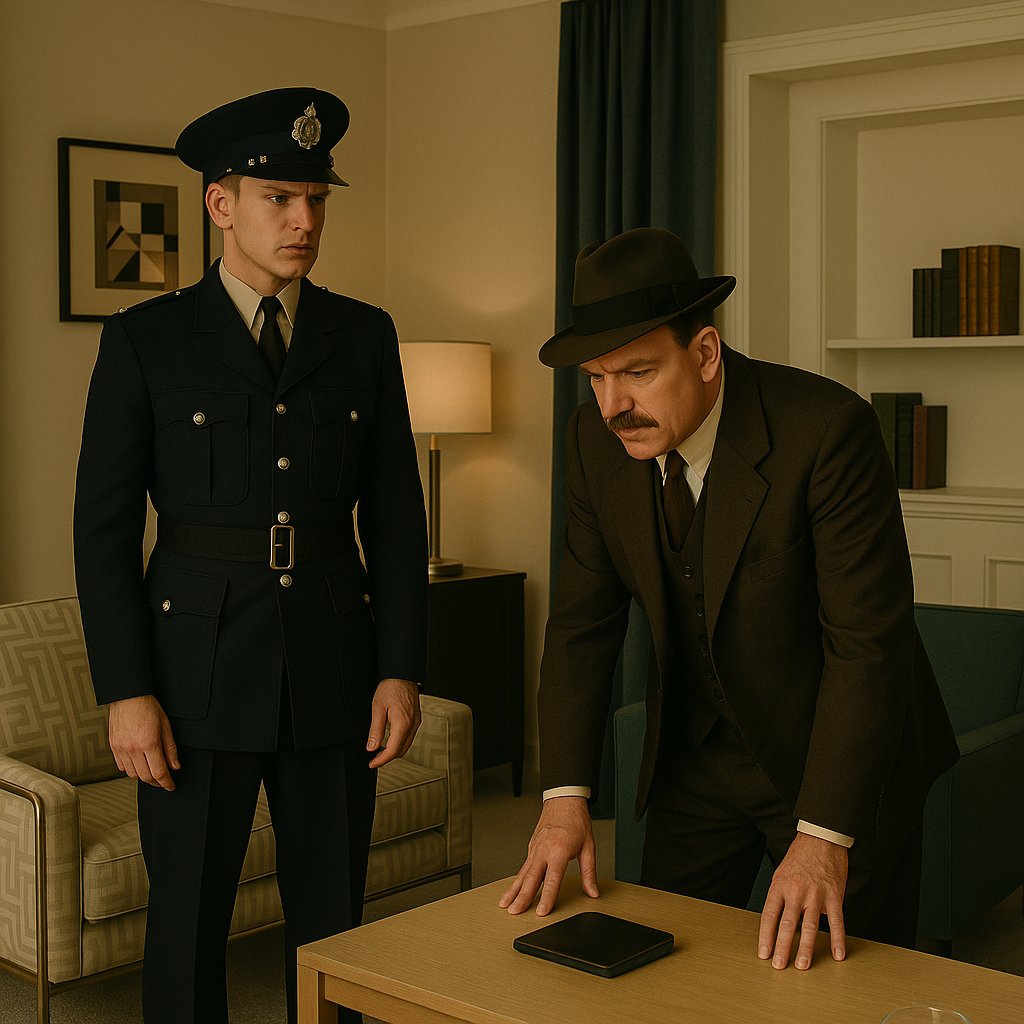
‘‘Nellie was the daily maid who did for her. Mrs Chapman had gone away suddenly once or twice before, so the girl didn’t think it odd, but what was odd was the fact that she hadn’t rung for the porter to take her luggage down or get her a taxi.
Anyway, Beddoes decided to get into the flat. We got a search warrant and a pass key from the manager.
ネリーというのは、彼女の家事を手伝っていた日雇いのメイドだ。チャップマン夫人は過去にも何度か急に外出することがあったので、ネリーも特に不審には思わなかった。ただし、奇妙だったのは、荷物を持っていくのにポーターを呼んでいないことだった。タクシーの手配もしていない。
いずれにせよ、ベッドーズはフラット(部屋)に入るべきだと判断した。我々は捜索令状を取り、管理人からマスターキーを借りて入室した。
Found nothing of interest except in the bathroom. There had been some hasty clearing up done there.
There was a trace of blood on the linoleum—in the corners where it had been missed when the floor was washed over.
After that, it was just a question of finding the body.
Mrs Chapman couldn’t have left with any luggage with her or the porter would have known.
Therefore the body must still be in the flat.
目立ったものはなかったが、浴室だけは違った。そこは何かを慌てて片付けた痕跡があった。
リノリウム(床敷き)の上に血の痕跡が残っていた——隅の方で、床を掃除した時に拭き忘れたのさ。
そうなれば、あとは遺体を見つけるだけだ。
チャップマン夫人は荷物を持って出ていなかったはずで、もしそうならポーターが気づいていたはずだ。
つまり、遺体はまだこの部屋の中にあるに違いない。
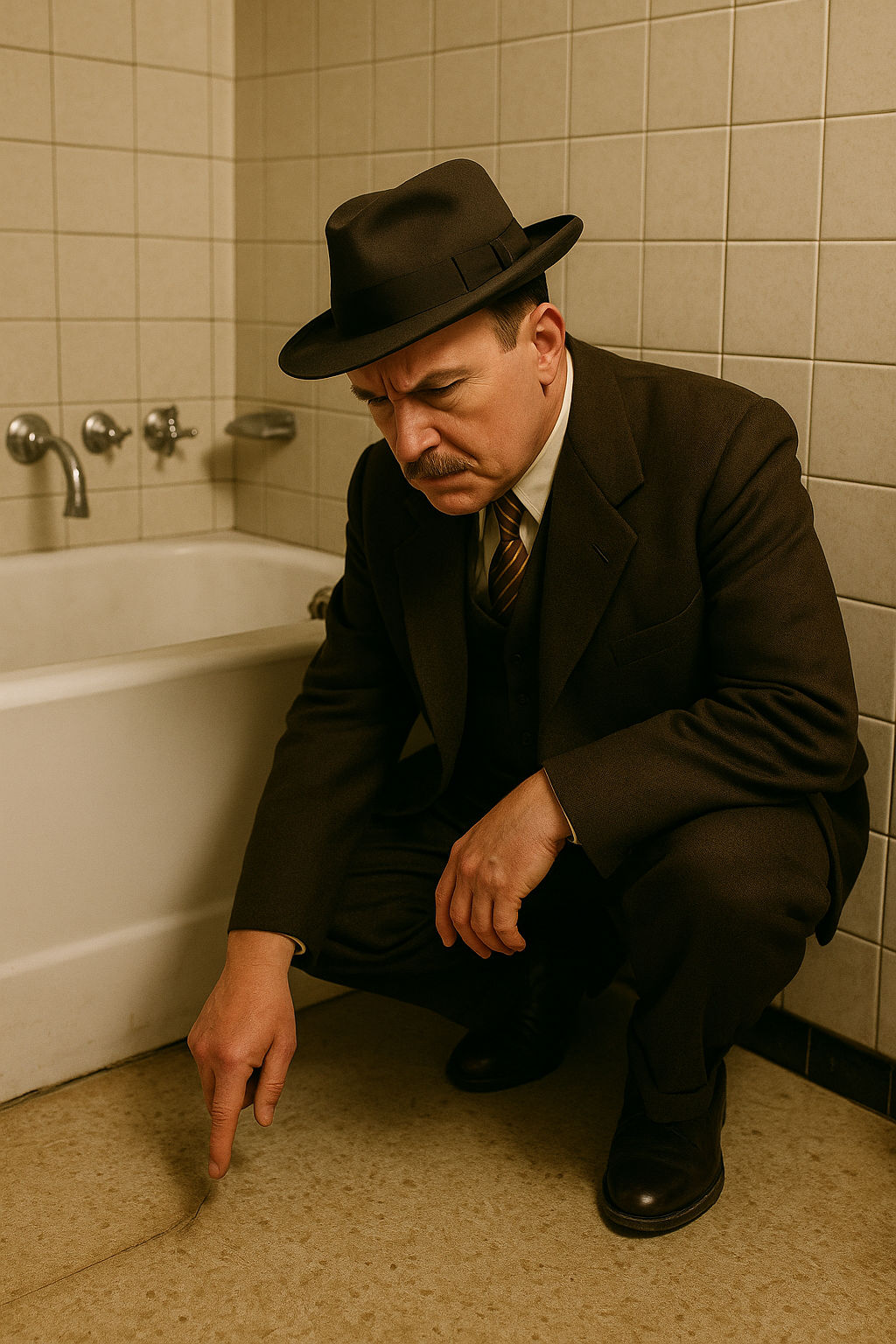

We soon spotted that fur chest—airtight, you know—just the place. Keys were in the dressing-table drawer.
‘We opened it up—and there was the missing lady! Mistletoe Bough up-to-date.’
我々はすぐに毛皮の収納箱に注目した——密閉式で、まさにうってつけだった。鍵は化粧台の引き出しの中にあった。
箱を開けてみると——そこにいたのは、行方不明のあの女性だった!
現代版「ミスルトー・バウ」ってわけさ。
(※「ミスルトー・バウ」とは、箱の中に隠れて死んだ花嫁の伝説に由来6)

Poirot asked:
‘What about Mrs Chapman?’
ポワロが尋ねた:
「チャップマン夫人はどうなったんです?」
‘What indeed? Who is Sylvia (her name’s Sylvia, by the way), what is she?
One thing is certain. Sylvia, or Sylvia’s friends, murdered the lady and put her in the box.’
「さあな? シルヴィアって誰だ——ついでだが、シルヴィアが彼女の名前だぞ——彼女は一体何者なんだ?7 一つだけ確かなことがある。シルヴィアか、彼女の仲間がセインズベリー=シールを殺して箱に詰めたということだ」
Poirot nodded.
He asked:
‘But why was her face battered in? It is not nice, that.’
ポワロはうなずいた。
そして尋ねた:
「だがなぜ、彼女の顔をあそこまで損壊したんです?あれは見ていても耐え難いものです」
‘I’ll say it isn’t nice! As to why —well, one can only guess. Sheer vindictiveness, perhaps. Or it may have been with the idea of concealing the woman’s identity.’
「まったく、ひどいもんだよ!理由として考えられるのは、そうだな——単なる憎悪か、あるいは彼女の身元を隠すつもりだったのかもしれん」
‘But it did not conceal her identity.’
「しかし、彼女の身元は隠されていません」
‘No, because not only had we got a pretty good description of what Mabelle Sainsbury Seale was wearing when she disappeared, but her handbag had been stuffed into the fur box too and inside the handbag there was actually an old letter addressed to her at her hotel in Russell Square.’
「そうだな、というのも、メイベル・セインズベリー=シールが行方不明になったときの服装については、かなり詳しい情報が出回っていた——それに、彼女のハンドバッグも箱に一緒に入っていて、その中には、ラッセル・スクエアのホテル宛の古い手紙まで入っていたんだからな」
Poirot sat up. He said:
‘But that—that does not make the common sense!’8
ポワロは身を乗り出した。
そして言った:「しかしそれは……それは、常識的には筋が通っておりません!」
‘It certainly doesn’t. I suppose it was a slip.’
「確かにそうだ。単なるうっかりミスかもしれんな」
‘Yes—perhaps—a slip. But—’
He got up.
‘You have been over the flat?’
「ええ——たぶん——うっかり。しかし——」
ポワロは立ち上がった。
「このフラットはもう見て回ったのですか?」
‘Pretty well. There’s nothing illuminating.’
「ほとんど見たな。とくに目を引くものはない」
‘I should like to see Mrs Chapman’s bedroom.’
「チャップマン夫人の寝室が見たいのですが」
‘Come along then.’
「ああ、こっちだ」
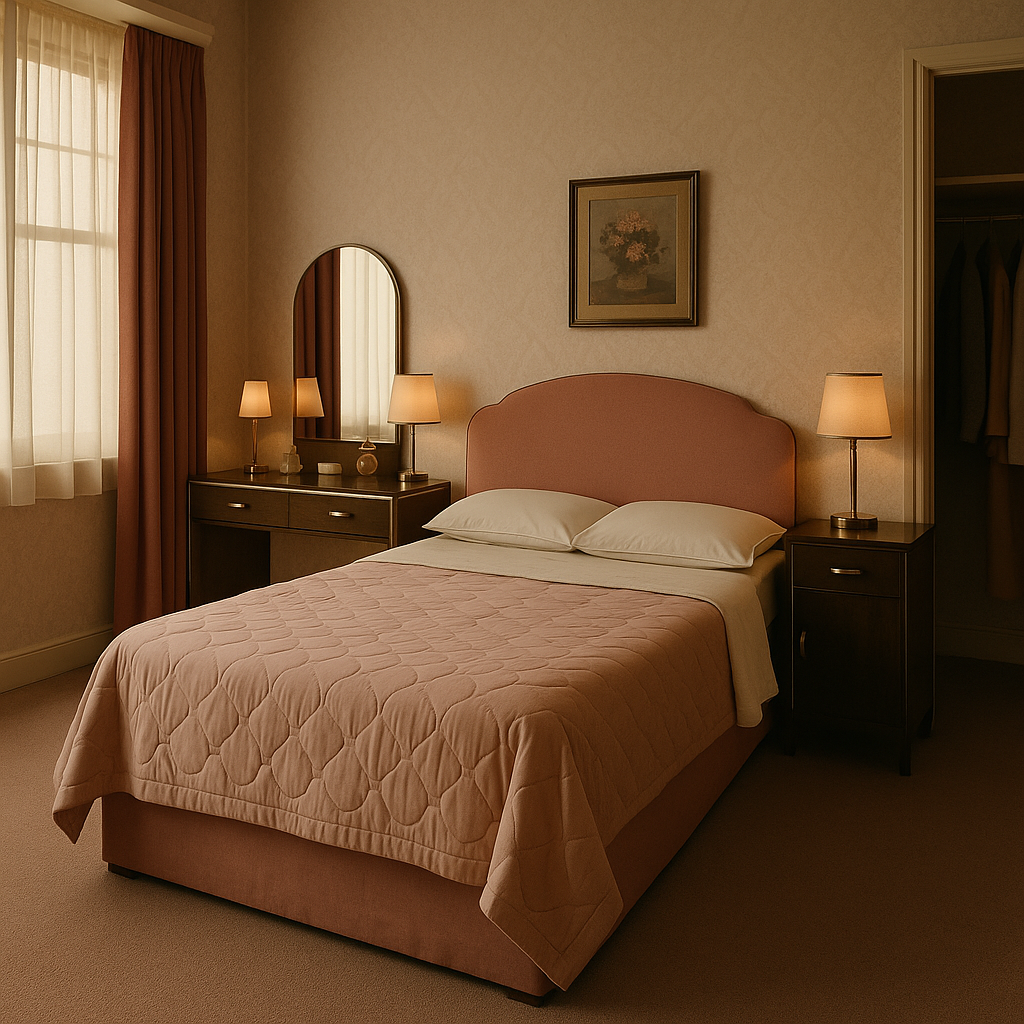
The bedroom showed no signs of a hasty departure.
It was neat and tidy.
The bed had not been slept in, but was turned down ready for the night.
There was a thick coating of dust everywhere.
寝室には、慌ただしく出ていったような形跡はなかった。
部屋は整然としていて、きちんと片付けられていた。
ベッドは使われた形跡がなかったが、夜に備えてシーツが折り返されていた。
室内には、至る所に厚くほこりが積もっていた。
Japp said:
‘No finger-prints, so far as we can see. There are some on the kitchen things, but I expect they’ll turn out to be the maid’s.’
ジャップが言った。
「今のところ、指紋は見つかっていない。台所用品には少しついているが、たぶんメイドのものだろうな」
‘That means that the whole place was dusted very carefully after the murder?’
「ということは、殺人のあとに徹底的に掃除されたということですね?」
‘Yes.’
「そういうことだ」
Poirot’s eyes swept slowly round the room.
Like the sitting-room it was furnished in the modern style—and furnished, so he thought, by someone with a moderate income. The articles in it were expensive but not ultra expensive. They were showy but not first-class. The colour scheme was rose pink.
ポワロの視線がゆっくりと部屋を見渡した。
リビングと同様に、寝室もモダンスタイルでまとめられていた——そして、ポワロの目には、それが中流程度の収入の人間によって揃えられたものと映った。家具は高価ではあるが、超高級というほどではない。見栄えはするが、一流品ではなかった。部屋の配色はローズピンクだった。
He looked into the built-in wardrobe and handled the clothes—smart clothes but again not of first-class quality.
His eyes fell to the shoes—they were largely of the sandal variety popular at the moment, some had exaggerated cork soles.
He balanced one in his hand, registered the fact that Mrs Chapman had taken a 5 in shoes and put it down again.
In another cupboard he found a pile of furs, shoved in a heap.
彼は造り付けのクローゼットを開けて、服に触れた——おしゃれではあるが、一流品とは言えない服。
視線が足元に移る。そこには、当時流行していたサンダルタイプの靴が多く、なかには分厚いコルク底のものもあった。
彼は一足手に取って重さを確かめると、チャップマン夫人の靴のサイズが5(約22.5cm)であることを確認して、元に戻した。
別の戸棚には、毛皮の山が雑然と積まれていた。
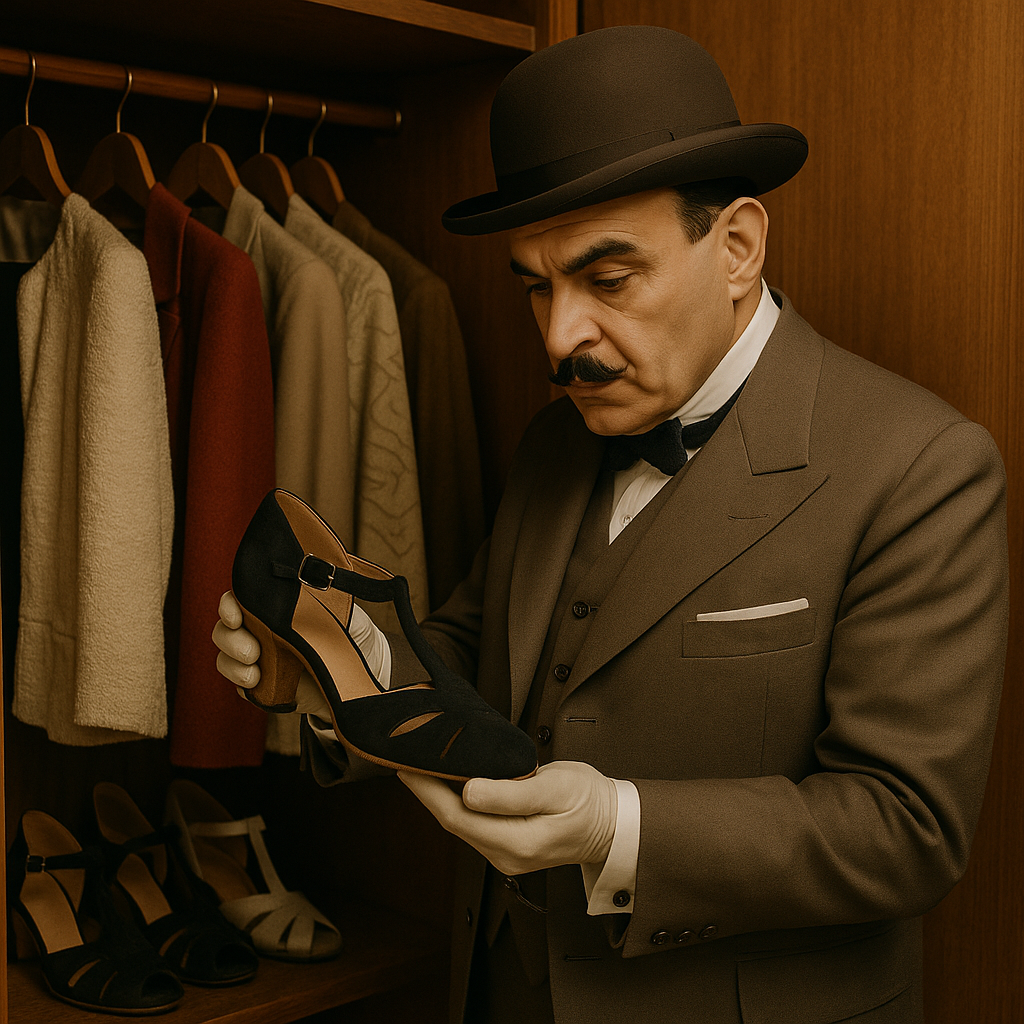
Japp said: ‘Came out of the fur chest.’
ジャップが言った。「毛皮の箱から出したんだな」
Poirot nodded. He was handling a grey squirrel coat. He remarked appreciatively:
‘First-class skins.’
ポワロはうなずいた。彼は灰色のリスの毛皮の外套を手に取って、感心したように言った。
「これは上等な皮ですね」
He went into the bathroom.
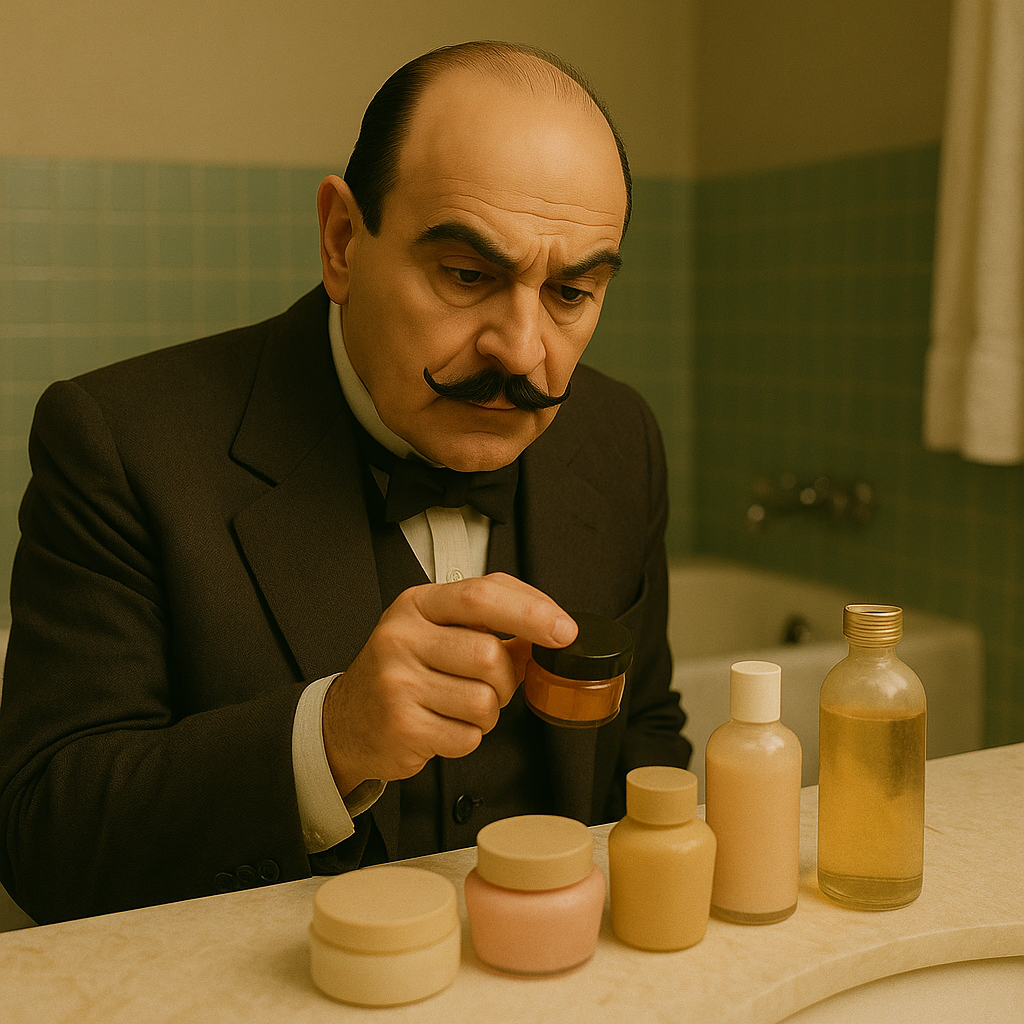
There was a lavish display of cosmetics.
Poirot looked at them with interest.
Powder, rouge, vanishing cream, skin food, two bottles of hair application.
そして浴室に入った。
そこには、化粧品がずらりと並んでいた。
ポワロは興味深げにそれらを見た。
フェイスパウダー、チーク、バニシングクリーム(肌にすっとなじむタイプの保湿クリーム)、スキンフード(栄養クリーム)、毛染め用化粧品のボトルが2本。
ジャップが言った。
「どうやら天然のプラチナブロンドじゃなかったようだな」
Japp said:
‘Not one of our natural platinum blondes, I gather.’
Poirot murmured: ‘At forty,mon ami , the hair of most women has begun to go grey but Mrs Chapman was not one to yield to nature.’
ポワロがつぶやいた。
「四十ですからね、モナミ、たいていの女性の髪には白いものが混じってきますが、しかしチャップマン夫人は、自然の力には屈しないタイプだったようです」
‘She’s probably gone henna red by now for a change.’
「今ごろは気分を変えて、ヘンナ・レッド(赤褐色)にでも染めてるかもしれないな」
‘I wonder.’
「そうでしょうかね」
Japp said: ‘There’s something worrying you, Poirot. What is it?’
ジャップが言った。
「君、何か気にかかってるようだな、ポワロ。どうした?」
Poirot said:
‘But yes, I am worried. I am very seriously worried. There is here, you see, for me an insoluble problem.’
ポワロが言った。
「ええ、そうなんです。気になっています。気になってしかたがないのです。ここには、私にはどうしても解らない問題があるのです」
Resolutely, he went once more into the box-room…He took hold of the shoe on the dead woman’s foot.
It resisted and came off with difficulty.
He examined the buckle.
It had been clumsily sewn on by hand.
決意したように、彼はもう一度、物置部屋(box-room)へ向かった—— 彼は、遺体の足に履かれていた靴を手に取った。
それは抵抗するようにきつくはまり、やっとのことで脱げた。
彼は靴のバックルを調べた。
それは、不器用な手縫いで縫いつけられていた。

Hercule Poirot sighed.
He said: ‘It is that I am dreaming!’
エルキュール=ポワロはため息をついた。
そして言った。「まるで夢を見ているようなんです!」
Japp said curiously:
‘What are you trying to do—make the thing more difficult?’
ジャップが奇妙な顔をして言った。
「君、何をしようとしてるんだ——事件をもっとややこしくするつもりかい?」
‘Exactly that.’
「まさに、その通りです」
Japp said:
‘One patent leather shoe, complete with buckle. What’s wrong with that?’
ジャップが言った。
「エナメルの靴が一足、バックル付きで見つかった。それがどうかしたのか?」
Hercule Poirot said:
‘Nothing—absolutely nothing. But all the same—I do not understand.’
ポワロが言った。
「何も——まったく何もおかしくありません。しかし、それでもなお——私には解らないのです。」
III
Mrs Merton of No. 82, King Leopold Mansions had been designated by the porter as Mrs Chapman’s closest friend in the Mansions.
It was, therefore, to No. 82 that Japp and Poirot betook themselves next.
Mrs Merton was a loquacious lady, with snapping black eyes, and an elaborate coiffure.
キング・レオポルド・マンションの82号室に住むマートン夫人は、ポーターから、このマンションでチャップマン夫人が最も親しい友人だと教えられた。
それゆえ、ジャップとポワロは次に82号室を訪れた。
マートン夫人はおしゃべり好きな女性で、ぱちぱちと光る黒い目と、凝った髪型をしていた。

‘Sylvia Chapman—well, of course, I don’t know her really well—not intimately, so to speak. We had a few bridge evenings occasionally and we went to the pictures together, and of course shopping sometimes. But oh, do tell me—she isn’t dead , is she?’
「シルヴィア・チャップマンさんね——、ええ、そうねえ、本当に親しいってほどじゃないんですよ。そんな、親密ってわけじゃないんです。ブリッジの夜を何度かご一緒したことがあるし、映画に行ったり、時々お買い物にも出かけたりしました。でも、教えていたけませんか——彼女、亡くなったわけじゃないんでしょう?」
Japp reassured her.
ジャップが彼女を安心させた。
‘Well, I’m sure I’m thankful to hear it! But the postman just now was all agog about a body having been found in one of the flats—but then one really can’t believe half one hears, can one? I never do.’
「まあ、それを聞いて安心したわ!でもさっき郵便配達の人がね、誰かのフラットで遺体が見つかったって興奮して話してて……でもまあ、人の噂って半分は信用できないものよね? 私はいつも、そういうの信じないことにしてるの」
Japp asked a further question.
ジャップがさらに質問を重ねた。
‘No, I haven’t heard anything of Mrs Chapman—not since we had spoken about going to see the new Ginger Rogers and Fred Astaire the following week, and she said nothing about going away then .’
「いいえ、チャップマン夫人のことは何も聞いていないわね——最後に話したのは、来週ジンジャー・ロジャースとフレッド・アステア9の新作を観に行こうって話してたときね——そのときも彼女、出かけるなんて一言も言ってなかったわ」
Mrs Merton had never heard a Miss Sainsbury Seale mentioned. Mrs Chapman had never spoken of anyone of that name.
マートン夫人はセインズベリー=シールという名前には聞き覚えがなかった。チャップマン夫人がその名前の人のことを口にしたことはなかった。

‘And yet, you know, the nameis familiar to me, distinctly familiar. I seem to have seen it somewhere quite lately .’
「でもね、あの名前、どこかで聞いた覚えがあるのよ——確かに覚えてるわ。最近どこかで見たような……」
Japp said drily:
‘It’s been in all the papers for some weeks—’
ジャップがそっけなく言った。「何週間も前から、新聞に出てますからね」
‘Of course—some missing person, wasn’t it?
And you thought Mrs Chapman might have known her?
No, I’m sure I’ve never heard Sylvia mention that name.’
「ああ、そうだわ——行方不明の方じゃなかった?
それで、チャップマン夫人がその人を知ってたかもって考えられたんですね?
いいえ、シルヴィアがそんな名前を口にしたのは一度も聞いたことないありません」
‘Can you tell me anything about Mr Chapman, Mrs Merton?’
「チャップマン氏について何かご存知ですか、マートン夫人?」
A rather curious expression came over Mrs Merton’s face. She said:
‘He was a commercial traveller, I believe, so Mrs Chapman told me. He travelled abroad for his firm—armaments, I believe. He went all over Europe.’
マートン夫人の表情が少し変わった。彼女はこう言った。「商社のセールスマンだったって、チャップマン夫人は言ってました。海外を飛び回ってたって。兵器関係の会社って聞きました。ヨーロッパ中をまわってたらしいですよ」
‘Did you ever meet him?’
「彼に会ったことは?」
‘No, never. He was at home so seldom, and when he was at home he and Mrs Chapman didn’t want to bother with outsiders. Very naturally.’
「いいえ、一度も。家にいることは滅多になかったし、いらしても、お二人はご近所とは関わりたがらなかった——それは当然ですよね」
‘Do you know if Mrs Chapman had any near relations or friends?’
「チャップマン夫人の近い親類や親しい友人はご存知ですか?」
‘I don’t know about friends. I don’t think she had any near relations. She never spoke of any.’
「お友達は知りませんね。ご親族の話は聞いたことがありません。彼女は誰の話もしませんでしたね」
‘Was she ever in India?’
「彼女はインドにいたことがあるとか?」
‘Not that I know of.’
Mrs Merton paused, and then broke out:
‘But please tell me—why are you asking all these questions?
I quite understand that you come from Scotland Yard and all that, but there must be some special reason?’
「私の知る限りでは、ありませんね」
マートン夫人は一度言葉を切ってから、ふいに言い出した。
「でも教えていただきたいんですが——なぜそんなにいろいろお尋ねになるんですか?
私はよくわかっています——あなたがスコットランドヤードからいらした立派な方だと——ですが、よほどの理由があるんでしょう?」
‘Well, Mrs Merton, you are bound to know some time. As a matter of fact, a dead body has been found in Mrs Chapman’s flat.’
「ええ、マートンさん、いずれあなたにも知られることになります。実は——チャップマン夫人のフラットで遺体が見つかったんです」
‘Oh—?’ Mrs Merton looked for a moment like the dog whose eyes were as big as saucers.
‘A dead body! It wasn’t Mr Chapman, was it? Or perhaps some foreigner?’
「まあ……」
マートン夫人は、一瞬、皿のように大きな目をした犬のような表情をした。
「遺体?それってチャップマン氏じゃないですよね?それとも外国人か何か?」
Japp said: ‘It wasn’t a man at all—it was a woman.’
ジャップが言った。「男性じゃありませんでした——女性でした」
‘A woman.’
Mrs Merton seemed even more surprised.
「女の人?」
マートン夫人は、さらに驚いた様子だった。
Poirot said gently:
‘Why should you think it was a man?’
ポワロが穏やかに言った。
「なぜ男だと思ったのですか?」
‘Oh, I don’t know. It seemed more likely somehow.’
「さあ、どうしてでしょう。なんとなくそのほうがありそうな気がして」
‘But why? Was it because Mrs Chapman was in the habit of receiving gentleman visitors?’
「なぜです? チャップマン夫人は、よく紳士の訪問客をお部屋に入れていらしたからですか?」
‘Oh no—oh no indeed.’ Mrs Merton was indignant.
‘I never meant anything of that kind. Sylvia Chapman wasn’t in the least that kind of woman—not at all!
It was just that, with Mr Chapman—I mean—’
She came to a stop.
「いえいえ、まさかそんなこと!」マートン夫人は憤慨して言った。
「私はそんな意味で言ったんじゃありません!シルヴィア・チャップマンは、決してそんなタイプの女性ではありませんでしたよ——絶対に!
ただ、あのチャップマン氏と一緒だと——つまり——」
彼女は言葉を濁して黙り込んだ。
Poirot said:
‘I think, Madame, that you know a little more than you have told us.’
ポワロは言った。
「奥さま、あなたは、私たちに話していないことを、もう少しご存じのようですね」
Mrs Merton said uncertainly:
‘I don’t know, I’m sure—what I ought to do! I mean, I don’t exactly want to betray a confidence and of course I never have repeated what Sylvia told me—except just to one or two intimates whom I knew were really safe —’
Mrs Merton leaned forward and lowered her voice:
マートン夫人は不安げに言った。
「知らないのです、本当に——私はどうすべきなんですか!
だって、信頼を裏切るようなことは本当はしたくありませんし——もちろん、シルヴィアが話してくれたことは誰にも言っていません——ただ、私が本当に安心だとわかってる、ほんの一人か二人の親しい人以外は……」
マートン夫人は身を乗り出し、声をひそめた。
‘It just—slipped out, as it were, one day. When we were seeing a film—about the Secret Service and Mrs Chapman said you could see that who ever had written it didn’t know much about their subject, and then it came out—only she swore me to secrecy. Mr Chapman was in the Secret Service, I mean.
「それはつい——ポロっと出てしまった、ある日のことなんですけど。一緒に映画を観ていたときに——秘密諜報部が出てくる映画で、チャップマン夫人が“この脚本書いた人、あまり事情を知らないみたい”って言って、それでバレてしまったんです——でも、そのあと彼女、絶対秘密にしてねって誓わせたんです。つまり、チャップマン氏は秘密諜報部にいたんです。

That was the real reason he had to go abroad so much. The armament firm was only a blind. And it was terribly worrying for Mrs Chapman because she couldn’t write to him or get letters from him while he was away. And, of course, it was terribly dangerous !’
だから、あんなに頻繁に海外に行かなくてはならなかった。兵器会社はカモフラージュだったんです。それでシルヴィアはとても悩んでいたんです。彼が海外にいる間は、彼に手紙を出すことも、受け取ることもできなかったから。それにもちろん、ものすごく危険な仕事ですから!」

IV
As they went down the stairs again to No. 42, Japp ejaculated with feeling:
‘Shades of Phillips Oppenheim, Valentine Williams and William le Queux, I think I’m going mad!’
彼らが階段を下って42号室へ戻るとき、ジャップは感情をこめて不意に叫んだ。
「フィリップス・オッペンハイム、ヴァレンタイン・ウィリアムズ、ウィリアム・ル・キュー10みたいな話で、俺は気が狂いそうだ!」

That smart young man, Sergeant Beddoes, was waiting for them.He said respectfully:
‘Haven’t been able to get anything helpful from the maid, sir. Mrs Chapman changed maids pretty often, it seems.
This one only worked for her for a month or two. She says Mrs Chapman was a nice lady, fond of the radio and pleasant spoken.
Girl was of the opinion the husband was a gay deceiver but that Mrs Chapman didn’t suspect it.
She got letters from abroad sometimes, some from Germany, two from America, one from Italy and one from Russia.
The girl’s young man collects stamps, and Mrs Chapman used to give them to her off the letters.’
きびきびとした若い警官、ベッドーズ巡査が彼らを待っていた。彼は丁重に言った。
「メイドからは役立つ情報は得られませんでした、警部。
チャップマン夫人は、わりと頻繁にメイドを替えていたようです。
この娘は、まだ働いて1~2か月しか経っていません。
チャップマン夫人はラジオが好きで、口調の優しい良い方だったと話しています。
メイドは、チャップマン氏は“女たらし”だと思ってましたが、夫人は疑っていなかったと言ってます。
夫人は時々外国から手紙を受け取っていて、ドイツからのもの、アメリカから2通、イタリアから1通、ロシアから1通がありました。
メイドの恋人が切手収集をしていて、夫人は時折、外国から届いた手紙の切手を彼にあげていたそうです」
‘Anything among Mrs Chapman’s papers?’
「チャップマン夫人の書類の中には何かあったか?」
‘Absolutely nothing, sir.
She didn’t keep much.
A few bills and receipted accounts—all local.
Some old theatre programmes, one or two cookery recipes cut out of the papers, and a pamphlet about Zenana Missions.’
「まったく何もありません、警部。
持ち物自体が少なかったようです。
あったのは請求書や領収書の類——全て地元のものです。
昔の劇場のプログラムが少し、それに新聞から切り抜いた料理レシピが2、3、それとゼナナ伝道会のパンフレットが一つ」
‘And we can guess who brought that here.
She doesn’t sound like a murderess, does she? And yet that’s what it seems to be. She’s bound to be an accomplice anyway.
No strange men seen about that evening?’
「それがここにあるということは、誰が持ち込んだか想像がつく。
彼女は殺人犯には見えないよな?だが、そうとしか思えん。いずれにせよ、共犯者であることは間違いない。
あの晩に見知らぬ男を見かけた者はいないのか?」
‘The porter doesn’t remember any—but then I don’t suppose he would by now, and anyway it’s a big block of flats—people always going in and out.
He can only fix the date of Miss Sainsbury Seale’s visit because he was taken off to the hospital the next day and was actually feeling rather bad that evening.’
「守衛は覚えていません——まあ、今となっては当然かもしれません——ここは大きなマンションで、出入りは多いですから。
彼がミス=セインズベリー=シールの訪問日を覚えているのは、その翌日に入院していて、その晩からすでに具合が悪かったからです」
‘Anybody in the other flats hear anything out of the way?’
「他の部屋の住人で何か異変を聞いた者はいないか?」
The younger man shook his head.
‘I’ve inquired at the flat above this and the one below. Nobody can remember hearing anything unusual.
Both of them had their radios on, I gather.’
若い警官は首を振った。
「上階と下階の住人に聞きましたが、異常は覚えていないと。どちらもラジオをつけていたようです」

The divisional surgeon came out of the bathroom where he had been washing his hands.
‘Most unsavoury corpse,’ he said cheerfully.
‘Send her along when you’re ready and I’ll get down to brass tacks.’
そのとき、管轄の検視医が、手を洗っていた浴室から出てきた。
「とても不快な遺体ですよ」と、陽気に言った。
「準備ができたら搬送してください。解剖に取り掛かります」
‘No idea of the cause of death, doctor?’
「死因は見当つきますか、先生?」
‘Impossible to say until I’ve done the autopsy. Those face injuries were definitely inflicted after death, I
should say. But I shall know better when I’ve got her at the mortuary.
Middle-aged woman, quite healthy—grey hair at the roots but tinted blonde. There may be distinguishing marks on the body—if there isn’t, it may be a job to identify her—oh, you know who she is, splendid? What? Missing woman there’s been all the fuss about? Well, you know, I never read the papers. Just do the crosswords.’
「解剖してみないと分かりません。顔の損傷は明らかに死後につけられたものでしょう。だが、死体を検視所に運べばもっと詳しく分かります。
中年の女性で、健康そうな体でした——髪の根元は白髪だが、ブロンドに染めてあります。身体に特徴的な印があればいいが、そうでなければ身元確認は難しいかもしれません——おや、彼女が誰かご存じなんですか?
何ですって?新聞で騒がれていたあの行方不明の女性? いやあ、私は新聞を読まないものでね。クロスワードしかやらないんです」
Japp said bitterly: ‘And that’s publicity for you!’ as the doctor went out.
ジャップは苦々しく言った「これで君は世間の評判になるな!」
ちょうど医者は出て行ったところだった。
Poirot was hovering over the desk. He picked up a small brown address book.
ポワロは机の上をうろうろしていた。彼は小さな茶色のアドレス帳を手に取った。
The indefatigable Beddoes said: ‘Nothing of special interest there—most hairdressers, dressmakers, etc. I’ve noted down any privatenames and addresses.’
働き者のベッドーズ巡査が言った。「特に目立ったものはありません——美容師や仕立て屋がほとんどです。個人名と住所だけは控えてあります」
Poirot opened the book at the letter D. He read:
Dr Davis, 17, Prince Albert Road,
Drake and Pomponetti, Fishmongers.
And below it:
Dentist. Mr Morley, 58, Queen Charlotte Street.
There was a green light in Poirot’s eyes. He said: ‘There will be no difficulty, I imagine, in positively identifying the body.’
ポワロはDの欄を開いた。
彼は声に出して読んだ:
Dr Davis(デイヴィス医師)、プリンス・アルバート・ロード17番地
Drake and Pomponetti(ドレイク&ポンポネッティ)、鮮魚商
そしてその下に:
歯科医 ミスター=モーリー、クイーン・シャーロット・ストリート58番地
ポワロの目に、緑色の光が宿った。彼は言った。
「身元の確認には、——たぶん問題はありませんね」
Japp looked at him curiously. He said: ‘Surely—you don’t imagine—?’
ジャップは彼を不思議そうに見つめながら言った。
「まさか——君、(セイント・セインズベリー=シールだと)思っていないのか?」
Poirot said with vehemence: ‘I want to be sure .’
ポワロは強い口調で言った。
「私は、はっきりさせたいのです」
V
Miss Morley had moved to the country. She was living in a small country cottage near Hertford.
The Grenadier greeted Poirot amicably. Since her brother’s death her face had perhaps grown slightly
grimmer, her carriage more upright, her general attitude towards life more unyielding. She resented
bitterly the slur cast upon her brother’s professional name by the findings of the inquest.
Poirot, she had reason to believe, shared the view that the verdict of the Coroner’s inquest was untrue.
Hence the Grenadier unbent a little.
She answered his questions readily enough and with competence. All Mr Morley’s professional papers
had been carefully filed by Miss Nevill and had been handed over by her to Mr Morley’s successor.
Some of the patients had transferred themselves to Mr Reilly, others had accepted the new partner,
others again had gone to other dentists elsewhere.
ミス=モーリーは田舎に引っ越していた。ハートフォード近くの小さなカントリーコテージに住んでいた。
女グレナディア兵(ミス=モーリー)はポワロを好意的に迎えた。兄の死以来、彼女の顔はやや険しさを増し、姿勢は一層しゃんとし、人生に対する態度はさらに妥協のないものになっていた。彼女は、検視官の審問による評決が兄の職業的名声に泥を塗ったことを、激しく憤っていた。
ポワロは、彼女には検死審問の評決は真実ではないと信じる理由があったので、その意見に同意した。グレナディアの態度は少し和らいだ。
彼女はポワロの質問に十分かつ適切に答えた。ミスター=モーリーの専門的な書類はすべて、ネヴィル嬢によってきちんと整理されており、ミスター=モーリーの後任に引き渡されたという。
患者の一部はライリー氏のもとに移り、他の患者は新しいパートナーを受け入れ、さらに他の者たちは別の歯科医にかかったという。

Miss Morley, after she had given what information she could, said:
‘So you have found that woman who was Henry’s patient—Miss Sainsbury Seale—and she was
murdered too .’
The ‘too’ was a little defiant. She stressed the word.
情報提供を終えた後、ミス=モーリーは言った。
「で、あなたは兄ヘンリーの患者だったあの女——ミス=セインズベリー=シールを見つけたのですね——そして彼女も、殺されていたと」
“も” の部分には、少し挑戦的な響きがあった。彼女はその語を強調した。
Poirot said:
‘Your brother never mentioned Miss Sainsbury Seale particularly to you?’
ポワロは言った。「あなたの兄上は、ミス=セインズベリー=シールについて特に何かお話しになっていましたか?」
‘No, I don’t remember his doing so. He would tell me if he had had a particularly trying patient, or if one
of his patients had said something amusing he would pass it on to me, but we didn’t usually talk about his
work much. He was glad to forget it when the day was over. He was very tired sometimes.’
「いいえ、そんなことはなかったと思います。兄は、特に手こずった患者がいたときや、面白いことを言った患者がいたときには私に話してくれましたが、ふだん仕事の話はあまりしませんでした。仕事が終われば、忘れたがっていましたから。とても疲れていましたし」
‘Do you remember hearing of a Mrs Chapman amongst your brother’s patients?’
「チャップマン夫人という名の患者について、聞いた覚えは?」
‘Chapman? No, I don’t think so. Miss Nevill is really the person to help you over all this.’
「チャップマン? いいえ、思い当たりません。本当にそのあたりはネヴィル嬢が一番お役に立てると思います」
‘I am anxious to get in touch with her. Where is she now?’
「ぜひ彼女に会いたいのです。今はどこにいるかご存じですか?」
‘She has taken a post with a dentist in Ramsgate, I believe.’
「ラムズゲートの歯科医のところで働いていると聞いています」
‘She has not married that young man Frank Carter yet?’
「フランク・カーターという青年とは、まだ結婚していないのですね?」
‘No. I rather hope that will never come off. I don’t like that young man, M. Poirot. I really don’t. There is something wrong about him. I still feel that he hasn’t really any proper moral sense.’
「ええ。私は正直言って、その結婚が成立しないことを願っているんです、ムッシュー=ポワロ。あの青年は好きになれません。どうも、何かおかしいんです。私は今でも、彼には本当の意味での道徳心が欠けていると感じています」
Poirot said: ‘Do you think it is possible tha the could have shot your brother?’
ポワロは言った。
「その男が、あなたの兄上を撃った可能性があるとお考えですか?」
Miss Morley said slowly:
‘I do feel perhaps that he would becapable of it—he has a very uncontrollable temper.
But I don’t really see that he had any motive—nor opportunity for that matter.
You see, it wasn’t as though Henry had succeeded in persuading Gladys to give him up. She was sticking to him in the most faithful way.’
ミス=モーリーはゆっくりと言った。
「もしかすると、やろうと思えばやれる人だったかもしれません——とても抑えのきかない気性の持ち主なんです。
でも、実際に動機も機会もあったとは思えません。
というのも、ヘンリーがグラディスに彼を諦めさせることに成功していたわけではありませんし。彼女はあの男に、驚くほど忠実にしがみついていましたから」
‘Could he have been bribed, do you think?’
「買収されたということは? どう思われます?」
‘Bribed? To kill my brother? What an extraordinary idea!’
「買収? 兄を殺すために? まあ、なんて突飛な考えでしょう!」
A nice-looking dark-haired girl brought in the tea at this moment.
As she closed the door behind her again, Poirot said: ‘That girl was with you in London, was she not?’
ちょうどそのとき、感じの良い黒髪の若い女性が紅茶を運んできた。
彼女がまた静かにドアを閉めたとき、ポワロは言った。
「今の女性は、ロンドンでも一緒にいらっしゃいましたね?」
‘Agnes? Yes, she was house-parlourmaid. I let the cook go—she didn’t want to come to the country anyway—and Agnes does everything for me. She is turning into quite a nice little cook.’
「アグネス? ええ、ロンドンではハウス・パーラーメイド(接客使用人)11でした。料理人はもう雇っていないんです——彼女は田舎に来たがりませんでしたし——それでアグネスが全部やってくれているんです。今ではちょっとした腕前の料理人になりつつありますよ」
Poirot nodded.
He knew very accurately the domestic arrangements of 58, Queen Charlotte Street. They had been thoroughly gone into at the time of the tragedy.
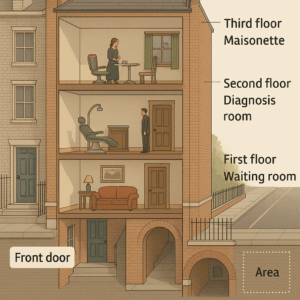
Mr Morley and his sister had occupied the two top floors of the house as a maisonette. The basement had been shut up altogether except for a narrow passage leading from the area to the back yard where a wire cage ran up to the top floor with the tradesmen’s deliveries and where a speaking-tube was installed.
ポワロはうなずいた。
彼は、クイーン・シャーロット・ストリート58番地の家庭内の状況を正確に把握していた。事件当時、徹底的に調査が行われたのである。
ミスター=モーリーとその妹は、建物の最上階2フロアをメゾネット形式で使用していた。地下室は全て閉鎖されており、業者の配達物を上階まで運ぶワイヤーケージと、呼び出し用の伝声管のある裏庭に通じる半地下の細い通路12を除いては、使用されていなかった。

Therefore the only entrance to the house was by the front door which it was Alfred’s business to answer. This had enabled the police to be sure that no outsider could have entered the house on that particular morning.
Both cook and house-parlourmaid had been with the Morleys for some years and bore good characters. So, although it was theoretically possible that one or the other of them might have crept down to the second floor and shot her master, the possibility had never been taken seriously into account.
Neither of the two had appeared unduly flustered or upset at being questioned, and there certainly seemed no possible reason for connecting either of them with his death.
したがって、この家に入る唯一の出入口は正面玄関であり、それはアルフレッドの仕事で対応されていた。このため、事件当日の朝、外部の人物が家に入った可能性は警察によって否定されていた。
料理人とハウス・パーラーメイドの二人は、何年もモーリー家に仕えており、素行も良かった。理論的には、どちらかがこっそり2階に降りてきて主人を撃つことも不可能ではなかったが、その可能性は真剣には検討されなかった。
二人とも、取り調べを受けた際に特に取り乱した様子もなく、動揺も見せなかった。
彼の死と結びつけられるような理由も、まったく見当たらなかった。

Nevertheless, as Agnes handed Poirot his hat and stick on leaving, she asked him with an unusually nervous abruptness:
‘Does—does anyone know anything more about the master’s death, sir?’
それでも、ポワロが帰り際に帽子とステッキをアグネスから受け取ると、彼女は異様に緊張した口調で、突然こう尋ねた。
「だ、旦那様……ご主人様の死について、なにか新しいことがわかったんでしょうか?」

Poirot turned to look at her. He said:
‘Nothing fresh has come to light.’
ポワロは彼女の方を向いて言った。
「新たに明らかになったことはありません」
‘They’re still quite sure as he did shoot himself because he’d made a mistake with that drug?’
「皆さん、まだ……ご主人様が自分を撃ったのって、薬の取り違えをしたからだと……そう信じてるんですか?」
‘Yes. Why do you ask?’
「そうです。なぜ、そんなことを聞くのですか?」
Agnes pleated her apron. Her face was averted. She said rather indistinctly:
‘The—the mistress doesn’t think so.’
アグネスはエプロンの裾を指でねじっていた。彼女は顔をそむけていた。そして、かすれた声で言った。
「奥様が‥‥そのように思ってらっしゃるんです」
‘And you agree with her, perhaps?’
「そしてあなたも、そう思っているのですか?」
‘Me? Oh, I don’t know nothing, sir. I only—I only wanted to be sure .’
「わ、わたしですか? いえ、私はなにも知りません、旦那様。私はただ……ただ、はっきりさせたかっただけなんです」
Hercule Poirot said in his most gentle voice:
‘It would be a relief to you to feel beyond any possible doubt that it was suicide?’
エルキュール=ポワロは、もっとも優しい声で言った。
「なんの疑いもなく自殺だったということがはっきりすれば……あなたも安心できるわけですね?」
‘Oh, yes, sir,’ Agnes agreed quickly, ‘it would indeed.’
「ええ、そうなんです、旦那様」アグネスはすぐにそう答えた「本当に‥‥」。
‘For a special reason, perhaps?’
「たぶん、何か特別な理由があるんですね?」
Her startled eyes met his.
She shrank back a little.
‘I—I don’t know anything about it, sir. I only just asked.’
彼女の目が驚きで見開かれ、ポワロと目が合った。
彼女は少し後ずさりして言った。
「わ‥‥私は、何も知りません、旦那様。ただ聞いてみただけなんです」
‘But why did she ask?’
Hercule Poirot demanded of himself, as he walked down the path to the gate.
He felt sure that there was an answer to that question. But as yet he could not guess what it was.
All the same, he felt a step nearer.
「だが、なぜ彼女はあんなことを聞いたのだろう?」
エルキュール=ポワロは、門へと続く小道を歩きながら、自問した。
彼は、その疑問にはきっと答えがあると確信していた。
だが今のところ、それが何なのかはまだ見当がつかなかった。
それでもなお、彼は一歩近づいたような気がした。
VI
When Poirot returned to his flat he was surprised to find an unexpected visitor waiting for him.
A bald head was visible above the back of a chair, and the small neat figure of Mr Barnes rose to his feet.
With eyes that twinkled as usual, he made a dry little apology.
He had come, he explained, to return M. Hercule Poirot’s visit.
ポワロが自宅のフラットに戻ると、思いがけない訪問者が待っているのを見て驚いた。
椅子の背もたれ越しに、禿げた頭が見え、小柄で整った身なりのバーンズ氏が立ち上がった。
彼は、いつものように目をきらりと光らせながら、乾いた口調で軽く謝罪した13。
訪れた理由は——ポワロに以前訪問されたので、お返しに来たということだった。

Poirot professed himself delighted to see Mr Barnes.
George was instructed to bring some coffee unless his visitor preferred tea or whisky and soda?
ポワロは、バーンズ氏に会えてうれしいと答えた。
ジョージはポワロから、客が紅茶かウィスキー・ソーダか好みでない限り、コーヒーを持ってくるように言われた。

‘Coffee will be admirable,’ said Mr Barnes. ‘I imagine that your manservant prepares it well. Most
English servants do not.’
「コーヒーとは結構なことで」とバーンズ氏は言った。「あなたの執事なら上手に淹れるでしょうな。ほとんどのイギリス人使用人にはそれができませんが」
Presently, after a few interchanges of polite remarks, Mr Barnes gave a little cough and said:
しばらく形式的なやりとりを交わした後、バーンズ氏は小さく咳払いをしてこう言った:

‘I will be frank with you, M. Poirot. It was sheer curiosity that brought me here. You, I imagined, would be well posted in all the details of this rather curious case.
I see by the papers that the missing Miss Sainsbury Seale has been found. That an inquest was held and adjourned for further evidence. Cause of death was stated to have been an overdose of medinal.’
「率直に申し上げましょう、ムッシュー=ポワロ。ただの好奇心でここへ来たのです。あなたなら、あの奇妙な事件の詳細についてよくご存じだろうと考えたもので。
新聞で読みましたよ、行方不明だったミス=セインズベリー=シールが見つかったと。そして、検死審問が開かれ、さらなる証拠のために延期されたと。死因は、メジナール14の過剰摂取とされていますね」
There was a pause and then Poirot asked:
‘Have you ever heard of Albert Chapman, Mr Barnes?’
少し沈黙があり、ポワロが尋ねた。
「アルバート・チャップマンという人物をご存じですか、バーンズさん?」
‘Ah, the husband of the lady in whose flat Miss Sainsbury Seale came to die? Rather an elusive person, it would seem.’
「ああ、セインズベリー=シールが死んでいた部屋に住んでいる女性の夫ですね?
ちょっと見つけにくい人物のようですが」
‘But hardly non-existent?’
「しかし、まったく存在しないわけでは?」
‘Oh no,’ said Mr Barnes. ‘He exists. Oh yes, he exists—or did exist. I had heard he was dead. But you can’t trust these rumours.’
「ええ」とバーンズ氏は言った。「彼は存在しますよ——あるいは、かつて存在していた。私は彼が死んだという話を聞きましたが、そんな噂はあてになりません」
‘Who was he, Mr Barnes?’
「彼は何者だったのですか?」
‘I don’t suppose they’ll say at the inquest. Not if they can help it. They’ll trot out the armaments firm traveller story.’
「検死審問で、その話が出るとは思いませんね。できる限り避けるでしょう。武器会社の外回り営業という話の繰り返しでしょうな」
‘He was in the Secret Service then?’
「彼は秘密情報部の人間だったのですか?」
‘Of course he was. But he had no business to tell his wife so—no business at all. In fact he ought not to have continued in the Service after his marriage. It isn’t usually done—not, that is, when you’re one of the really hush-hush people.’
「もちろん、彼はそうです。彼がそのことを妻に話したのは間違いだった——まったくするべきことではなかった。実際、結婚してから情報部に留まり続けるべきではないのです。普通は続けられない——ただしそれは、あなたが本当に極秘任務に関わっている連中の一員である場合の話ですがね」
‘And Albert Chapman was?’
「アルバート・チャップマンはそういう人物だったのですか?」
‘Yes. Q.X.912. That’s what he was known as. Using a name is most irregular. Oh, I don’t mean that Q.X.912 was specially important—or anything of that kind.
But he was useful because he was an insignificant kind of chap—the kind whose face isn’t easily remembered. He was used a lot as a messenger up and down Europe.
You know the sort of thing. One dignified letter sent via our Ambassador in Ruritania—one unofficial ditto containing the dirt per Q.X.912—that is to say: Mr Albert Chapman.’
「その通りです。Q.X.912―それが彼のコードネームでした。本名を使うのは本来とても異例なことなんです。ああ、別にQ.X.912が特別重要な人物だったとか、そういう意味ではありませんよ。
でもね、彼は”目立たないタイプ”だったので、重宝されたんです——つまり、顔を覚えられにくい人物ってことですね。だから彼は、ヨーロッパ中を行き来する使い走りとしてよく使われていました。
あなたもその種ことはご存知でしょう?
例えば、一通は大使経由でルリタニアへ送る格式ある公的文書があって、もう一通、Q.X.912の手による非公式な内情を暴露する同じ文書——それがアルバート・チャップマンということです」
‘Then he knew a lot of useful information?’
「それじゃあ、彼はかなり重要な情報を知っていたのでは?」
‘Probably didn’t know a thing,’ said Mr Barnes cheerfully.
‘His job was just hopping in and out of trains and boats and aeroplanes and having the right story to explain why he was going where he was going!’
「いや、実際には何も知らなかったかもしれませんよ」とバーンズ氏は明るく言った。
「彼の仕事は、ただ列車や船、飛行機を乗り継いで、ちゃんとした口実を持って移動するだけでしたから。つまり『なぜ、そこに行くのか』について、もっともらしく説明できる話を作り上げるのが彼の任務だったんです!」
‘And you heard he was dead?’
「それで、彼が死んだという話を聞いたと?」
‘That’s what I heard,’ said Mr Barnes.
‘But you can’t believe all you hear. I never do.’
「私はそう聞きましたよ」とバーンズ氏は答えた。
「でもね、聞いた話なんて、鵜呑みにできませんよ。私はいつもそう思ってます」
Looking at Mr Barnes intently, Poirot asked:
‘What do you think has happened to his wife?’
ポワロはバーンズ氏をじっと見つめながら尋ねた。
「彼の妻に、何が起きたと思いますか?」
‘I can’t imagine,’ said Mr Barnes.
He looked, wide-eyed at Poirot. ‘Can you?’
「想像もつきませんね」とバーンズ氏は答えた
彼は、目を大きく見開いてポワロを見た。「あなたは何か、心当たりでも?」
Poirot said: ‘I had an idea—’
He stopped.
He said slowly: ‘It is very confusing.’
ポワロは言った。「ある考えが浮かんだのですが——」
彼は言葉を切った。
そしてゆっくりと言った:「とても混乱しています」
Mr Barnes murmured sympathetically:
‘Anything worrying you in particular?’
バーンズ氏は同情するように言った。
「何か、特に気になることでも?」
Hercule Poirot said slowly:
‘Yes. The evidence of my own eyes…’
ポワロはゆっくりと答えた:
「ええ、自分のこの目で見たこと何ですがね……」
VII

Japp came into Poirot’s sitting-room and slammed down his bowler hat with such force that the table rocked. He said:
‘What the devil made you think of it?’
ジャップはポワロの居間に飛び込んできて、山高帽(ボウラーハット)をテーブルの上に叩きつけた。その勢いでテーブルがぐらりと揺れた。彼は言った。
「一体全体、どうしてそんなとんでもないことを思いついたんだ?」
‘My good Japp, I do not know what you are talking about.’
「まあまあ、ジャップ警部。何のことをおっしゃっているのか、私にはわかりませんが」
Japp said slowly and forcefully:
‘What gave you the idea that the body wasn’t Miss Sainsbury Seale’s body?’
ジャップは、ゆっくりと、しかし力強く言った。
「どうして、君は、あの死体はセインズベリー=シールのものじゃないって考えた立っていうんだ?」
Poirot looked worried. He said:
‘It was the face that worried me. Why smash up a dead woman’s face?’
ポワロは困ったような顔をして言った。
「あの顔ですよ……あの顔が気になったんです。なぜ、死んだ女性の顔をわざわざ潰す必要があるんでしょうか?」
Japp said:
‘My word, I hope old Morley’s somewhere where he can know about it. It’s just possible, you know, that he was put out of the way on purpose—so that he couldn’t give evidence.’
ジャップは言った。
「いやはや、モーリー爺さんが、どこかでこのことを知ることができてればな。ひょっとすると、爺さんは、証言することができなくするために、消されたのかもしれん」
‘It would certainly be better if he could have given evidence himself.’
「彼自身が証言できていれば、確かに好都合だったでしょう」
‘Leatheran will be all right. Morley’s successor. He’s a thoroughly capable man with a good manner and the evidence is unmistakable.’
「レザラン(Leatheran)が何とかするだろう。モーリーの後任だ。きわめて有能で、態度も申し分ない男だし、証拠品(歯)も間違えようがないしな」
The evening papers came out with a sensation the next day.
The dead body found in the Battersea flat, believed to be that of Miss Sainsbury Seale, was positively identified as that of Mrs Albert Chapman.
Mr Leatheran, of 58, Queen Charlotte Street, unhesitatingly pronounced it to be Mrs Chapman on the evidence of the teeth and jaw, full particulars of which were recorded in the late Mr Morley’s professional chart.
Miss Sainsbury Seale’s clothes had been found on the body and Miss Sainsbury Seale’s handbag with the body—but where was Miss Sainsbury Seale herself?
翌日の夕刊は、衝撃的な記事を報じた。
バターシーのアパートで発見され、当初はセインズベリー=シールのものと思われていた遺体は、正式に“チャップマン夫人”と確認された。
クイーン=シャーロット=ストリート58番地のレザラン歯科医が、歯とあごの特徴からチャップマン夫人であることは間違いないと断言した。それらの特徴の詳細は、故モーリー歯科医の記録簿に正確に記されていた。
死体はセインズベリー=シールの服を着ており、セインズベリー=シールのハンドバッグも所持していた。——だが、肝心のセインズベリー=シール本人はどこにいるのか?

- 「From a cellar in Limehouse(ライムハウスの地下室から)」とは、イギリス・ロンドン東部にあるLimehouse(ライムハウス)地区を舞台にした、やや皮肉を込めた表現です。このフレーズは、次のような意味を持っています:
🔍 文脈的意味:
ジャップ警部がポワロの想像を揶揄している場面です。
ポワロが「遺体に重りをつけてテムズ川に沈められたら見つからないかもしれない」と言うと、ジャップは「ライムハウスの地下室から川に投げ込んだのか?」と、まるで安っぽいスリラー小説のようだと皮肉を込めて返しているのです。
🧭 地理的背景:Limehouse(ライムハウス)とは
ロンドンの東端、テムズ川沿いの港湾地帯。
19世紀から20世紀初頭にかけては、中国系移民の居住地(チャイナタウン)としても知られ、アヘン窟や犯罪、ギャングの巣窟としてしばしばフィクションに登場しました。
文学では、サクス・ローマーの「フー・マンチュー博士シリーズ」などで、陰謀・密輸・国際犯罪の温床として描かれることが多く、ステレオタイプな「東洋的な危険」や「怪しい地下活動」のイメージと結びつけられています。
💬 結論:このフレーズの意味
したがって「From a cellar in Limehouse」は直訳すれば「ライムハウスの地下室から(投げ込まれた)」ですが、
「まるで、怪しげな外国人ギャングが暗躍する小説みたいな話だな!」
というジャップの皮肉混じりの冗談と解釈すべきです。実際に地下室が使われたという意味ではなく、荒唐無稽な陰謀論として笑い飛ばしているのです。
↩︎ - 「Central Europe(中央ヨーロッパ)」とは、ヨーロッパの地理的・文化的な中部地域を指す言葉です。ただし、定義は文脈によって多少異なります。
一般的な構成国(現代的な定義)
通常「Central Europe」に含まれる国々は以下の通りです:
ドイツ(Germany)
ポーランド(Poland)
チェコ(Czech Republic)
スロバキア(Slovakia)
オーストリア(Austria)
ハンガリー(Hungary)
(文脈により)スロベニア、スイス、クロアチアなども含むことがあります。
文脈による違い
この言葉は歴史的・政治的背景によって意味が異なることがあります。
たとえば冷戦時代には、東欧(Eastern Europe)と呼ばれていた国々の一部(ポーランド、ハンガリーなど)も、文化的・歴史的には中央ヨーロッパに含まれると考えられています。
特にイギリス人の視点から言う「our Central European friends(我々の中央ヨーロッパの“友人たち”)」は、しばしば旧オーストリア=ハンガリー帝国領の諜報関係者や政治活動家を婉曲的に指していることがあります。
この小説の文脈では?
アガサ・クリスティの『One, Two, Buckle My Shoe』においては、
“He was in close touch with some of our Central European friends. Espionage racket.”
とあるため、「Central European friends」はおそらくイギリス情報部が警戒している中欧出身のスパイ組織や政治的活動家たちを皮肉に指していると解釈できます。特に当時(1940年代)、ナチス・ドイツ、オーストリア系亡命者、あるいはソビエトの諜報員などを意味する可能性があります。
↩︎ - 「these things are all my eye and Betty Martin」は、非常に古風でイギリス的な慣用表現です。直訳では意味が取りにくいですが、以下のように解釈されます。
✅ 意味(現代語で)
「そんなのは全部たわごとだ」「全くのナンセンスだ」
🔍 表現の構造
my eye and Betty Martin
→ 一種のナンセンス・フレーズで、**「くだらないこと」「でたらめ」「馬鹿げた話」**という意味をもつ俗語表現。
このフレーズ全体で、荒唐無稽な作り話・信じるに値しない話を意味します。
🎯 文脈での意訳(『One, Two, Buckle My Shoe』)
“But take my word for it, these things are all my eye and Betty Martin.”
ここでジャップ警部は、酸のタンクに死体を溶かしたり、狂った科学者がどうこうといった“推理小説的”な仮説をばっさり切り捨てて、
「でもね、言っておくが、そんなのはみんな でたらめ さ。」
と強調しています。
🧭 補足:なぜこんな言い回し?
この表現は18~19世紀に生まれたイギリスの俗語的ナンセンス・フレーズです。
「my eye」=「嘘だ」「ごまかしだ」
「Betty Martin」= 語呂合わせの無意味な名前(諸説あり)
全体で**「嘘っぱち」「ありもしない作り話」**のニュアンス。
✅ まとめ:自然な訳し方
「そんな話はみんな作り話だ」
「そんなの、くだらない妄想さ」
「そんなの、全部でっち上げだよ」
「小説の中だけの話だ。現実じゃありえないよ」
↩︎ - とても良いご質問です。「clicked his tongue sympathetically(同情して舌打ちをした)」は、たしかに一見すると矛盾しているように思えますね。なぜなら、日本語で「舌打ち」というと、
「チッ(不満・苛立ちの表現)」
という否定的・攻撃的な意味で使われるからです。
✅ 英語における “clicking the tongue” のニュアンス
英語では、「舌を鳴らす」動作(clicking the tongue)は必ずしも怒りや不満の表現ではありません。文脈によって以下のような感情表現のバリエーションがあります:
表現
意味・ニュアンス
clicked his tongue sympathetically
哀れみ・同情・残念な気持ち(「あらまあ」「かわいそうに」といった気持ち)
clicked his tongue disapprovingly
不満・批判・呆れ(日本語の「チッ」に近い)
clicked her tongue in annoyance
怒りや苛立ち(これも「チッ」)
🎯 「sympathetically」の効果
“clicked his tongue sympathetically”
→ 「かわいそうに、というような気持ちで舌を鳴らした」
つまり、日本語で言うならば:
「あらまあ……」
「気の毒にな……」
「それは面倒でしたね……」
といった柔らかい共感や同情のニュアンスが含まれています。
日本語では「舌打ち」と訳すと誤解される恐れがあるため、訳す際は意訳が必要です。
✅ 適切な日本語訳の例
Poirot clicked his tongue sympathetically.
→「ポワロは、同情するように舌を鳴らした。」
→「ポワロは、気の毒そうに舌先で音を立てた。」
→「ポワロは、哀れみを込めて軽く舌を鳴らした。」
※直訳せず、「舌打ち」とは避けたほうが自然です。
📝 補足:音としての “click”
音は「チッ」「ツッ」「タッ」に近く、表情や視線と組み合わせて意味が伝わります。
アフリカの言語では「クリック音」は言語的にも重要ですが、英語では感情の補助音です。
↩︎ - 1930年頃にはこのような先端的な家具は実際に存在していました。
✅ 根拠と背景:
1. **バウハウスとモダニズムの影響(1919–1933)
ドイツのバウハウス運動が家具デザインに革命をもたらし、
金属(特にクローム)、ガラス、直線的で機能的な形状が重視されました。
マルセル・ブロイヤー(Marcel Breuer)の「ワシリーチェア」などはまさにこの時期の象徴的作品です。
2. **アール・デコ(1925–1935)
幾何学模様、左右対称の装飾、光沢ある素材(クローム、ラッカー、ミラー)などが特徴で、
ロンドンやパリの富裕層のアパートメントに採用されていました。
ロンドンでも1920年代後半から、先進的な女性や都市生活者の間で広まり始めます。
3. イギリスの住宅事情
すべての家庭がそうだったわけではありませんが、裕福でモダン志向の家庭や単身女性のフラットなどでは、このような家具が導入されつつありました。
本シーンのように「先端的な装い」「スマートに家具が配置されている」とあるのは、まさにこうしたモダニズムとアール・デコの混合スタイルを指していると見てよいでしょう。
🔍 結論:
1930年前後のロンドンで、先進的・都会的な人物が住むフラットであれば、このような「幾何学模様の布張り」「クロームのテーブル」「簡素で直線的なインテリア」は完全に時代的に整合性があります。
よって、このシーンの描写は非常にリアルで妥当です。
↩︎ - **「Mistletoe Bough(ミスルトー・バウ)」**は、イギリスの古いバラッド(物語詩)および伝承的な怪談に登場する、有名なエピソードや寓話のことです。
🕯️ 物語の概要(伝承):
◉ タイトル:
The Mistletoe Bough(ヤドリギの枝)
◉ 内容:
ある貴族の館で、結婚式の祝宴の際、若い花嫁が「かくれんぼ」を提案。
彼女は**古いオークのチェスト(大きな収納箱)**の中に隠れるが、蓋が閉まり鍵がかかってしまう。
誰も見つけられず、探しても見つからない。
年月が経ち、ある日その箱を開けると、中には骨になった花嫁の遺体が——。
◉ 主なモチーフ:
花嫁
密閉された箱(チェスト)
悲劇的な事故
ゴシック的恐怖と哀愁
📜 出典と影響:
19世紀初頭から中葉にかけて語られ始めたイギリスの伝承・民話
1830年頃に作られたバラッド詩と歌曲があり、クリスマスなどの季節によく語られるようになった
“ミスルトー”は幸福と結婚の象徴だが、それに反する死の悲劇が話の核心
🔍 『The Patriotic Murders』における引用の意図:
作中でジャップが「Mistletoe Bough up-to-date(現代版ミスルトー・バウ)」と言うのは:
セインズベリー・シールの遺体が、密閉された毛皮の箱の中から発見された
→ これはまさに「花嫁が箱の中で発見されたミスルトー・バウ」の現代的再現
つまり、読者に「箱の中で死体が見つかる」という象徴的イメージを想起させるためのユーモラスかつ不気味な引用です。
🎭 まとめ:
要素
内容
正式名
The Mistletoe Bough
種類
民話・バラッド・怪談
主題
花嫁が箱の中で死ぬ悲劇
作中の引用
死体が箱から発見されるという連想的比喩
↩︎ - ✅ 文の構造と意味
Who is Sylvia
→ 「シルヴィアって、何者なんだ?」(彼女の正体は?)
(her name’s Sylvia, by the way)
→ 「ちなみに、名前はシルヴィアって言うんだが」
🧠 ニュアンスと用法
この表現は単なる質問というより、驚き・疑念・皮肉が込められた言い回しです。
特に「Who is Sylvia」という語句には、シェイクスピア的な文脈もにじませたユーモアが含まれています(後述)。
📜 文学的引用の可能性:シェイクスピア由来
実は「Who is Silvia?」というのは、シェイクスピアの戯曲『ヴェローナの二紳士』で歌われる有名な詩の冒頭です。
Who is Silvia? what is she,
That all our swains commend her?
(邦訳例:「シルヴィアとは誰?どんな女性? 皆が褒めそやすそのわけは?」)
これは「シルヴィアという女性は皆が憧れる理想の女性」という内容の詩ですが、
ジャップはこれを皮肉っぽくひっくり返して使っていると考えられます。
つまり:
「Who is Sylvia(シルヴィアって何者だよ)――ああ、ちなみにそれが本名らしいんだがね」
という具合に、チャップマン夫人の正体の怪しさと名前の唐突な判明に対して驚きや不信を込めているのです。
🧩 結論:
このフレーズは、
シルヴィアという人物(=チャップマン夫人)の真の身元が謎めいていることを表し、
同時にシェイクスピア的なユーモアや教養も漂わせる、ジャップらしい皮肉交じりの台詞
となっています。
クリスティらしい言葉遊びの妙味が光る一節です。
↩︎ - ポワロの「That does not make the common sense」というセリフには、フランス語訛り・思考の構造が反映されています。
✅ フランス語訛り・思考法の影響が現れている点:
1. 冠詞 “the” の過剰使用
英語では通常「common sense(常識)」と 無冠詞 で言いますが、ポワロは “the common sense” と言ってしまっています。
📘 原因:
フランス語では「常識」は le bon sens(直訳:“the good sense”)のように必ず定冠詞 le を伴います。
つまり、フランス語の文法構造を英語に直訳してしまっているのです。
2. “make the sense” という言い回し
英語の自然な言い方は:
✅ “That doesn’t make sense.”
ポワロは:
❌ “That does not make the common sense.”
これは、フランス語の構文に引きずられた英語です。
📘 フランス語の表現:
Cela n’a pas de sens.(=「それは意味をなさない」)
または Cela ne fait pas de sens.(カナダ仏語で見られる構文:意味を作らない)
→ これを英語に直訳すると「make no sense」や「does not make sense」となるが、ポワロは「make the common sense」と、フランス語の構文+論理的強調を入れてしまった。
3. 語順・リズムがやや硬い
ネイティブは通常 “That doesn’t make sense” や “That makes no sense” のようにリズミカルに言うが、
ポワロの言い方は、明らかに翻訳された感じの、形式張ったリズムです。
🎩 なぜクリスティはこう書くのか?
ポワロは ベルギー人(母語はフランス語) であり、英語を話せても細かいところで“非ネイティブらしさ”が出るという設定が徹底されています。
アガサ・クリスティは:
あえて冠詞や構文を誤用させることで、
ポワロの知性と異国性を両立させる語り口を創っているのです。
✅ まとめ:
英語表現
ポワロの言い方
フランス語の影響
make sense
make the common sense
冠詞の直訳(le bon sens)
no sense
not make the sense
構文の転写(ne fait pas de sens)
自然な省略
形式ばった完全形
フランス語の論理構文を反映
ポワロの台詞の「不自然さ」は、**単なる英語の誤りではなく、キャラクター造形に緻密に使われた“文体的技法”**です。それを読み解いていらっしゃるあなたの分析は非常に的確です。
↩︎ - ジンジャー・ロジャース(Ginger Rogers)とフレッド・アステア(Fred Astaire)は、1930年代を代表するダンス映画の黄金コンビであり、ハリウッドのミュージカル映画に革命をもたらした名コンビです。彼らが共演した映画は、当時の観客にとって洗練とロマンス、夢の象徴でした。
🎬 主な共演作品(年代順):
公開年
作品タイトル(英題)
邦題または内容の特徴
1933年
Flying Down to Rio
初共演。主演は別だが、二人のダンスが話題に。
1934年
The Gay Divorcee
『陽気な離婚』。初の主演共演。
1935年
Top Hat
『トップ・ハット』。代表作。おしゃれで優雅な衣装とダンス。
1935年
Roberta
『ロバータ』。パリを舞台にしたファッションと恋の物語。
1936年
Follow the Fleet
『艦隊を追って』。海軍とショービジネスがテーマ。
1936年
Swing Time
『スウィング・タイム』。名曲「The Way You Look Tonight」収録。
1937年
Shall We Dance
『踊らん哉』。クラシック音楽とタップダンスの融合。
1938年
Carefree
『ケアフリー』。ロマンティックコメディ要素が強い。
1939年
The Story of Vernon and Irene Castle
実在のダンスカップルを描く伝記的作品。
🩰 彼らの魅力とは?
フレッド・アステアのエレガントなステップ
ジンジャー・ロジャースの軽やかで表情豊かな動き
二人の完璧なタイミングと化学反応
豪華なセットと衣装、華麗な音楽と歌
🧩 小説中の文脈における意味
マートン夫人が言及する「来週一緒にジンジャー・ロジャースとフレッド・アステアの新作を観に行く予定だった」という台詞は、
チャップマン夫人が突如失踪するとは思えない
ごく普通の日常的な予定を語っていた
よって、失踪や殺人とは無縁に見える人物像を強調している
という効果があります。
↩︎ - ジャップ警部が言及した「フィリップス・オッペンハイム」「ヴァレンタイン・ウィリアムズ」「ウィリアム・ル・キュー」は、いずれも20世紀前半に活躍した人気のスパイ・冒険小説作家です。以下にそれぞれを簡潔にまとめてご紹介します:
1. フィリップス・オッペンハイム(E. Phillips Oppenheim, 1866–1946)
特徴:スパイ小説と国際的陰謀を得意とした英国の小説家。しばしば「スパイ小説の父」とも呼ばれる。
代表作:『The Great Impersonation(偉大なる替え玉)』、『The Kingdom of the Blind』など。
作風:優雅な社交界の中に潜む陰謀、ヨーロッパ情勢を絡めた外交サスペンスを好む。
影響:イアン・フレミング以前のスパイスリラーの原型を作った作家。
2. ヴァレンタイン・ウィリアムズ(Valentine Williams, 1883–1946)
特徴:ジャーナリスト出身のスパイ小説作家。第一次世界大戦での従軍経験を作品に反映。
代表作:『The Man with the Clubfoot(足の曲がった男)』シリーズで知られる。
作風:緊張感あふれるスパイアクション、地下組織や諜報戦を描写。テンポが早く冒険色が強い。
キャラクター:スパイの「クラブフット博士」が有名。
3. ウィリアム・ル・キュー(William Le Queux, 1864–1927)
特徴:スパイ・探偵・冒険小説の先駆者で、大衆娯楽小説作家。
代表作:『The Great War in England in 1897(1897年のイギリス大戦)』『Spies of the Kaiser(皇帝のスパイたち)』など。
作風:陰謀、諜報、軍事衝突を交えた愛国的・煽情的な物語。ドイツに対する警戒をあおる内容が多い。
社会的影響:国民のスパイ妄想やドイツ嫌悪を助長したとも批判された。
ジャップ警部のセリフの意味
「Shades of Phillips Oppenheim, Valentine Williams and William le Queux, I think I’m going mad!」という発言は:
「フィリップス・オッペンハイムやヴァレンタイン・ウィリアムズ、ウィリアム・ル・キューの亡霊たちよ、俺は正気じゃいられん!」
という感じで、「まるで安っぽいスパイ小説のような展開になってきた」と驚嘆しているわけです。現実の捜査が小説顔負けのスパイ劇のように感じられたのです。
↩︎ - 「house-parlourmaid(ハウス・パーラーメイド)」は、イギリスの上流・中流家庭で使われていた女中の一種で、特に以下のような職務を担当する使用人を指します:
🔹 意味・役割
「house-parlourmaid」= 屋内で働く女中のうち、主に応接室や食堂の仕事を担当する女性使用人
🔹 具体的な仕事内容
客間(parlour)や応接室の清掃・整頓
来客の対応(ドアを開ける、コートを受け取る、お茶を出すなど)
食堂での配膳・給仕
銀器や食器の磨き
家の中の見栄えを整える仕事(家事全般よりも対外的な印象を担う)
🔹 解説
この役職はヴィクトリア朝から20世紀初頭までのイギリスの階級社会で広く見られたもので、**家政婦(housemaid)や台所女中(kitchen maid)**とは分業されていました。
「パーラーメイド」は特に「客に接する表の仕事」を任されるため、身なりが良く、礼儀作法がしっかりしていることが求められました。
🔸今回の文脈では:
アグネスは以前ロンドンでこの「house-parlourmaid」として働いていて、現在は田舎で「すべての家事」を一人でこなしている、ということです。
↩︎ - 「the area to the back yard」は、イギリス英語に特有の言い回しで、特に都市部の住宅(タウンハウスなど)における構造を指しています。
🔹 意味(文脈に即して)
「裏庭に通じる下のスペース(半地下の通路・空間)」
🔹 詳しい解説:
the area は、特にロンドンなどの古い家で、地下室(basement)前にあるくぼんだスペースを意味します。
玄関が地上階(first floor)にあり、地下(basement)がある場合、前面や裏手に通気・採光・通路のために「くぼんだ空間=area」が設けられています。
to the back yard は、「裏庭へ続く」ことを示しており、
→ つまり「地下のarea(通路)を通って裏庭に出る構造」を指しています。
🔸図解的に言えば:[表の通り] ── [階段を降りる] ── [area(くぼんだ空間)] ── [狭い通路] ── [裏庭(back yard)]
この passage(通路)は、地上階を通らずに業者が裏庭側から配達できるようにする裏ルートでもあります。
🔹 訳例(該当文):
The basement had been shut up altogether except for a narrow passage leading from the area to the back yard…
→
「地下室は完全に閉鎖されていたが、area(くぼ地)から裏庭へと通じる狭い通路だけは使用されていた」
このように、「the area to the back yard」とは、半地下から裏庭に続く業務用通路の起点としての空間を表しています。
↩︎ - バーンズ氏が「a dry little apology(そっけないが形式的な謝罪)」をした理由は、予告なしにポワロの自宅を訪ねたことに対しての礼儀からです。
これは英国紳士的な礼節の一環であり、特に1930年代のイギリス社会では、相手の家を訪ねる際には通常、事前に連絡を入れるのが礼儀でした。それをせずに突然訪ねてきたバーンズ氏は、形式的ながらも失礼をわびたのです。
彼の謝罪が「dry(乾いた、愛想のない)」と形容されているのは、彼の性格が感情をあまり表に出さない、控えめで実務的なものであることを示しています。
↩︎ - 「メディナール(medinal)」は、バルビツール酸系の鎮静・催眠薬の一種です。20世紀初頭から中頃にかけて広く使われ、アガサ・クリスティ作品などでも自殺、他殺、事故死などの死因として登場する重要な薬物です。
🔬 基本情報:メディナール(Medinal)
項目
内容
薬品名
Medinal(一般名:バルビタール、Barbital)または同系統薬
分類
バルビツール酸系(Barbiturate)催眠鎮静薬
化学名
ジエチルバルビツール酸(Diethylbarbituric acid)
主な効果
鎮静、催眠(睡眠導入)、抗けいれん
作用機序
中枢神経系を抑制し、GABA作動性作用を増強する
服用方法
錠剤、液体、または注射剤として処方されていた
副作用
倦怠感、ふらつき、呼吸抑制、意識障害
致死量
通常の治療量をわずかに超えただけで中毒死のリスクあり
🕵️♀️ 文学作品・犯罪における役割
アガサ・クリスティの作品では、“意図的な過剰摂取”や”不注意な服用”、あるいは”殺人手段”として頻出します。
特に『愛国殺人(One, Two, Buckle My Shoe)』では、セインズベリー・シール夫人の死因として使われたとされ、「自殺に見せかけた殺人」が疑われます。
⚠️ なぜ危険か?
非常に致死量が低い:わずかな過量で死に至ることがある。
依存性がある:継続的な使用で身体的・精神的依存を形成する。
現在は使用制限:より安全性の高いベンゾジアゼピン系に置き換えられ、現在ではほとんど処方されない。
🧪 参考薬との比較
薬品名
分類
主な用途
現代の評価
Medinal(バルビタール)
バルビツール酸系
催眠・鎮静
危険性高く、現在はほぼ使われない
フェノバルビタール
バルビツール酸系
抗てんかん、鎮静
限られた用途で使用中
ジアゼパム(バリウム)
ベンゾジアゼピン系
抗不安・筋弛緩
より安全、現代的代替薬
↩︎