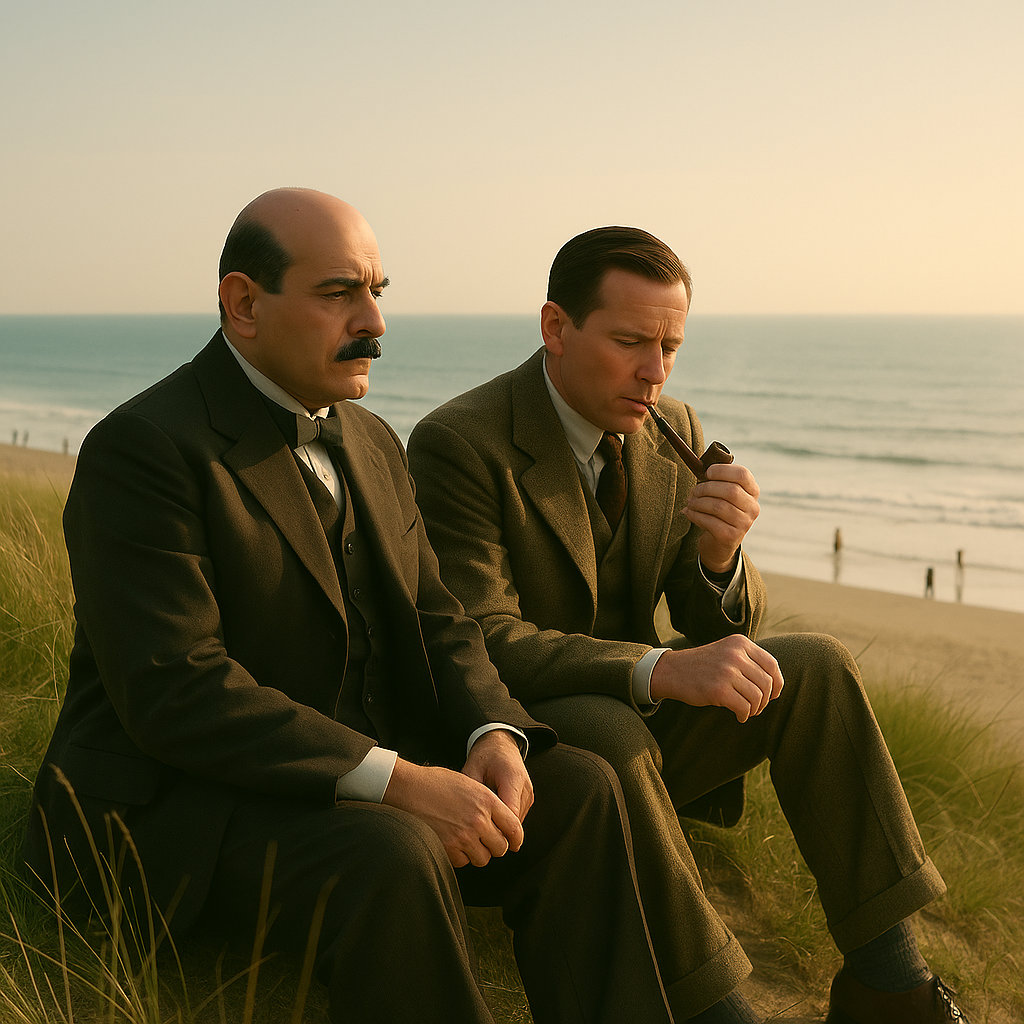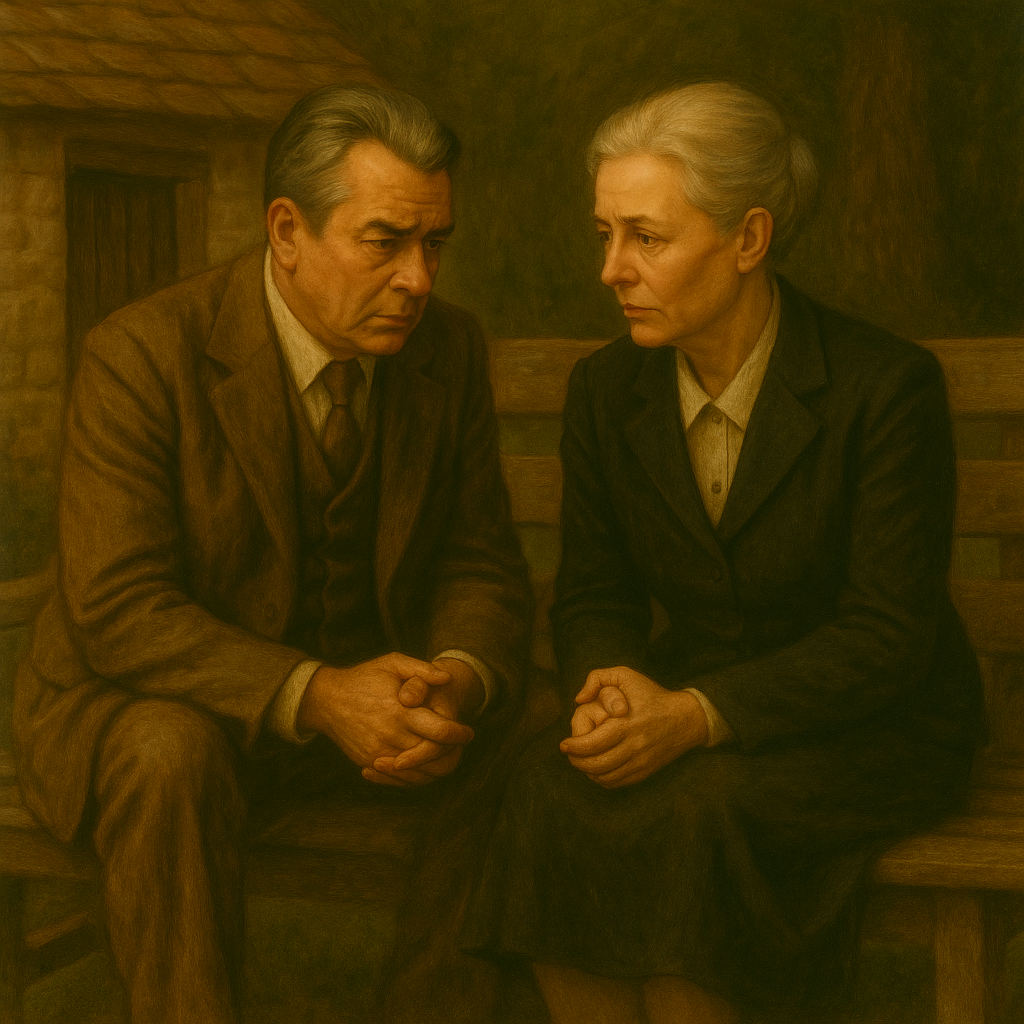
An Amazing Statement
驚くべき推理

The next moment Poirot embraced me warmly.
“Enfin! You have arrived. And all by yourself. It is superb!
Continue your reasoning. You are right. Decidedly we have done wrong to forget Georges Conneau.”
次の瞬間、ポワロは私を熱く抱きしめた。
「アンファン(ついに!)!たどり着きましたね。そして自分ひとりの力で。素晴らしい!
そのまま推理を続けなさい。君の言ったとおりです。我々は明らかにジョルジュ・コノーの存在を忘れていたのはうっかりしていました」

I was so flattered by the little man’s approval that I could hardly continue. But at last I collected my thoughts and went on.
“Georges Conneau disappeared twenty years ago, but we have no reason to believe that he is dead.”
小男の賞賛にすっかり気をよくした私は、少し舞い上がってしまい、なかなか続きを言い出せなかった。しかしようやく考えを整理して話を続けた。
「ジョルジュ・コノーは20年前に姿を消した、しかし、彼が死んだことを確信できる根拠はない」
“Aucunement,” agreed Poirot. “Proceed.”
「オーキュヌモン(まったくそのとおり)!」とポワロは同意した。「続けて」
“Therefore we will assume that he is alive.”
「ならば、彼が生きていると仮定しよう」
“Exactly.”
「そのとおり」
“Or that he was alive until recently.”
「あるいは、少なくとも最近まで生きていたと」
“De mieux en mieux!”
「ドゥ・ミユー・アン・ミユー!(ますます良くなってきた!)」
“We will presume,” I continued, my enthusiasm rising, “that he has fallen on evil days. He has become a criminal, an apache, a tramp—a what you will.
He chances to come to Merlinville. There he finds the woman he has never ceased to love.”
「では、こう考えてみよう——」私はますます調子に乗って続けた。「彼は不運な境遇に落ちぶれてしまった。犯罪者やアパッシュ(ならず者)、浮浪者——なんでもいいけど、そうなっていた。
そして偶然メリンヴィルに現れる。そこで、彼がかつて愛していた女性を見つけた」
“Eh eh! The sentimentality,” warned Poirot.
「えっ、えっ!、感傷的ですな」とポワロはたしなめた。
“Where one hates one also loves,” I quoted or misquoted.
「愛している者ほど、憎むものだ」と私は適当に引用したつもりで言った。
“At any rate he finds her there, living under an assumed name. But she has a new lover, the Englishman, Renauld.
Georges Conneau, the memory of old wrongs rising in him, quarrels with this Renauld. He lies in wait for him as he comes to visit his mistress, and stabs him in the back. Then, terrified at what he has done, he starts to dig a grave.
「とにかく、彼はそこで、偽名で暮らしている彼女を見つける。しかし、彼女には新しい恋人——英国人のルノー氏がいる。
過去の恨みが甦ったコノーは、ルノーと口論になる。彼はその女のもとへ向かうルノーを待ち伏せし、背後から刺し殺す。そして恐ろしくなって、遺体を埋めようと穴を掘り始める。
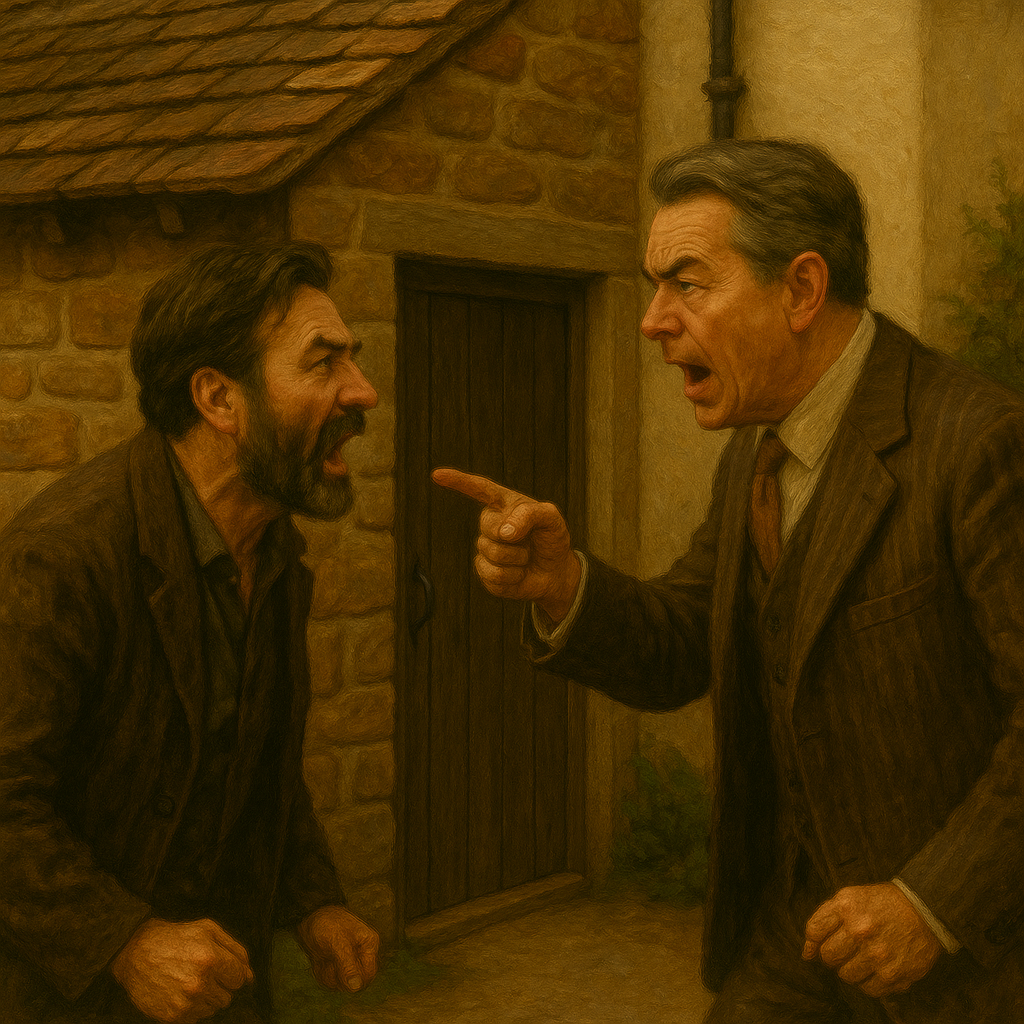
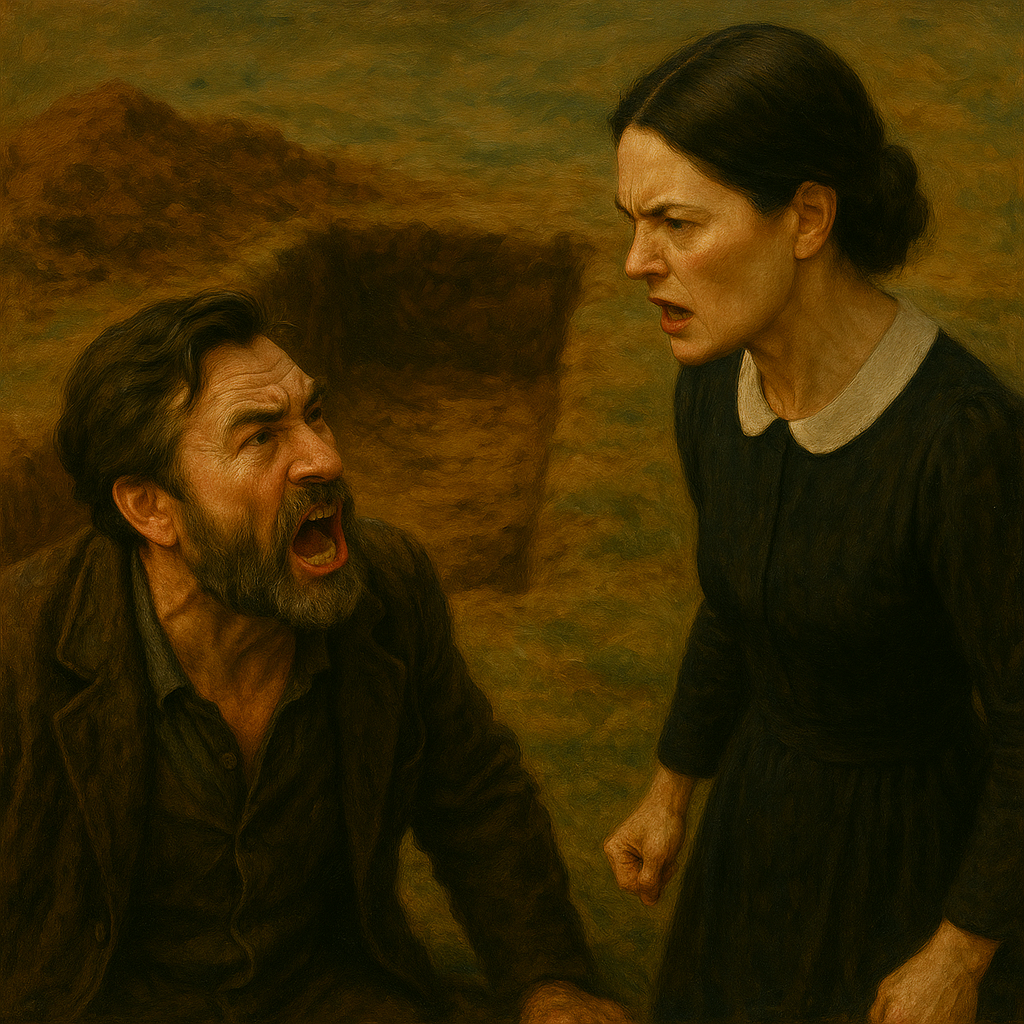
I imagine it likely that Madame Daubreuil comes out to look for her lover. She and Conneau have a terrible scene. He drags her into the shed, and there suddenly falls down in an epileptic fit.
そこへ、マダム・ドーブルイユが恋人を探して外へ出てくる。彼女とコノーは激しく口論する。コノーは彼女を小屋に引きずり込み、そこで突然てんかんの発作を起こして倒れる。
Now supposing Jack Renauld to appear. Madame Daubreuil tells him all, points out to him the dreadful consequences to her daughter if this scandal of the past is revived. His father’s murderer is dead—let them do their best to hush it up.
J
さて、そこへジャック・ルノーが現れたと仮定しよう。ドーブルイユ夫人はすべてを打ち明け、もし過去のスキャンダルが明るみに出れば娘にとってどれほどの害があるかを彼に訴える。父親の殺人者はすでに死んでいる——ならば何とか隠蔽しようと。
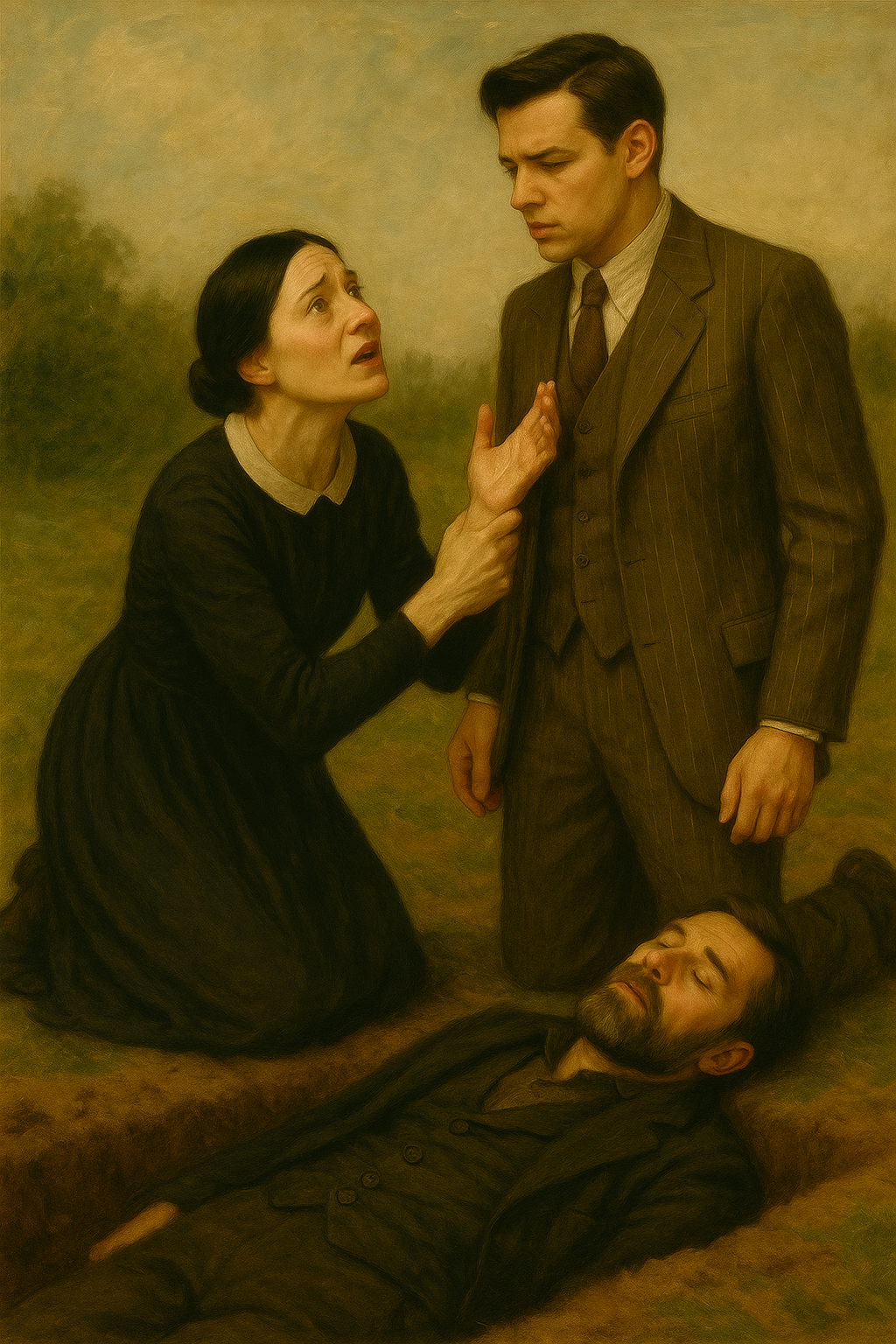
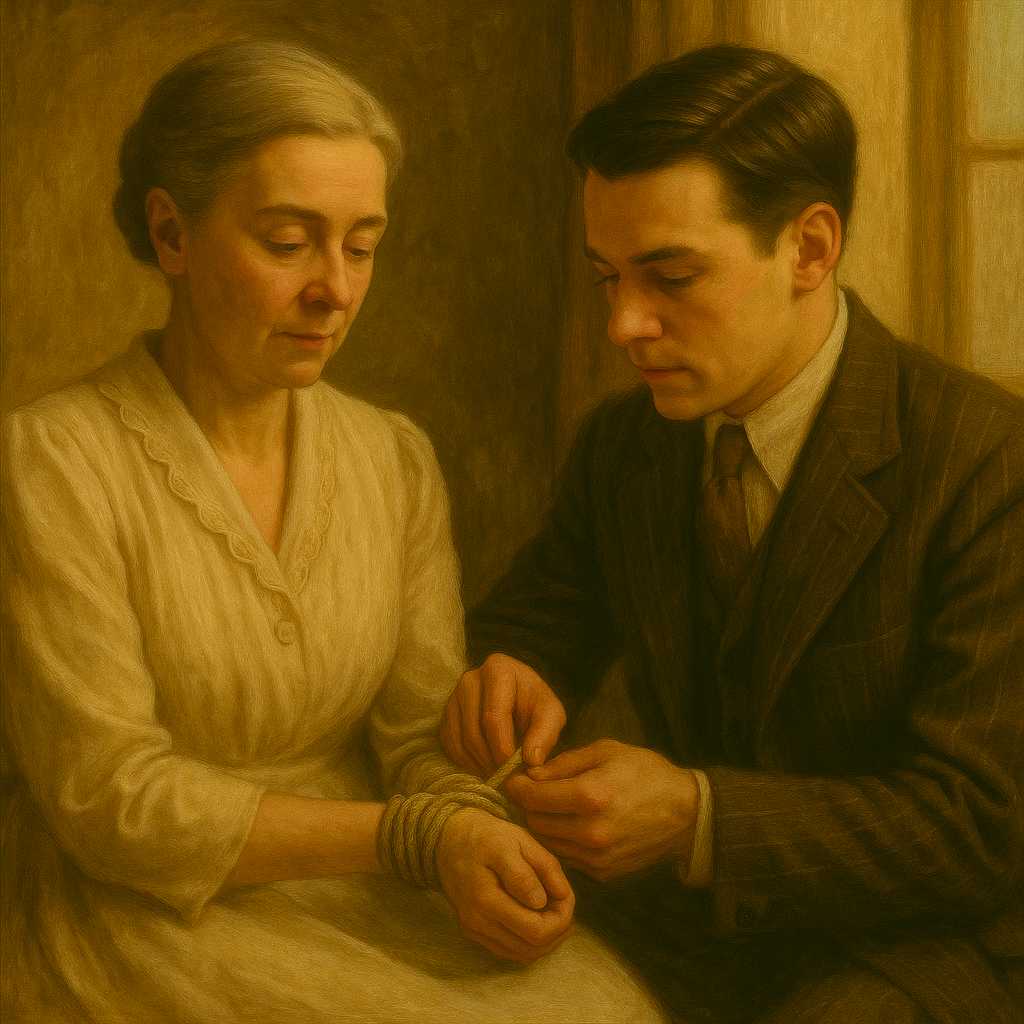
Jack Renauld consents—goes to the house and has an interview with his mother, winning her over to his point of view.
Primed with the story that Madame Daubreuil has suggested to him, she permits herself to be gagged and bound.
ジャック・ルノーは同意し、屋敷に戻って母親と話し合い、彼女を彼の考えに同意させる。
ドーブルイユ夫人が提案した計画を母親に教え込むと、母親は自ら進んで縄で縛られ、猿ぐつわをされる。

There, Poirot, what do you think of that?”
I leaned back, flushed with the pride of successful reconstruction.
どうだい、ポワロ、この推理をどう思う?」
私は誇らしげに椅子の背にもたれかかり、うまく再現できたので頬を紅潮させていた。

Poirot looked at me thoughtfully.
“I think that you should write for the Kinema, mon ami,” he remarked at last.
ポワロは思慮深げに私を見つめた。
「キネマ(映画)の脚本を書くべきだと思いますよ、モナミ」と彼はようやく言った。
“You mean—?”
「どういう意味だい……?」
“It would make a good film, the story that you have recounted to me there—but it bears no sort of resemblance to everyday life.”
「君が語ったその話は、実に良い映画になるということですよ——現実の生活と類似しているところがまったくないのです」
“I admit that I haven’t gone into all the details, but—”
「細かい点までは詰めていないことは認めるよ、しかし——」
“You have gone further—you have ignored them magnificently.
What about the way the two men were dressed?
Do you suggest that after stabbing his victim, Conneau removed his suit of clothes, donned it himself, and replaced the dagger?”
「君は飛躍しすぎてます——その細部を見事に無視しているのですよ。
被害者と犯人の服装の問題はどう説明します?
君は、コノーが男を刺したあと、服を脱がせ、自分が着て、再びナイフを刺し戻したとでもいうんですか?」
“I don’t see that that matters,” I objected rather huffily.
“He may have obtained clothes and money from Madame Daubreuil by threats earlier in the day.”
「それはたいした問題ではないと思う」と私はむっとして反論した。
「コノーはドーブルイユ夫人をその日の早い時間に脅迫していて、服と金を手に入れていた可能性だってある」
“By threats—eh? You seriously advance that supposition?”
「脅迫、え? それを本気で想定して話を進めているのですか?」
“Certainly. He could have threatened to reveal her identity to the Renaulds, which would probably have put an end to all hopes of her daughter’s marriage.”
「もちろん。コノーがドーブルイユ夫人の正体をルノーの家族に暴露すると脅せば、娘との結婚の話も台無しになるだろうし」
“You are wrong, Hastings. He could not blackmail her, for she had the whip hand.
Georges Conneau, remember, is still wanted for murder. A word from her and he is in danger of the guillotine.”
「君は間違っていますよ、ヘイスティングス。コノーはドーブルイユ夫人を脅迫することなどできなかった。なぜなら、彼女の方が優位な立場にあったのだから。
覚えているように、ジョルジュ・コノーは殺人容疑でいまだに指名手配されています。彼女の一言で、彼はギロチン送りです」
I was forced, rather reluctantly, to admit the truth of this.
“Your theory,” I remarked acidly, “is doubtless correct as to all the details?”
私は不本意ながらもその通りだと認めざるを得なかった。
「君の理論は、すべての点で正しいんだね?」と私は皮肉気味に言った。
“My theory is the truth,” said Poirot quietly.
“And the truth is necessarily correct. In your theory you made a fundamental error.
You permitted your imagination to lead you astray with midnight assignations and passionate love scenes.
But in investigating crime we must take our stand upon the commonplace. Shall I demonstrate my methods to you?”
「私の理論は“真実”です」とポワロは静かに言った。
「そして真実は、必然的に正しいものです。君の理論は根本的に誤っています。君は、真夜中の密会や情熱的な愛の場面など、想像力に引き込まれてしまってます。
しかし犯罪を捜査するには、我々は“日常のありふれた事実”に立脚せねばなりません。私の方法論(メソド)を君に示してみましょうか?」
“Oh, by all means let us have a demonstration!”
「ああ、ぜひともそれをお願いしたいね!」
Poirot sat very upright and began, wagging his forefinger emphatically to emphasize his points.
“I will start as you started from the basic fact of Georges Conneau.
Now the story told by Madame Beroldy in court as to the ‘Russians’ was admittedly a fabrication. If she was innocent of connivance in the crime, it was concocted by her, and by her only as she stated.
If, on the other hand, she was not innocent, it might have been invented by either her or Georges Conneau.
ポワロはまっすぐに背筋を伸ばし、話すたびに人差し指を力強く振って、要点を強調しながら語り始めた。
「君がジョルジュ・コノーという基本的事実から出発したように、私もそこから始めよう。
ベロルディ夫人が法廷で語った“ロシア人たち”の話は、明らかに作り話でした。もし彼女が事件への関与に無関係だったなら、それは彼女だけで考え出されたものだと、彼女自身がそう述べています。
だが、もし彼女が無実でなかったのなら、その話は彼女か、あるいはジョルジュ・コノーが考え出した可能性があるのです。
“Now in this case we are investigating, we meet the same tale.
As I pointed out to you, the facts render it very unlikely that Madame Daubreuil inspired it. So we turn to the hypothesis that the story had its origin in the brain of Georges Conneau.
Very good. Georges Conneau, therefore, planned the crime with Madame Renauld as his accomplice. She is in the limelight, and behind her is a shadowy figure whose alias is unknown to us.
「さて、今回我々が捜査している事件では、また同じような話が出てきます。
すでに君に指摘したとおり、事実関係から考えて、ドーブルイユ夫人がこの話をでっち上げた可能性は極めて低い。となると、この話は、ジョルジュ・コノーの頭の中かで生まれたと仮定しなければなりません。
いいですね。つまり、ジョルジュ・コノーは、マダム・ルノーを共犯としてこの犯罪を計画したということです。彼女は表に立ち、そしてその背後には、その偽名さえ我々には分かっていない影の人物がいるというわけです。
“Now let us go carefully over the Renauld Case from the beginning, setting down each significant point in its chronological order.
You have a notebook and pencil?
Good. Now what is the earliest point to note down?”
「では、ルノー事件の発端から注意深く順を追って、重要な点を時系列で確認してい来ましょう。
君、ノートと鉛筆はありますか?
よろしい。では、最初に記録すべき点は何です?」
“The letter to you?”
「君に来た手紙だね?」
“That was the first we knew of it, but it is not the proper beginning of the case.
The first point of any significance, I should say, is the change that came over M. Renauld shortly after arriving in Merlinville, and which is attested to by several witnesses.
We have also to consider his friendship with Madame Daubreuil, and the large sums of money paid over to her. From thence we can come directly to the 23rd May.”
「それは我々が知る最初の手がかりですが、この事件の本当の始まりではありません。
私の見るところ、最初に注目すべき点は、ルノー氏がメリンヴィルに来て間もなく様子が一変したという事実で、複数の証人によって証言されています。
そして彼がドーブルイユ夫人と親しくしていたこと、大金を彼女に渡していたことも考慮すべきです。そこから直接、5月23日に話を進めましょう」
Poirot paused, cleared his throat, and signed to me to write.
ポワロは一度言葉を止めて咳払いし、私に書くよう合図した。
“23rd May. M. Renauld quarrels with his son over latter’s wish to marry Marthe Daubreuil. Son leaves for Paris.
“24th May. M. Renauld alters his will, leaving entire control of his fortune in his wife’s hands.
“7th June. Quarrel with tramp in garden, witnessed by Marthe Daubreuil.
“Letter written to M. Hercule Poirot, imploring assistance.
“Telegram sent to Jack Renauld, bidding him proceed by the Anzora to Buenos Ayres.
“Chauffeur, Masters, sent off on a holiday.
“Visit of a lady, that evening. As he is seeing her out, his words are ‘Yes, yes—but for God’s sake go now. …’ ”
Poirot paused.
「5月23日:ルノー氏、息子がマルト・ドーブルイユとの結婚を望んでいることに激怒し口論。息子はパリへ向かう。
5月24日:ルノー氏、遺言を変更し、全財産の管理を妻に託す。
6月7日:庭で浮浪者と口論。
マルト・ドーブルイユが目撃。
ポワロ宛の手紙を書く。助力を懇願。
ジャック・ルノー宛に電報を送り、アンズーラ号でブエノスアイレスへ向かわせるよう指示。
運転手マスターズを休暇に出す。
その夜、女性の訪問あり。見送りの際、ルノー氏の言葉:『ああ、ああ――だが、頼む、今すぐ行ってくれ……』」
ポワロはそこで再び止まり、言った。
“There, Hastings, take each of those facts one by one, consider them carefully by themselves and in relation to the whole, and see if you do not get new light on the matter.”
「さあヘイスティングス。これらの事実を一つ一つ丁寧に個別に見て、そして全体との関係をよく考えてみてごらん、きっと新しい光が見えてくるはずだ」

I endeavoured conscientiously to do as he had said. After a moment or two, I said rather doubtfully:
“As to the first points, the question seems to be whether we adopt the theory of blackmail, or of an infatuation for this woman.”
私は彼の言うとおり、入念に考えてみようとした。しばらくして、やや自信なげに口を開いた。
「最初の論点としては、この女性に関する説明が、脅迫だったか、それとも熱愛だったのかが問題になりそうだ」
“Blackmail, decidedly. You heard what Stonor said as to his character and habits.”
「それは明らかに脅迫です。ルノー氏の性格や習慣について、ストーナーが言っていたのを、君も聞いたでしょう」
“Mrs. Renauld did not confirm his view,” I argued.
「でも、ルノー夫人はその見解を認めなかったよ」と私は反論した。
“We have already seen that Madame Renauld’s testimony cannot be relied upon in any way. We must trust to Stonor on that point.”
「だが我々はすでに、マダム・ルノーの証言はまったく信頼できないことがわかっています。その点はストーナーを信じるしかないでしょう」
“Still, if Renauld had an affair with a woman called Bella, there seems no inherent improbability in his having another with Madame Daubreuil.”
「それでも、ルノー氏が“ベラ”という名の女性と関係を持っていたとしたら、ドーブルイユ夫人と関係があったとしても、普通に考えて不自然ではないよ」
“None whatever, I grant you, Hastings. But did he?”
「それに異論はない、もっともです、ヘイスティングス。しかし、本当にそうだったのでしょうか?」
“The letter, Poirot. You forget the letter.”
「ポワロ、手紙があるよ。君はあの手紙を忘れている!」
“No, I do not forget. But what makes you think that letter was written to M. Renauld?”
「いいえ、忘れてはいません。しかし、どうして君は、あの手紙がルノー氏宛てに書かれたものと思うのですか?」

“Why it was found in his pocket and—and—”
「なぜって、それが彼のポケットに見つかったし——それと、それと——」
“And that is all!” cut in Poirot.
“There was no mention of any name to show to whom the letter was addressed. We assumed it was to the dead man because it was in the pocket of his overcoat.
Now, mon ami, something about that overcoat struck me as unusual. I measured it, and made the remark that he wore his overcoat very long. That remark should have given you to think.”
「それだけなんです!』」とポワロが遮った。
「その手紙に、宛名を示すような名前は一切書かれていなかった。手紙が死体のオーバー外套のポケットに入っていたという理由だけで、我々は当然のようにそれが被害者宛てだと思い込んだ。
だが、モナミ、私はあのオーバー外套に何か妙な点があると感じた。そこで私はそれを測り、『彼はとても長い外套を着ている』という発言をしたのだ。あの言葉で君は何か気づくべきだったのだよ」

“I thought you were just saying it for the sake of saying something,” I confessed.
「ただ何か言いたいだけだと思ってたよ」と私は白状した。
“Ah, quelle idée!
Later you observed me measuring the overcoat of M. Jack Renauld.
Eh bien, M. Jack Renauld wears his overcoat very short.
Put those two facts together with a third, namely that M. Jack Renauld flung out of the house in a hurry on his departure for Paris, and tell me what you make of it!”
「ああ、ケル・イデ!(なんてことだ!)
その後、私がジャック・ルノー氏のオーバー外套の寸法を測っていたのを見ていましたよね。
エ・ビヤン(さて)、ジャック・ルノー氏は非常に短い外套を着ているのです。
この二つの事実に、さらに三つ目——すなわち、ジャック・ルノー氏がパリに出発する際、慌てて家を飛び出したという点——を合わせて考えてみたごらん。君はどう思いますか?」

“I see,” I said slowly, as the meaning of Poirot’s remarks bore in upon me.
“That letter was written to Jack Renauld—not to his father. He caught up the wrong overcoat in his haste and agitation.”
「わかった」と私はゆっくり言った。ポワロの言葉の意味がだんだんと私にしみ込んできた。
「あの手紙はジャック・ルノー宛てだったんだ——父親ではなく。彼は焦って動揺のあまり、間違えて父の外套を掴んでしまったんだ」
Poirot nodded.
“Précisement! We can return to this point later.
For the moment let us content ourselves with accepting the letter as having nothing to do with M. Renauld père, and pass to the next chronological event.”
ポワロは頷いた。
「プレシズマン(まさしくその通り)! この点については後にしましょう。
今はまずその手紙が、父親のルノー氏とは何も関係ないということで十分です、そして、次の時系列的な出来事に進みましょう」

“May 23rd,” I read, “M. Renauld quarrels with his son over latter’s wish to marry Marthe Daubreuil. Son leaves for Paris.
I don’t see anything much to remark upon there, and the altering of the will the following day seems straightforward enough.
It was the direct result of the quarrel.”
「5月23日」と私は読み上げた。「ルノー氏、息子がマルト・ドーブルイユと結婚したいと言い張ったことで口論。息子はパリへ向かう。
ここには特に注目すべきことはないし、翌日の遺言書の変更もわかりやすい。それは喧嘩の直接的な結果だよ」
“We agree, mon ami—at least as to the cause.
But what exact motive underlay this procedure of M. Renauld’s?”
「そこまでは同意だ、モナミ——少なくとも原因についてはですが。
しかし、何か本当の理由が、ルノー氏がそうした行動の裏にあるのではないですか?」

I opened my eyes in surprise.
“Anger against his son of course
私は驚いて目を見開いた。
「もちろん、息子への怒りだろう」
“Yet he wrote him affectionate letters to Paris?”
「それなのに彼は、パリの息子に愛情のこもった手紙を書いたのですか?」
“So Jack Renauld says, but he cannot produce them.”
「ジャック・ルノーはそう言ってるけど、彼はその手紙を実際に見せることができなかった」
“Well, let us pass from that.”
「まあ、いいでしょう、それは置いておいて次にいきましょう」
“Now we come to the day of the tragedy. You have placed the events of the morning in a certain order. Have you any justification for that?”
「さて、悲劇の当日に来ましたね。君は朝の出来事をある一定の順序で並べたね。それは何か確かな理由があるのかい?」
“I have ascertained that the letter to me was posted at the same time as the telegram was despatched.
Masters was informed he could take a holiday shortly afterwards.
In my opinion the quarrel with the tramp took place anterior to these happenings.”
「私宛の手紙が郵便に出された時刻は、ジャック宛の電報が打たれた時刻と同じなのは確認済みです。
マスターズにはその直後、休暇が与えられました。
そして私の考えでは、浮浪者との口論は、これらの出来事よりも前だったはずです」
“I do not see that you can fix that definitely—unless you question Mademoiselle Dabreuil again.”
「それは確定することはできないと、僕は思うけどね——ドーブルイユ嬢にもう一度尋ねない限りは」
“There is no need. I am sure of it. And if you do not see that, you see nothing, Hastings!”
「その必要はありませんよ。私は確信しています。そして、もし君がそれがわからないなら、何も見えていないことになりますよ、ヘイスティングス!」
I looked at him for a moment.
“Of course! I am an idiot.
If the tramp was Georges Conneau, it was after the stormy interview with him that Mr. Renauld apprehended danger.
He sent away the chauffeur, Masters, whom he suspected of being in the other’s pay, he wired to his son, and sent for you.”
私は彼をじっと見つめた。
「そうか!——私は馬鹿だった。
もしその浮浪者がジョルジュ・コノーだったとすれば、ルノー氏が危険を察知したのは、彼との激しいやりとりの後のはずだ。
だから、相手に買収されているかもしれないと疑った運転手のマスターズを家から遠ざけ、息子に電報を送り、君に助けを求めたんだ」
A faint smile crossed Poirot’s lips.
“You do not think it strange that he should use exactly the same expressions in his letter as Madame Renauld used later in her story?
If the mention of Santiago was a blind, why should Renauld speak of it, and—what is more—send his son there?”
ポワロの唇にかすかな笑みが浮かんだ。
「君は奇妙だとは思いませんか?彼が自分の手紙の中で、ルノー夫人が後に語った話とまったく同じ表現を使っていたことが」
もし『サンティアゴ』の件が『ごまかし』だったとすれば、なぜルノー氏はそれを口にしたのか——さらに、なぜ——その場所に息子を送ったのか?」
“It is puzzling, I admit, but perhaps we shall find some explanation later.
We come now to the evening, and the visit of the mysterious lady. I confess that that fairly baffles me, unless it was Madame Daubreuil, as Françoise all along maintained.”
「それは確かに不思議だとは思うけど、しかし、そのうち何か説明がつくかもしれない。
今度はあの晩の謎の女性の訪問だね。正直言ってこれはまったく当惑してる、僕にはフランソワーズが一貫して言い続けたように、ドーブルイユ夫人だったとしか思えないよ」
Poirot shook his head.
“My friend, my friend, where are your wits wandering?
Remember the fragment of cheque, and the fact that the name Bella Duveen was faintly familiar to Stonor, and I think we may take it for granted that Bella Duveen is the full name of Jack’s unknown correspondent, and that it was she who came to the Villa Geneviève that night.
Whether she intended to see Jack, or whether she meant all along to appeal to his father we cannot be certain, but I think we may assume that this is what occurred.
ポワロは首を横に振った。
「『私の友、ヘイスティングス、君の知恵はどこをさまよっているのだ?
小切手の断片のこと、そして、“ベラ・デュヴィーン”という名前がストーナーにどこか聞き覚えがあるようだったことを思いだせば、我々は仮にこう考えていいでは——ベラ・デュヴィーンがジャックの“謎の手紙”の書いたフルネームであり、あの晩、ジュヌヴィエーヴ荘を訪ねてきたのも彼女だった、と。
彼女がジャックに会おうとしていたのか、それとも最初から彼の父親に訴えようとしていたのか、それは断定できないが、おそらく次のようなことが起こったと私は考えています。
She produced her claim upon Jack, probably showed letters that he had written her, and the older man tried to buy her off by writing a cheque. This she indignantly tore up.
The terms of her letter are those of a woman genuinely in love, and she would probably deeply resent being offered money.
彼女はジャックに対する自分の立場を主張し、おそらく彼からの手紙を見せたのではないか、そして父親であるルノー氏は、彼女を金で黙らせようとして小切手を切った。彼女は激しく怒ってそれを破り捨てた。
彼女の書いた手紙の文面から見て、それは真剣な愛情に基づくものであり、金で解決されることに深く憤ったに違いありません。
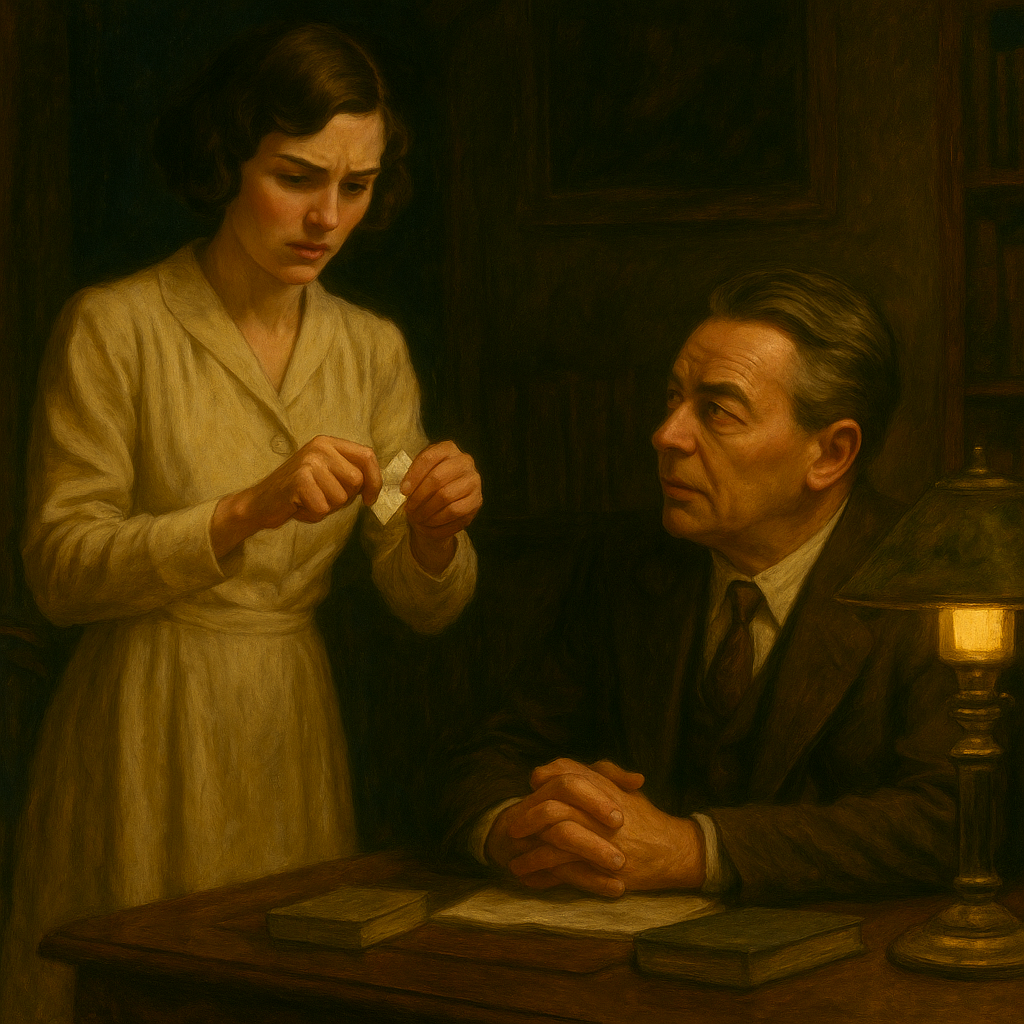
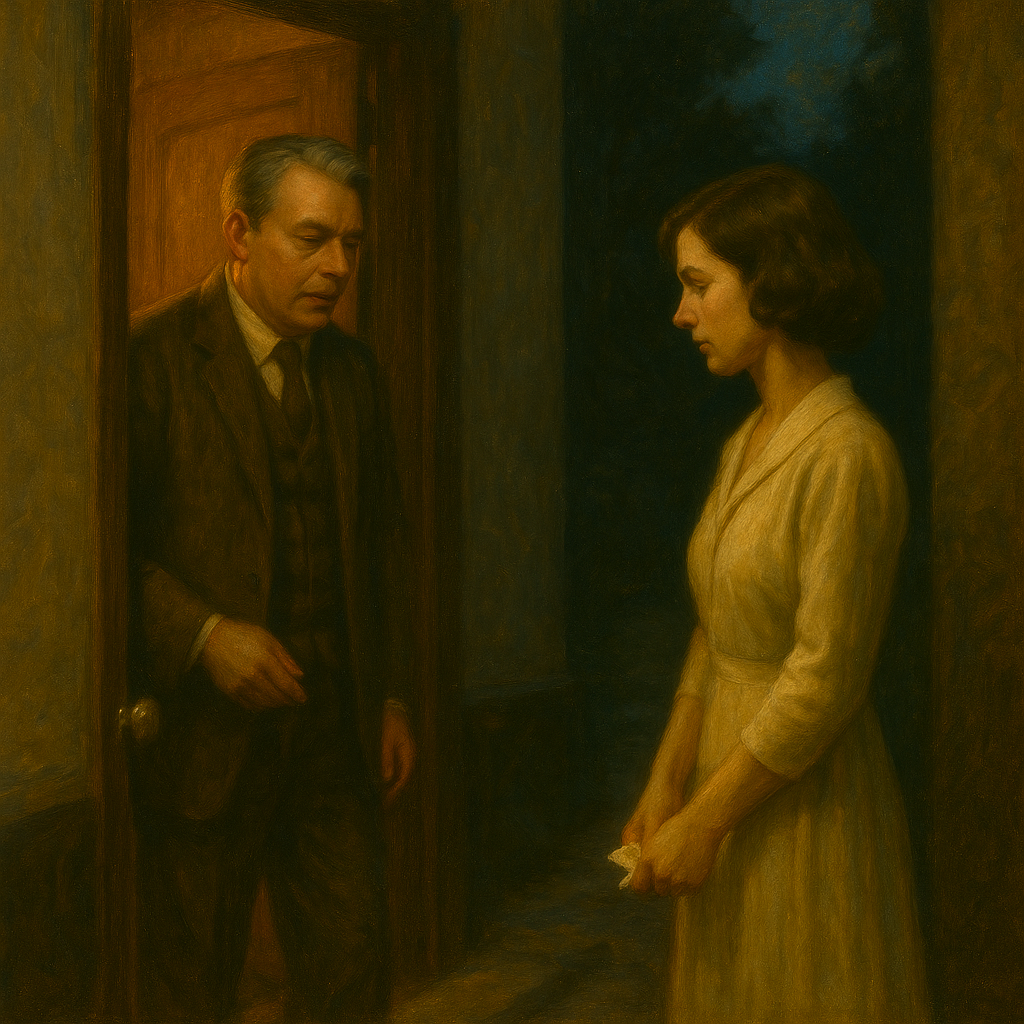
In the end he got rid of her, and here the words that he used are significant.”
“ ‘Yes, yes, but for God’s sake go now,’ ” I repeated.
最終的に、ルノー氏はなんとか彼女を追い返しましたが、ここで、彼の言葉が非常に意味深になるのです」
『“わかった、わかった、だが頼むから、今すぐ帰ってくれ……”』と私は繰り返した。
“They seem to me a little vehement, perhaps, that is all.”
「ちょっと焦ってる気はするけど、それだけのことでは?」

“That is enough. He was desperately anxious for the girl to go. Why?
Not only because the interview was unpleasant. No, it was the time that was slipping by, and for some reason time was precious.”
「それだけで十分ですよ。彼はどうしてもその娘を帰らせたかったのです。なぜか?
単に話し合いが不愉快だったからだけではありません。ではなく、時間が過ぎていったからです、何か理由があって、時間が貴重だったのです」
“Why should it be?” I asked, bewildered.
「なぜそんなに?」と私は困惑して尋ねた。

“That is what we ask ourselves. Why should it be?
But later we have the incident of the wrist watch—which again shows us that time plays a very important part in the crime.
We are now fast approaching the actual drama. It is half-past ten when Bella Duveen leaves, and by the evidence of the wrist watch we know that the crime was committed, or at any rate that it was staged, before twelve o’clock.
「それが、我々が自問自答すべきことなんですよ——なぜ、そこまで時間を気にしていたのか?
そして後に、腕時計のエピソードが出てくる——これもまた、時間がこの事件で非常に重要な要素であること示しています。
我々は今、現実の劇的な事件に急速に近づいています。ベラ・デュヴィーンが立ち去ったのは午後10時半、そして腕時計の証拠から、事件が起きた、もしくは少なくとも仕組まれたのは、12時より前であることがわかってます。
We have reviewed all the events anterior to the murder, there remains only one unplaced.
By the doctor’s evidence, the tramp, when found, had been dead at least forty-eight hours—with a possible margin of twenty-four hours more.
Now, with no other facts to help me than those we have discussed, I place the death as having occurred on the morning of June 7th.”
殺人事件の前に起こった出来事は、これですべて検討し尽くしましたが、まだ位置付けられていない出来事がひとつだけ残っています。
医師の証言によれば、“浮浪者”の遺体が発見された時、すでに少なくとも48時間、あるいは最大で72時間が経過していました。
そこで、他に材料となる事実が何もない状況で、私はこう判断しました——その浮浪者の死は、6月7日の朝に起こった」
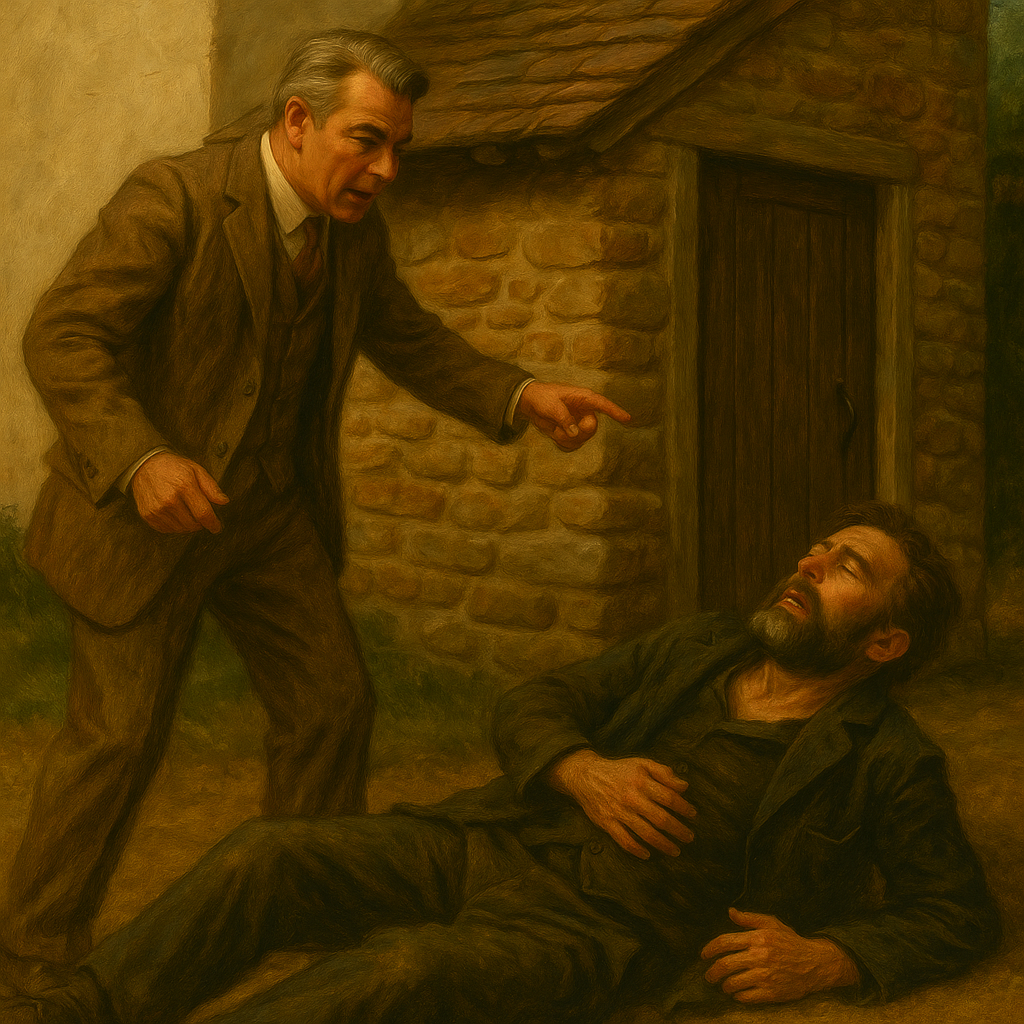
I stared at him, stupefied.
“But how? Why? How can you possibly know?”
私は呆然として彼を見つめた。
「でも、なぜ? どうして? どうやってそんなことがわかるんだ?」
“Because only in that way can the sequence of events be logically explained.
Mon ami, I have taken you step by step along the way. Do you not now see what is so glaringly plain?”
「なぜなら、そう位置づけることだけが、すべての出来事の順序を論理的に説明できるからです。
モナミ、私は君を一歩ずつ導いてきました。今、これほど明らかになったことがわからないのですか?」
“My dear Poirot, I can’t see anything glaring about it.
I did think I was beginning to see my way before, but I’m now hopelessly fogged.”
「なあ、ポワロ、僕には“明らかになったこと”が何もわからないよ。
さっきまでは少し方向性が見えてきた気がしたけど、今ではさっぱり霧の中だ」
Poirot looked at me sadly, and shook his head.
“Mon Dieu! But it is triste! A good intelligence—and so deplorably lacking in method. There is an exercise most excellent for the development of the little grey cells. I will impart it to you—”
ポワロは悲しげに私を見て、首を振った。
「モン・デュー!(神よ…)トリストゥ(悲しいことだ!)
知性はあるのに——肝心なメソド(秩序正しい考え方)というものがまるで欠けているのだ…… “灰色の脳細胞”を鍛えるには、ある極めて良い練習法がある。それを君に教えて——」
“For Heaven’s sake, not now! You really are the most irritating of fellows, Poirot. For goodness’ sake, get on and tell me who killed M. Renauld.”
「お願いだから、今は勘弁だ! 本当に君は一番イライラさせる男だよ、ポワロ。頼むから、とっとと、誰がルノー氏を殺したのか教えてくれよ!」
“That is just what I am not sure of as yet.”
「それが——まだ私にもはっきりとは分かっていないのです」
“But you said it was glaringly clear?”
「でも、“明らかになった”って言ったじゃないか!?」
“We talk at cross-purposes, my friend.
Remember, it is two crimes we are investigating—for which, as I pointed out to you, we have the necessary two bodies.
There, there, ne vous impatientez pas! I explain all.
To begin with, we apply our psychology. We find three points at which M. Renauld displays a distinct change of view and action—three psychological points therefore.
The first occurs immediately after arriving in Merlinville, the second after quarrelling with his son on a certain subject, the third on the morning of June 7th.
Now for the three causes. We can attribute No. 1 to meeting Madame Daubreuil. No. 2 is indirectly connected with her since it concerns a marriage between M. Renauld’s son and her daughter. But the cause of No. 3 is hidden from us. We have to deduce it.
Now, mon ami, let me ask you a question; who do we believe to have planned this crime?”
「話がすれ違っているんですよ、ヘイスティングス。
思い出してください、我々が今捜査しているのは二つの犯罪です——そのために必要な二つの死体があることは、私は君に指摘したはずです。
まあまあ、ヌ・ヴ・アンパシヤンテ・パ!(焦らないで!)、すべて説明しましょう。
まず最初に、心理学を適用します。その結果、ルノー氏が明らかに態度や考え方を変えた三つの時点を見つけることができます——つまり三つの心理的ポイントです。
一つ目はメリンヴィルに到着した直後——二つ目は、ある問題で息子と口論した後——三つ目は6月7日の朝です。
さて、その三つの原因を考えてみます。一つ目は、ドーブルイユ夫人との出会いが原因です。二つ目もルノー氏の息子と彼女の娘との結婚話が原因で、彼女は間接的に関連しています。しかし、三つ目の原因が我々には見えてこない。推理で導き出さねばならないのです。
さて、モナミ、君に質問させてください。我々はこの犯罪を計画したのは誰だと考えればいいのでしょう?」
“Georges Conneau,” I said doubtfully, eyeing Poirot warily.
「ジョルジュ・コノー」と私は疑い深げに言い、ポワロを警戒するように見た。
“Exactly.
Now Giraud laid it down as an axiom that a woman lies to save herself, the man she loves, and her child.
Since we are satisfied that was Georges Conneau who dictated the lie to her, and as Georges Conneau is not Jack Renauld, follows that the third case is put out of court.
And, still attributing the crime to Georges Conneau, the first is equally so. So we are forced to the second—that Madame Renauld lied for the sake of the man she loved—or in other words, for the sake of Georges Conneau. You agree to that.”
「その通りです。
ところで、ジローは、女は自分自身、愛する男、そして自分の子供を守るために嘘をつくものだという原則を立てたましたね。
我々は、ルノー夫人がついた嘘はジョルジュ・コノーによって指示されたものだと考えています——まず、ジョルジュ・コノーがジャック・ルノーではない以上、三つ目のケース(息子のため)は除外される。
そして、今なお、ジョルジュ・コノーが犯人であるとするなら、一つ目のケース(ルノー夫人自身のため)も同様に除外される。となると、二つ目——マダム・ルノーが愛する男のため——すなわち、ジョルジュ・コノーのためということになる。君もそれには同意するでしょう」
“Yes,” I admitted. “It seems logical enough.”
「ええ」と私は認めた。「十分、理論的だと思う」
“Bien! Madame Renauld loves Georges Conneau. Who, then, is Georges Conneau?”
「ビヤン(よし)! ルノー夫人はジョルジュ・コノーを愛していた。では、ジョルジュ・コノーとは誰か?」
“The tramp.”
「浮浪者だ」
“Have we any evidence to show that Madame Renauld loved the tramp?”
「ルノー夫人が浮浪者を愛していたという証拠は、我々にあるでしょうか?」
“No, but—”
「いや、しかし——」
“Very well then. Do not cling to theories where facts no longer support them. Ask yourself instead who Madame Renauld did love.”
「そういうことです。事実によって裏付けることのできない理論にしがみつくのはやめるのです。代わりに自分に聞いてみるのです——ルノー夫人が愛していたのは誰か?」
I shook my head perplexed.
私は困惑して首を振った。
“Mais, oui, you know perfectly. Who did Madame Renauld love so dearly that when she saw his dead body, she fell down in a swoon?”
「メ・ウィ(もちろん)、君はよく知っているはずです。ルノー夫人が、彼の遺体を見た瞬間に失神するほど愛していた男は誰なのか?」
I stared dumbfounded.
“Her husband?” I gasped.
私は呆然とした。
「……彼女の夫?」私は息を呑んだ。
Poirot nodded.
“Her husband—or Georges Conneau, whichever you like to call him.”
ポワロは頷いた。
「そう、彼女の夫です——あるいはジョルジュ・コノーと君が呼びたいならどちらでも」
I rallied myself.
“But it’s impossible.”
私は気を取り直して言った。
「でも、それは不可能だ!」
“How ‘impossible?’
Did we not agree just now that Madame Daubreuil was in a position to blackmail Georges Conneau?”
「なぜ不可能なんですか?
つい先ほど我々は、ドーブルイユ夫人はジョルジュ・コノーを恐喝できる立場だったと同意したではないですか?」
“Yes, but—”
「ああ、しかし——」
“And did she not very effectively blackmail M. Renauld?”
「それに、彼女はルノー氏を実際に恐喝に成功していたではないですか?」
“That may be true enough, but—”
「それは確かに事実かもしれない、しかし——」
“And is it not a fact that we know nothing of M. Renauld’s youth and upbringing?
That he springs suddenly into existence as a French Canadian exactly twenty-two years ago?”
「そして、ルノー氏の若い頃や出自について我々は何も知らないのというのが事実ではないですか?
ちょうど22年前に、突然、フランス系カナダ人として現れたのではないですか?」
“All that is so,” I said more firmly, “but you seem to me to be overlooking one salient point.”
「それはその通りだ」と私は少し自信を取り戻しながら言った。「しかし、君は一つの重要な点を見落としているとようだ」
“What is it, my friend?”
「それは何ですか、ヘイスティングス?」
“Why, we have admitted Georges Conneau planned the crime. That brings us to the ridiculous statement that he planned his own murder!”
「それは、我々はジョルジュ・コノーがこの犯罪を計画したと認めたことだよ。そうすると我々は、彼が自分の殺害を計画したという馬鹿げた話に行き着くことになってしまう!」
“Eh bien, mon ami,” said Poirot placidly, “that is just what he did do!”
「エ・ビヤン(うむ、そうです)、モナミ」とポワロは穏やかに言った。「まさにそれが、彼がしたことなのです!」


以下がご指定の英文の日本語訳です:
ご希望なら、この先の翻訳も続けます!
ご希望であれば、この先の続きや文法解説も可能です。