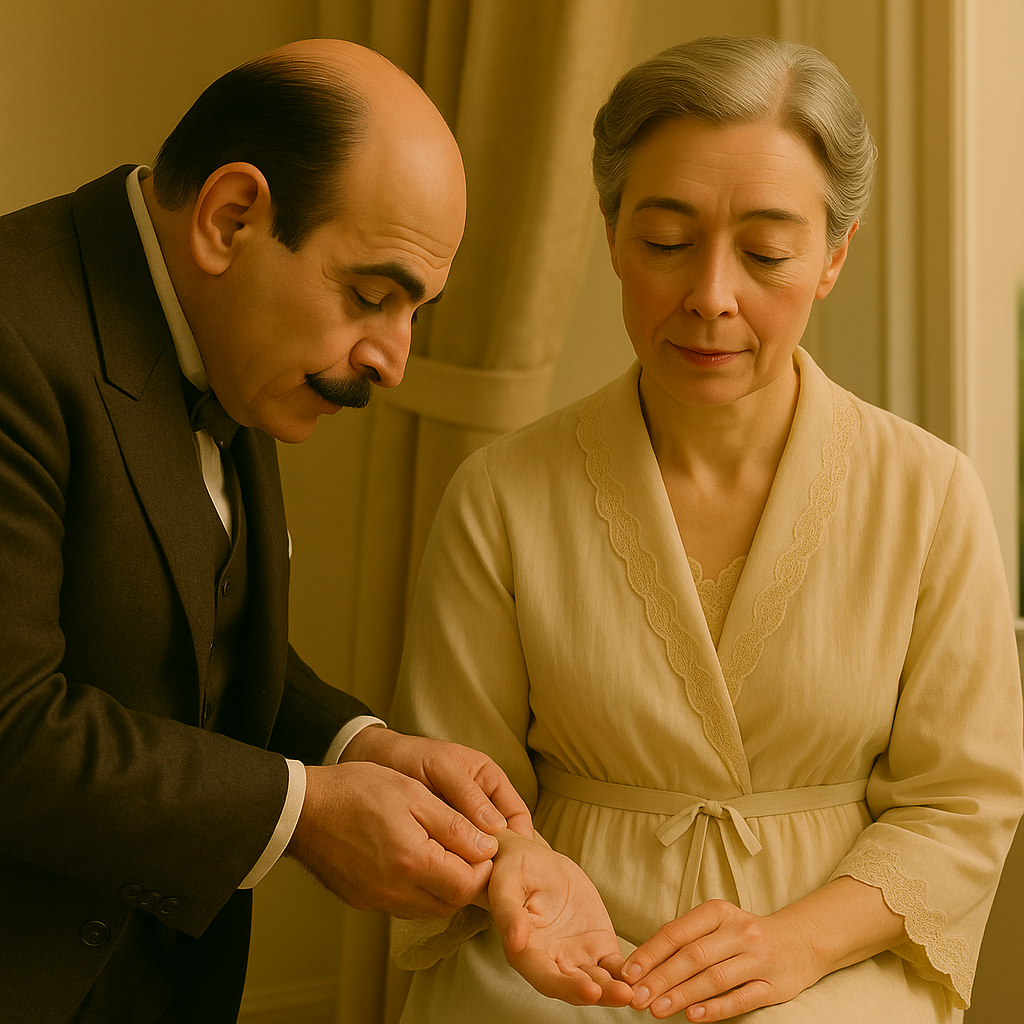
Jack Renauld
ジャック・ルノー
What the next development of the conversation would have been, I cannot say, for at that moment the door was thrown violently open, and a tall young man strode into the room.
会話の次の展開がどうなったかはわからない。というのも、その瞬間、ドアが激しく開かれ、背の高い若者が部屋に飛び込んできたからだ。
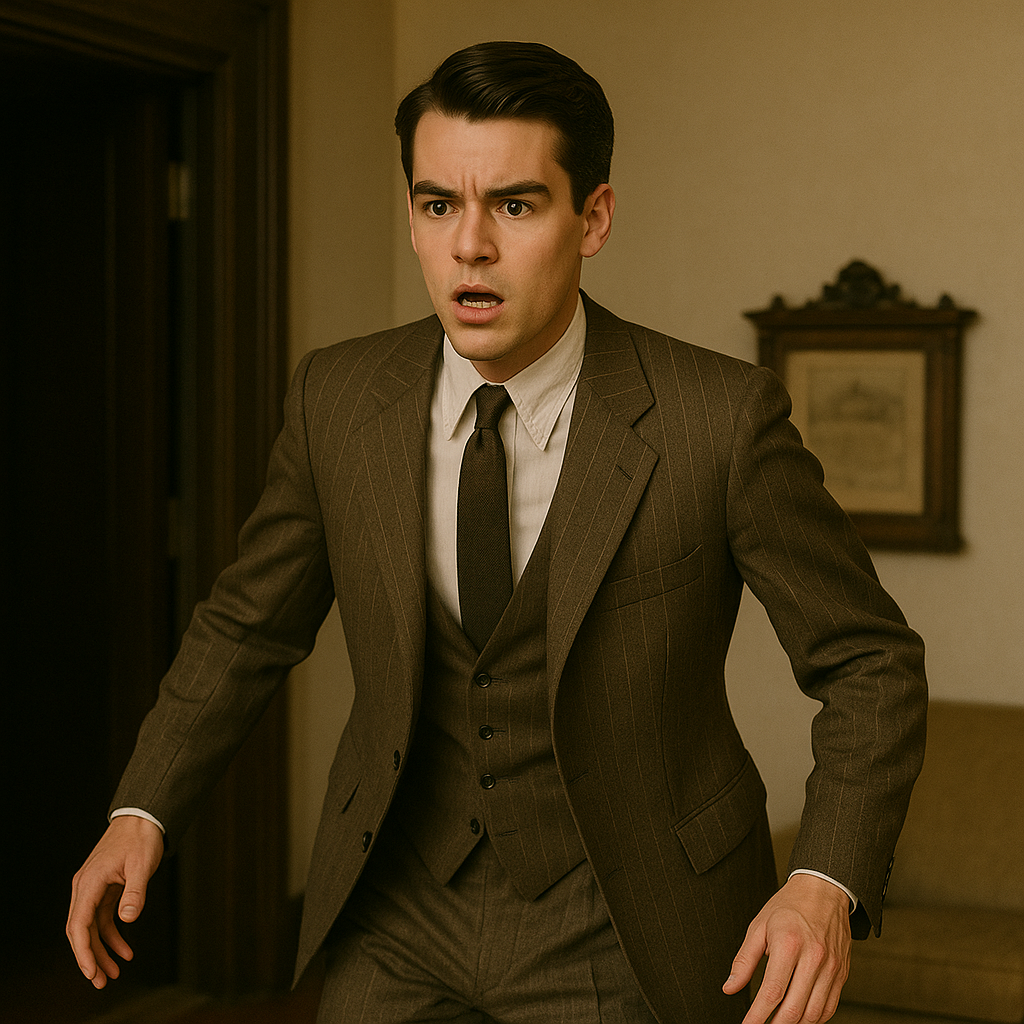

Just for a moment I had the uncanny sensation that the dead man had come to life again.
Then I realized that this dark head was untouched with grey, and that, in point of fact, it was a mere boy who now burst in among us with so little ceremony. He went straight to Mrs. Renauld with an impetuosity that took no heed of the presence of others.
一瞬、私は不気味な感覚にとらわれた。まるで死んだはずの男が甦ったかのようだった。
しかしすぐに気づいた。入ってきた若者の黒髪には白髪の気配すらなく、実際にはまだ年若い青年にすぎなかった。
彼は他人の存在など意に介さず、まっすぐルノー夫人の元へと駆け寄った。

“Mother!”
「母さん!」
“Jack!” With a cry she folded him in her arms.
“My dearest! But what brings you here? You were to sail on the Anzora from Cherbourg two days ago?”
「ジャック!」
彼女は叫び声をあげて彼を抱きしめた。
「最愛の息子!でも、どうしてここに?シェルブールから二日前にアンゾラ号で出航したはずでは?」
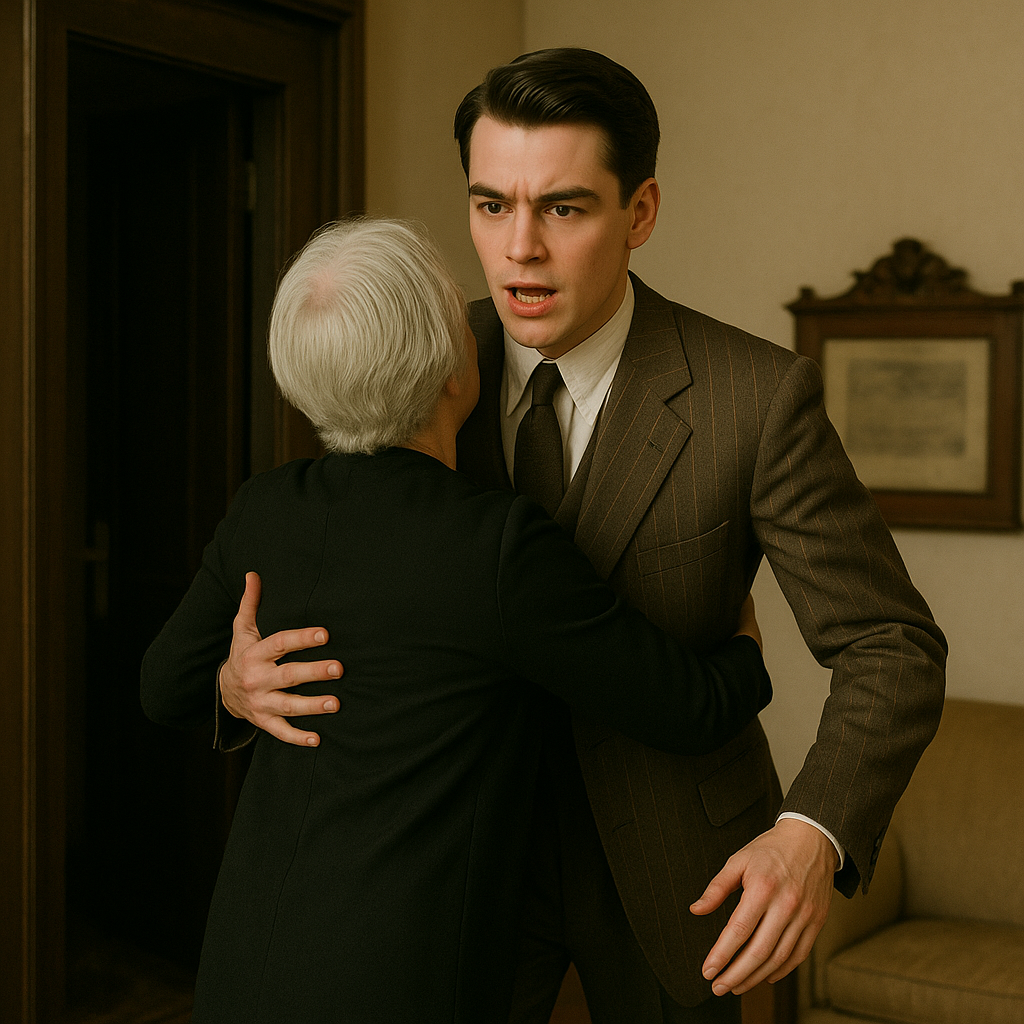

Then, suddenly recalling to herself the presence of others, she turned with a certain dignity, “My son, messieurs.”
そして、突然、他人の前だということを思い出したように、彼女は態度を改めてこう言った。
「私の息子ですわ、皆さん」

“Aha!” said M. Hautet, acknowledging the young man’s bow.
“So you did not sail on the Anzora?”
「ほう!」とオーテ予審判事が、若者の一礼に応じて言った。
「では、アンゾラ号には乗らなかったのですか?」
“No, monsieur.
As I was about to explain, the Anzora was detained twenty-four hours through engine trouble. I should have sailed last night instead of the night before, but, happening to buy an evening paper, I saw in it an account of the—the awful tragedy that had befallen us—”
His voice broke and the tears came into his eyes.
“My poor father—my poor, poor, father.”
「はい、閣下。
ご説明いたしますと、アンゾラ号は機関の不具合により24時間出航が遅れました。そのため一昨日ではなく、昨晩に出航する予定だったのですが、たまたま夕刊を手にして、あの……あの私たちに降りかかった恐ろしい悲劇のことを知ったのです……」
彼の声はそこで途切れ、目には涙が浮かんだ。
「父さんが……可哀想な父さんが……」
Staring at him like one in a dream, Mrs. Renauld repeated:
“So you did not sail?”
And then, with a gesture of infinite weariness, she murmured as though to herself, “After all, it does not matter—now.”
夢を見ているかのように彼を見つめていたルノー夫人は繰り返した。
「では……あなたは船に乗っていなかったのね?」
そして、深いため息をつくように疲れ切った動作でつぶやいた。
「もう……どうでもいいことだけれど」
“Sit down, M. Renauld, I beg of you,” said M. Hautet, indicating a chair.
“My sympathy for you is profound. It must have been a terrible shock to you to learn the news as you did.
However, it is most fortunate that you were prevented from sailing. I am in hopes that you may be able to give us just the information we need to clear up this mystery.”
「どうぞ、おかけください、ムッシュー・ルノー」
オーテ判事が椅子を示しながら言った。
「あなたのお気持ちはお察しします。新聞でこの事件を知ったときは、さぞや衝撃だったでしょう。
しかし、あなたが出航できなかったのは非常に幸運でした。事件の解明に役立つ情報をお持ちかもしれません」
“I am at your disposal, M. le juge. Ask me any questions you please.”
「お役に立てるなら、何でもお答えします、予審判事閣下」
“To begin with, I understand that this journey was being undertaken at your father’s request?”
「まず最初に、今回の旅はお父上の依頼によるものだったとか?」
“Quite so, M. le juge.
I received a telegram bidding me to proceed without delay to Buenos Ayres, and from thence via the Andes to Valparaiso and on to Santiago.”
「そのとおりです、判事閣下。
電報で、急ぎブエノスアイレスへ向かい、そこからアンデス山脈を越えてバルパライソ1、さらにサンティアゴへ行けと命じられました」
“Ah. And the object of this journey?”
「ふむ。その旅の目的とは?」
“I have no idea, M. le juge.”
「それはまったく存じません、判事閣下」
“What?”
「なんですって?」
“No. See, here is the telegram.”
「はい。こちらがその電報です」
The magistrate took it and read it aloud.
“ ‘Proceed immediately Cherbourg embark Anzora sailing tonight Buenos Ayres. Ultimate destination Santiago. Further instructions will await you Buenos Ayres. Do not fail. Matter is of utmost importance. Renauld.’
And there had been no previous correspondence on the matter?”
判事はそれを受け取り、声に出して読んだ。
「『今夜出航のアンゾラ号でシェルブールから直ちにブエノスアイレスへ出発せよ。最終目的地はサンティアゴ。詳細はブエノスアイレスで指示する。必ず行け。極めて重要な件。ルノー。』
これ以前にこの件についての連絡はまったくなかったのですか?」
Jack Renauld shook his head.
“That is the only intimation of any kind. I knew, of course, that my father, having lived so long out there, had necessarily many interests in South America.
But he had never mooted any suggestion of sending me out.”
ジャック・ルノーは首を振った。
「これが唯一の指示です。もちろん、父が長年南米で暮らしていたことは知っていましたし、多くの利害関係があることも察してはいました。
でも、私を派遣するという話は一度もありませんでした」
“You have, of course, been a good deal in South America, M. Renauld?”
「あなた自身は当然、南米に行かれた経験がかなりおありなんでしょう?」
“I was there as a child.
But I was educated in England, and spent most of my holidays in that country, so I really know far less of South America than might be supposed.
You see, the war broke out when I was seventeen.”
「子供の頃に行ったことがあります。
でも、教育はずっとイギリスでしたし、休暇もほとんどイギリスで過ごしていましたので、思われているほど南米について知っているわけではありません。
戦争が始まったとき、私は十七歳でした」
“You served in the English Flying Corps, did you not?”
「イギリス空軍に従軍されたのですよね?」
“Yes, M. le juge.”
「はい、判事閣下」
M. Hautet nodded his head, and proceeded with his inquiries along the, by now, well-known lines.
In response, Jack Renauld declared definitely that he knew nothing of any enmity his father might have incurred in the city of Santiago, or elsewhere in the South American continent, that he had noticed no change in his father’s manner of late, and that he had never heard him refer to a secret.
He had regarded the mission to South America as connected with business interests.
オーテ判事はうなずき、いつもの慣れた要領で質問を続けた。
それに対し、ジャック・ルノーは、父がサンティアゴや南米のどこかで敵を作っていたことなど一切知らないと断言し、最近の父の様子にも特段の変化はなく、何か秘密を抱えている様子もなかったということだった。
今回の任務は単なる商用だと理解していたと答えた。
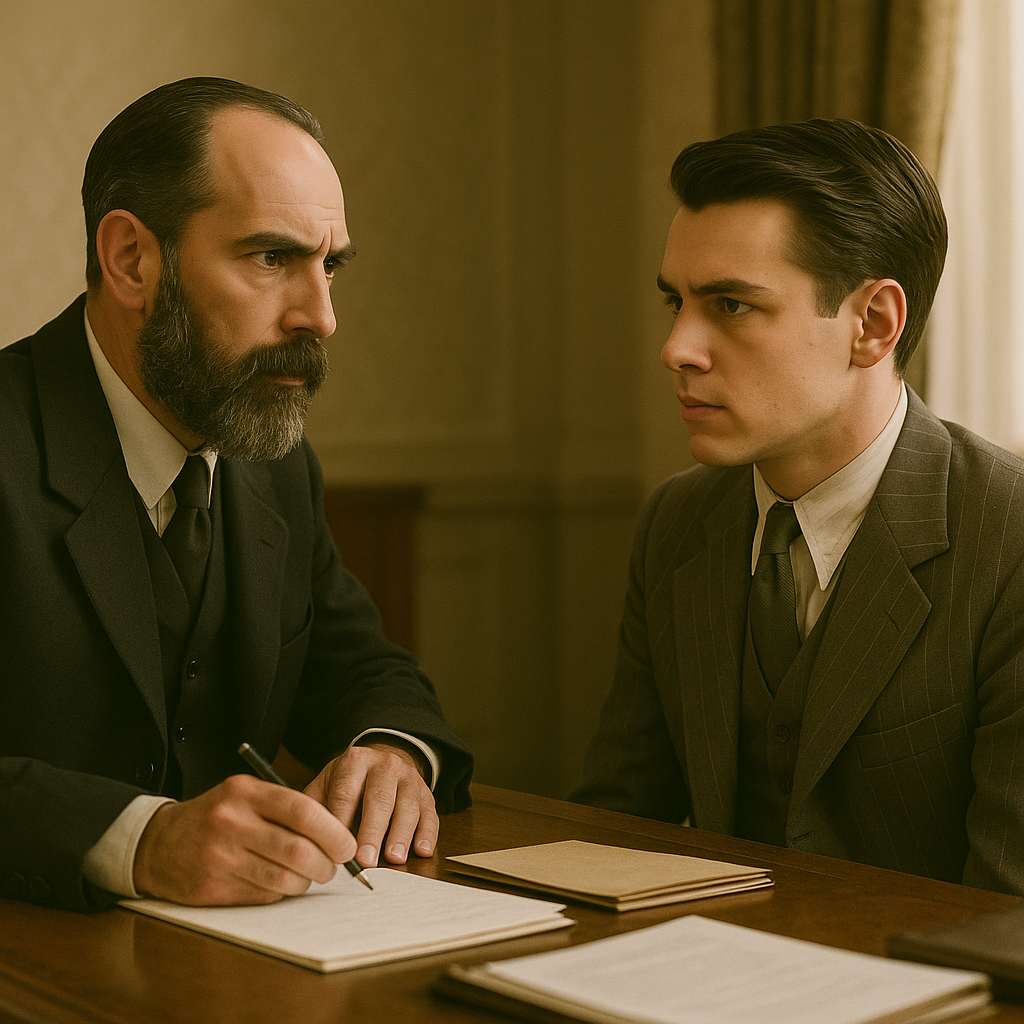

As M. Hautet paused for a minute, the quiet voice of Giraud broke in.
“I should like to put a few questions on my own account, M. le juge.”
判事が少し言葉を切ったとき、静かな声でジロー警部が口を開いた――。
「私からもいくつか質問させていただきたいのですが、判事閣下」
“By all means, M. Giraud, if you wish,” said the magistrate coldly.
「どうぞご自由に、ジロー警備、ご希望であれば」と、予審判事は冷ややかに言った。
Giraud edged his chair a little nearer to the table.
“Were you on good terms with your father, M. Renauld?”
ジローは椅子を少しテーブルに近づけた。
「あなたは、お父上と良好な関係をお持ちでしたか、ルノーさん?」

“Certainly I was,” returned the lad haughtily.
「もちろんです」と、青年は誇らしげに答えた。
“You assert that positively?”
「その答えは確信をもってのことですか?」
“Yes.”
「はい」
“No little disputes, eh?”
「ちょっとした口論などもなかった…そうですか?」
Jack shrugged his shoulders.
“Every one may have a difference of opinion now and then.”
ジャックは肩をすくめた。
「誰だって時には意見の違いくらいあるでしょう」
“Quite so, quite so.
But if any one were to assert that you had a violent quarrel with your father on the eve of your departure for Paris, that person, without doubt, would be lying?”
「ごもっとも、ごもっとも。
しかし、もし誰かが――たとえばあなたがパリに出発する前夜、お父上と激しい口論をしたと主張したとすれば――その者は間違いなく嘘をついている、ということになりますが…?」
I could not but admire the ingenuity of Giraud. His boast “I know everything” had been no idle one.
Jack Renauld was clearly disconcerted by the question.
ジローの巧妙さには感心せざるを得なかった。「何でも知っている」との自負は伊達ではなかった。
ジャック・ルノーは明らかにこの問いに動揺した。
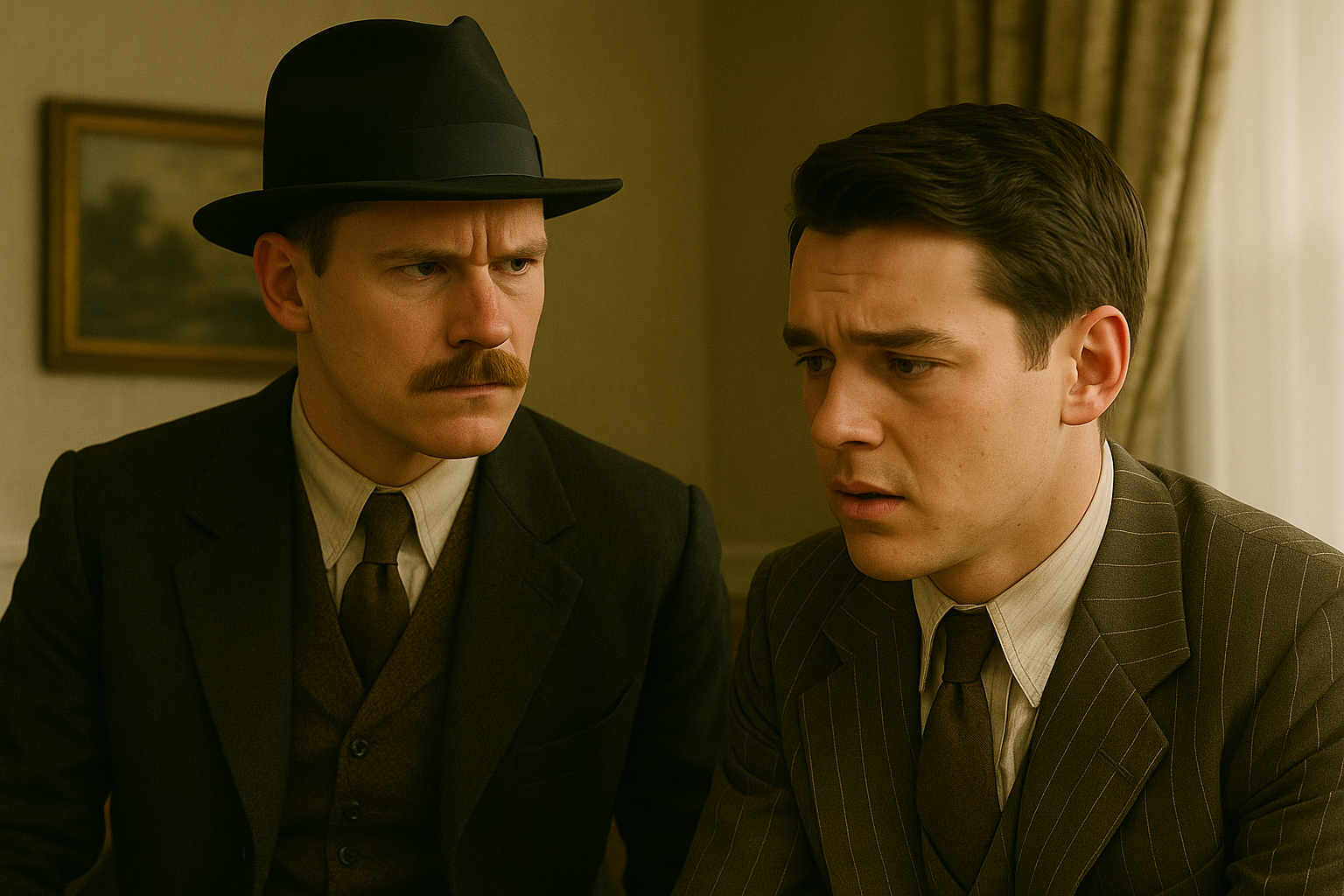
“We—we did have an argument,” he admitted.
「……確かに口論はしました」彼は認めた。
“Ah, an argument! In the course of that argument did you use this phrase: ‘When you are dead, I can do as I please?’ ”
「ほう、口論ですか。その口論の最中、あなたはこう言いましたね――『お父さんが死んだら、僕は好きにできるんだ』と」
“I may have done,” muttered the other.
“I don’t know.”
「そう言ったかもしれません」彼はつぶやいた。
「……覚えていません」
“In response to that, did your father say: ‘But I am not dead yet!’
To which you responded: ‘I wish you were!’ ”
「それに対してお父上はこう返しました――『だが私はまだ死んでいない!』と。
そしてあなたはこう言い返した――『死んでくれたらいいのに!』と」
The boy made no answer. His hands fiddled nervously with the things on the table in front of him.
青年は何も答えなかった。彼の手はテーブルの上の物をいじりながら落ち着かない様子だった。

“I must request an answer, please, M. Renauld,” said Giraud sharply.
「お答え願いたい、ルノーさん」とジローは鋭く言った。
With an angry exclamation, the boy swept a heavy paper-knife on to the floor.
“What does it matter? You might as well know. Yes, I did quarrel with my father. I dare say I said all those things—I was so angry I cannot even remember what I said! I was furious—I could almost have killed him at that moment—there, make the most of that!”
He leant back in his chair, flushed and defiant.
怒りの声を上げ、青年は重いペーパーナイフを床に叩き落とした。
「何だっていうんです? もう知られてしまったのなら、言ってやりますよ。はい、父と口論しました。たぶん、そんなことも言ったでしょう――怒りに我を忘れて、何を言ったかさえ覚えていない! 本当に腹が立って、あのときは……父を殺してやりたいと思ったくらいだ――さあ、それで好きなように解釈すればいい!」
彼は椅子にもたれかかり、顔を赤くしながらも挑戦的な目つきでにらみ返した。
Giraud smiled, then, moving his chair back a little, said:
“That is all. You would, without doubt, prefer to continue the interrogatory, M. le juge.”
ジローはほほ笑み、椅子を元の位置に引き戻しながら言った。
「以上です。あとはお任せします、判事閣下、質問を続けてください」

“Ah, yes, exactly,” said M. Hautet. “And what was the subject of your quarrel?”
「ええ、そうですね」とオーテ判事は応じた。「では、口論の原因は何だったのです?」

“I decline to state.”
「お答えしかねます」
M. Hautet sat up in his chair.
“M. Renauld, it is not permitted to trifle with the law!” he thundered.
“What was the subject of the quarrel?”
オーテ判事は椅子から身を乗り出した。
「ルノーさん、法を軽んじることは許されませんぞ!」彼は雷鳴のごとく言い放った。
「口論の原因は何です!?」
Young Renauld remained silent, his boyish face sullen and overcast.
若いルノーは沈黙を保ち、その少年らしい顔には陰鬱な表情が浮かんでいた。

But another voice spoke, imperturbable and calm, the voice of Hercule Poirot.
“I will inform you, if you like, M. le juge.”
だが、別の冷静で揺るぎない声が口を開いた――エルキュール=ポワロの声である。
「よろしければ、私がお教えしましょう、予審判事閣下」
“You know?”
「あなたが知っていると?」
“Certainly I know.
The subject of the quarrel was Mademoiselle Marthe Daubreuil.”
「ええ、もちろんです。
口論の原因は、マルト・ドーブルイユ嬢のことでした」
Renauld sprang round, startled.
ルノーは驚いて振り返った。

The magistrate leaned forward.
“Is this so, monsieur.”
予審判事は前のめりになった。
「それは本当ですか、ルノーさん?」
Jack Renauld bowed his head.
“Yes,” he admitted.
ジャック・ルノーは頭を垂れた。
「はい」と彼は認めた。
“I love Mademoiselle Daubreuil, and I wish to marry her.
When I informed my father of the fact, he flew at once into a violent rage. Naturally I could not stand hearing the girl I loved insulted, and I, too, lost my temper.”
「私はマルト・ドーブルイユを愛しています。彼女と結婚したいのです。
そのことを父に伝えると、彼はすぐさま激怒しました。愛する女性を侮辱されるのを聞き流すことなどできず、私もつい感情的になりました」

M. Hautet looked across at Mrs. Renauld.
“You were aware of this—attachment, madame.”
オーテ判事はルノー夫人に目を向けた。
「奥さまはこの関係をご存知でしたか?」
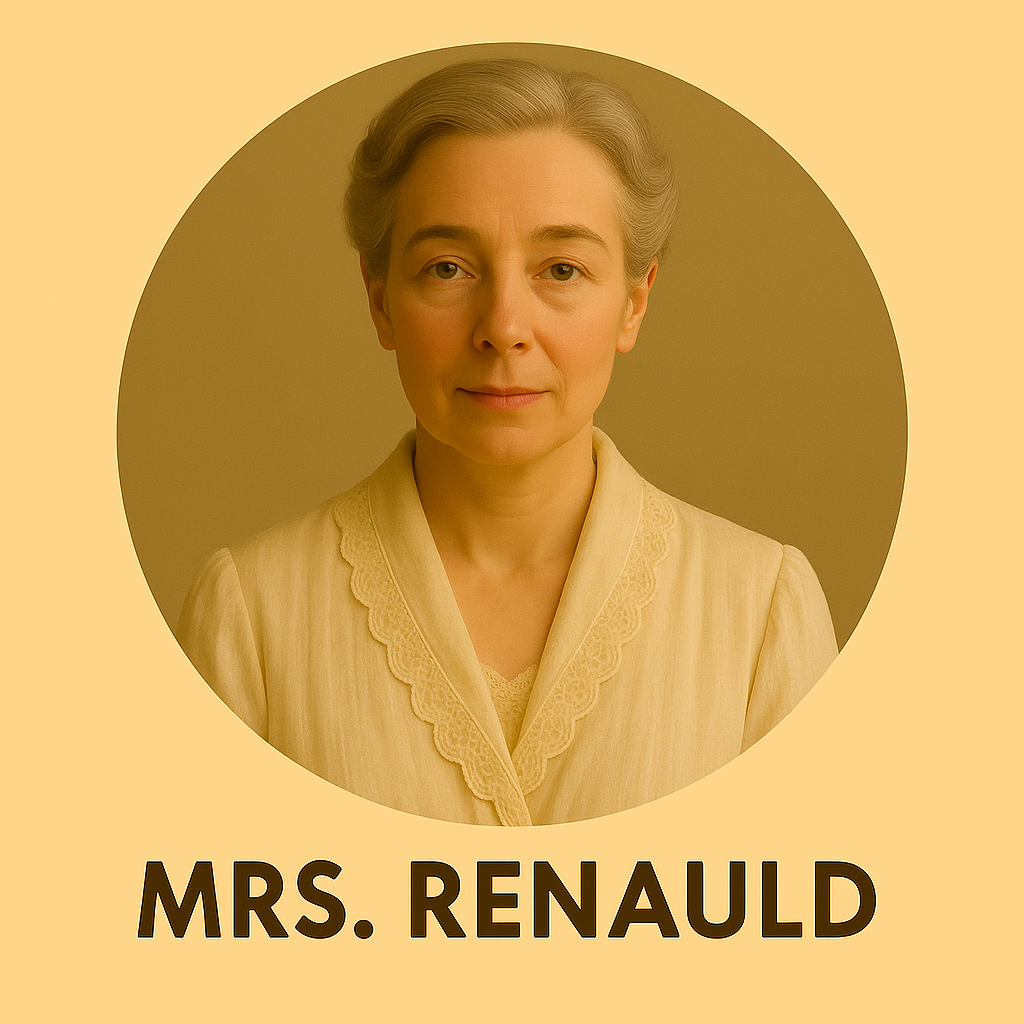
“I feared it,” she replied simply.
「恐れておりました」と彼女は率直に答えた。
“Mother,” cried the boy.
“You too! Marthe is as good as she is beautiful. What can you have against her?”
「母さん!」と少年は叫んだ。
「あなたまで! マルトは美しさだけでなく、人柄も素晴らしい女性です。彼女の何がいけないというのです?」
“I have nothing against Mademoiselle Daubreuil in any way.
But I should prefer you to marry an Englishwoman, or if a Frenchwoman not one who has a mother of doubtful antecedents!”
「私は、ドーブルイユ嬢本人については、何も反対する理由はありません。
ただ、あなたにはイギリス人の女性か、あるいはフランス人でも、素性のはっきりした母親を持つ女性と結婚してほしかったのです!」
Her rancour against the older woman showed plainly in her voice, and I could well understand that it must have been a bitter blow to her when her only son showed signs of falling in love with the daughter of her rival.
ドーブルイユ夫人に対する彼女の敵意が、その声にありありとにじみ出ていた。ひとり息子が、自分のライバルの娘に恋をしていると知ったときの、夫人の衝撃はいかばかりだったか、私にもよく理解できた。
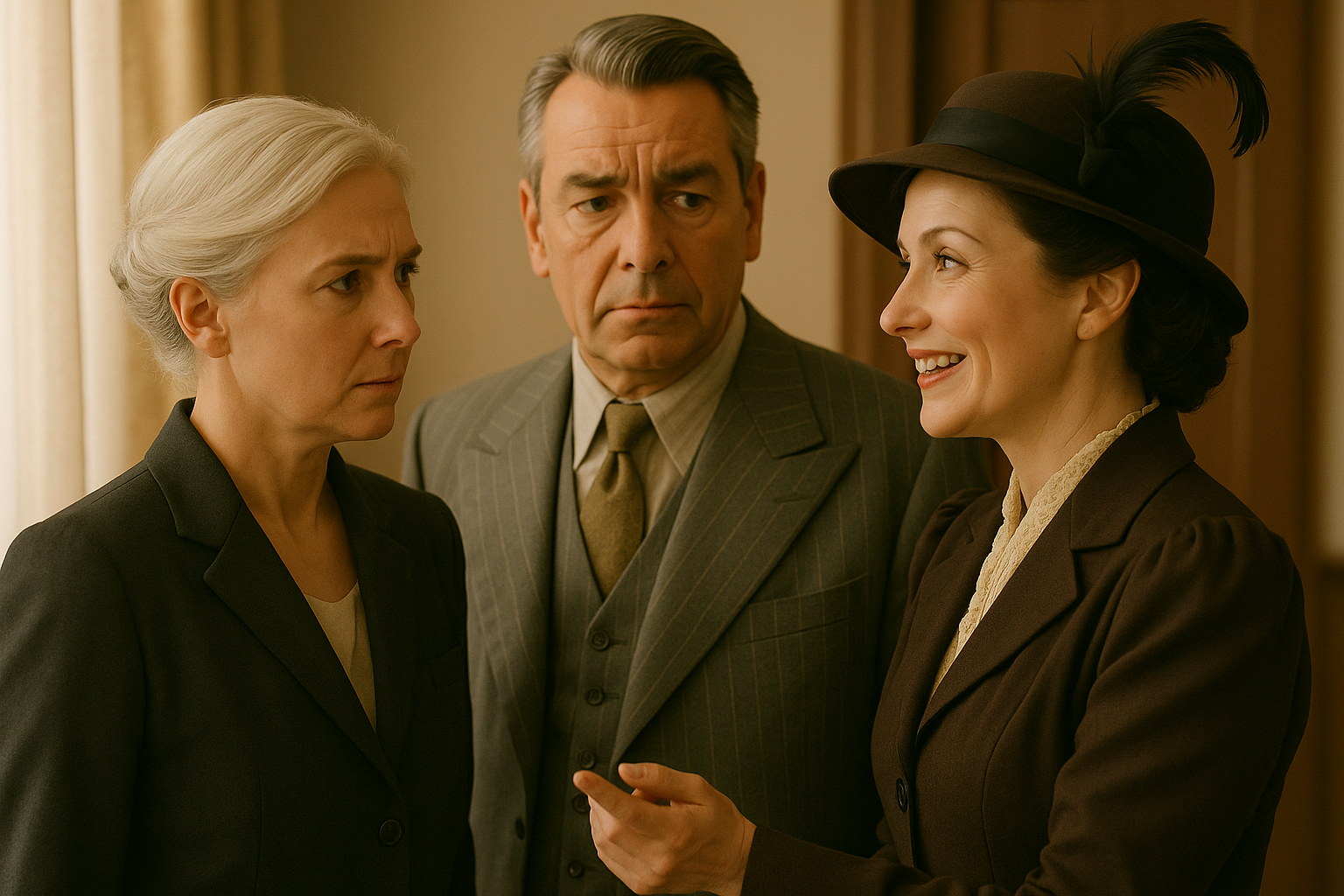
Mrs. Renauld continued, addressing the magistrate:
“I ought, perhaps, to have spoken to my husband on the subject, but I hoped that it was only a boy and girl flirtation which would blow over all the quicker if no notice was taken of it.
I blame myself now for my silence, but my husband, as I told you, had seemed so anxious and care-worn, different altogether from his normal self, that I was chiefly concerned not to give him any additional worry.”
ルノー夫人は続けて、判事に語った。
「本当は夫にこの件を話すべきだったのかもしれません。けれども私は、それがただの若者同士の一時的な戯れで、むしろ放っておいた方が早く終わると思っていたのです。
今では沈黙していたことを後悔しております。ですが、そのころの夫は、私が申し上げたように、ひどく心を痛め、疲れ切っておりました。普段の彼とはまるで別人のようで、私は何よりも彼にこれ以上心労をかけたくなかったのです」

M. Hautet nodded.
“When you informed your father of your intentions towards Mademoiselle Daubreuil,” he resumed, “he was surprised?”
オーテ判事はうなずいた。
「あなたがドーブルイユ嬢と結婚したいとお父上に伝えたとき…」判事は再び続けた
「…お父上は驚かれましたか?」
“He seemed completely taken aback.
「完全に虚を突かれたような反応でした。
Then he ordered me peremptorily to dismiss any such idea from my mind. He would never give his consent to such a marriage. Nettled, I demanded what he had against Mademoiselle Daubreuil. To that he could give no satisfactory reply, but spoke in slighting terms of the mystery surrounding the lives of the mother and daughter.
I answered that I was marrying Marthe, and not her antecedents, but he shouted me down with a peremptory refusal to discuss the matter in any way. The whole thing must be given up.
それから父は即座に、そのような考えはきっぱり捨てろと命じました。父はそんな結婚に絶対に同意しないと。私はなぜそこまで反対するのか問いただしましたが、父は満足に説明できず、ただ母娘の周囲に不明瞭な点があるなどと軽蔑的に言うばかりでした。
私は『私はマルトと結婚するのであって、彼女の過去と結婚するのではない』と反論しましたが、父は聞く耳を持たず、話すことさえ拒否して、すべてをやめろと怒鳴りました。
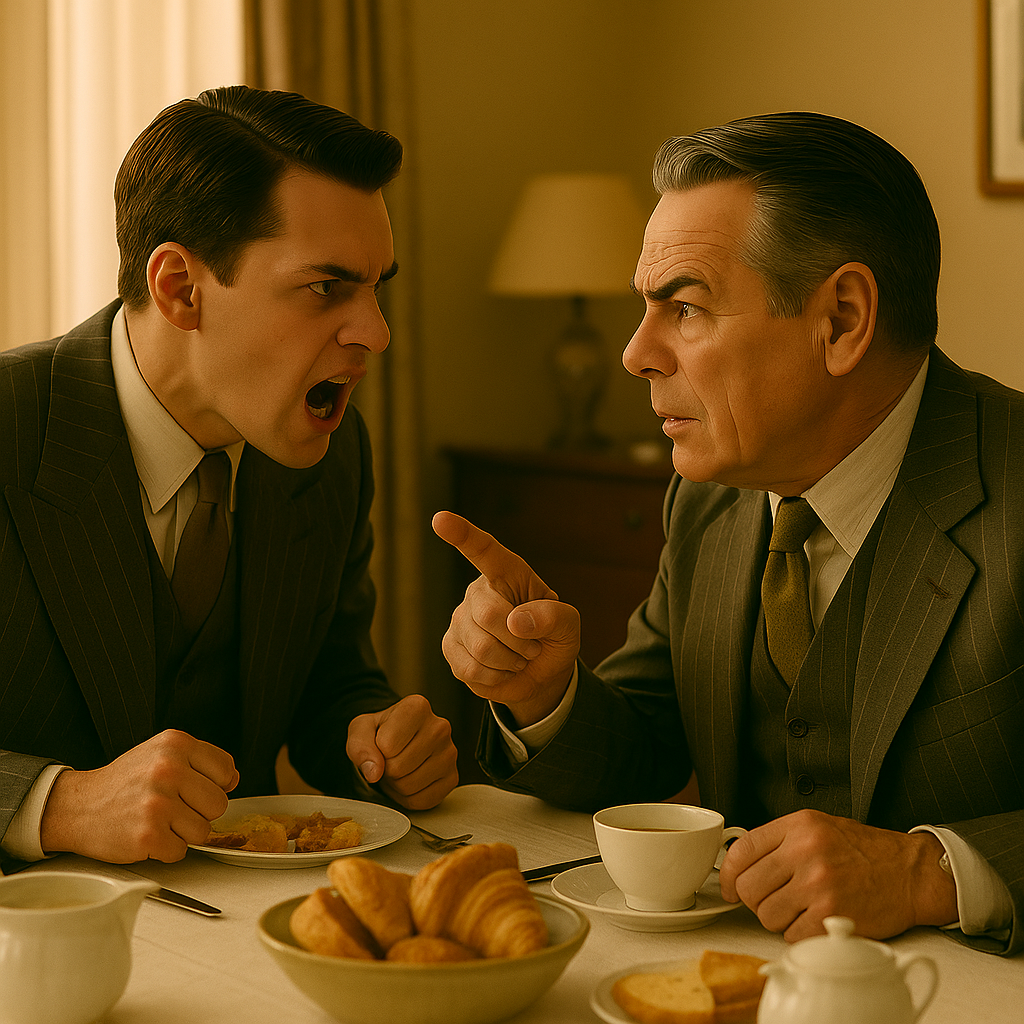
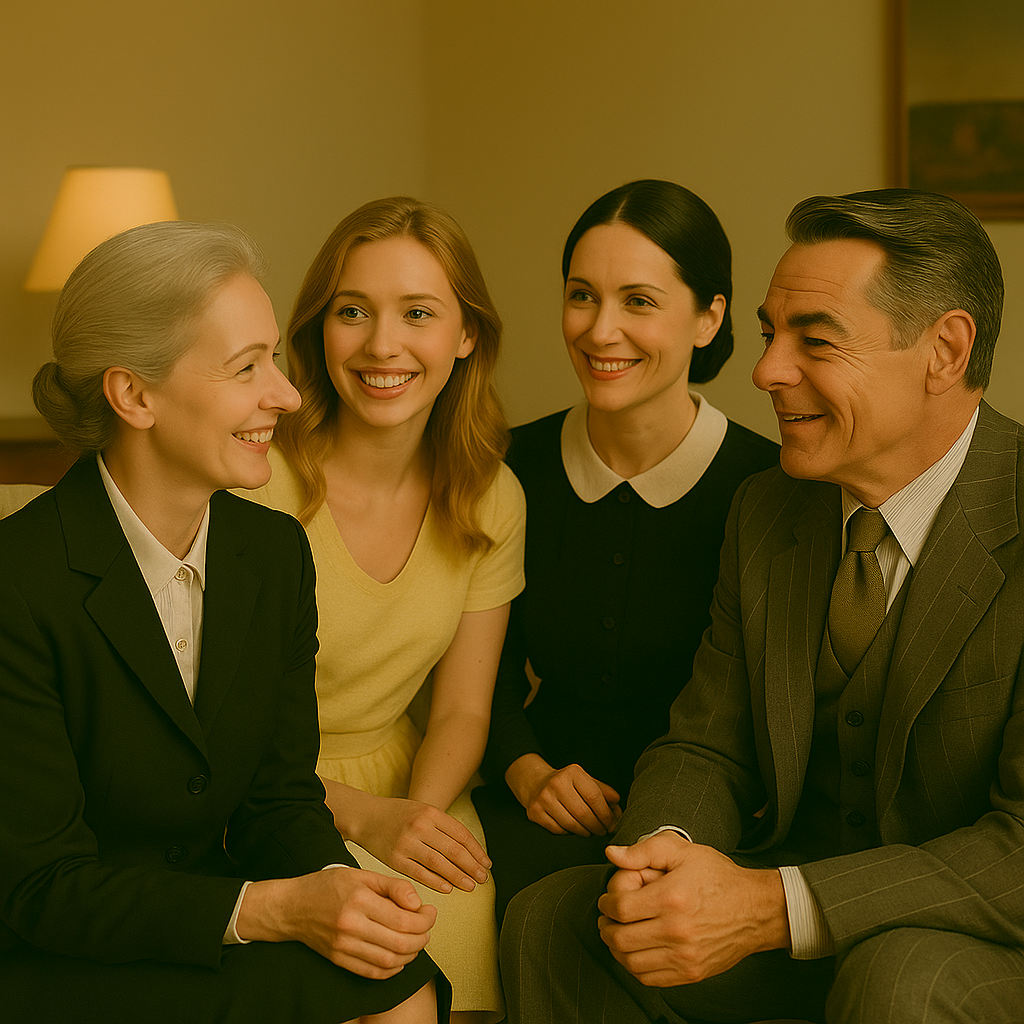
The injustice and high-handedness of it all maddened me—especially since he himself always seemed to go out of his way to be attentive to the Daubreuils and was always suggesting that they should be asked to the house.
I lost my head, and we quarrelled in earnest. My father reminded me that I was entirely dependent on him, and it must have been in answer to that that I made the remark about doing as I pleased after his death—”
その理不尽さ、横暴さに私は激怒しました。というのも、父自身がドーブルイユ親子にとても気を付かっていて、しょっちゅう家に招くように言っていたのですから。
私は頭に血が上り、真剣に口論になりました。父は『お前はすべて私に依存している』と言い、それに対して私は『父が死ねば、自分の好きなようにできる』などと口走ったのだと思います」

Poirot interrupted with a quick question.
“You were aware, then, of the terms of your father’s will?”
ポワロが素早く口を挟んだ。
「ということは、あなたはお父上の遺言の内容をご存知だったのですね?」

“I knew that he had left half his fortune to me, the other half in trust for my mother to come to me at her death,” replied the lad.
「ええ、父の財産の半分は私に、もう半分は母の死後に私が相続するということは知っていました」と彼は答えた。

“Proceed with your story,” said the magistrate.
「続けてください」と判事が言った。
“After that we shouted at each other in sheer rage, until I suddenly realized that I was in danger of missing my train to Paris. I had to run for the station, still in a white heat of fury.
However, once well away, I calmed down. I wrote to Marthe, telling her what had happened, and her reply soothed me still further. She pointed out to me that we had only to be steadfast, and any opposition was bound to give way at last.
Our affection for each other must be tried and proved, and when my parents realized that it was no light infatuation on my part they would doubtless relent towards us.
Of course, to her, I had not dwelt on my father’s principal objection to the match. I soon saw that I should do my cause no good by violence.
My father wrote me several letters to Paris, affectionate in tone, and which did not refer to our disagreement or its cause, and I replied in the same strain.”
「その後、私たちは怒りにまかせて叫び合い、私はふと、パリ行きの列車に遅れそうになっていることに気づきました。慌てて駅まで走り、まだ怒りの冷めやらぬまま出発しました。
けれども距離を置くことで冷静になれました。マルトに手紙を書き、経緯を伝えると、彼女の返事がさらに私を落ち着かせてくれました。彼女は、ただ信念を持ち続ければ、どんな反対もやがては崩れると説いてくれました。
私たちの愛は、試練によってこそ証明されるべきで、両親も私が一時的な迷いではないと理解すれば、いずれは和解できるはずだと。
もちろん、彼女には父の最大の反対理由については言いませんでした。私は、暴力的に事を運んでは逆効果だと気づいたのです。
父からはパリ宛にいくつか手紙が届き、どれも愛情のこもった内容で、口論やその原因には一切触れていませんでした。私も同様に返事を送りました」

“You can produce those letters, eh?” said Giraud.
「その手紙を提出できますか?」とジローが尋ねた。

“I did not keep them.”
「手元には残っていません」
“No matter,” said the detective.
「問題ありません」と刑事は言った。
Renauld looked at him for a moment, but the magistrate was continuing his questions.
ルノーは一瞬ジロー警部を見たが、判事は質問を続けた。

“To pass to another matter, are you acquainted with the name of Duveen, M. Renauld?”
「話題を変えましょう。デュヴェン(Duveen)という名に心当たりはありますか、ルノーさん?」
“Duveen?” said Jack. “Duveen?” He leant forward, and slowly picked up the paper-knife he had swept from the table.
As he lifted his head, his eyes met the watching ones of Giraud.
“Duveen? No, I can’t say I am.”
「デュヴェン?」とジャックは繰り返した。「デュヴェン……?」
彼は前に倒したペーパーナイフを拾い上げながら前屈みになった。
顔を上げたとき、ジローの視線とぶつかった。
「デュヴェン? いいえ、心当たりはありません」
“Will you read this letter, M. Renauld?
And tell me if you have any idea as to who the person was who addressed it to your father?”
「この手紙をお読みください、ムッシュー・ルノー。
そして、これを書いた人物に思い当たる節があるか教えてください」
Jack Renauld took the letter, and read it through, the colour mounting in his face as he did so.
“Addressed to my father?” The emotion and indignation in his tones were evident.
ジャック・ルノーは手紙を取り、読み進めるうちに、顔に赤みが差していった。
「父宛ての手紙だって?」
彼の声には明らかに感情と憤りがにじんでいた。
“Yes. We found it in the pocket of his coat.”
「はい。彼の上着のポケットの中で見つかりました」
“Does—” He hesitated, throwing the merest fraction of a glance towards his mother.
「それは――」彼はためらい、ほんの一瞬だけ母親の方に視線を送った。
The magistrate understood.
“As yet—no. Can you give us any clue as to the writer?”
予審判事はそれを理解した。
「現時点では――いいえ。差出人について何か心当たりはありますか?」
“I have no idea whatsoever.”
「まったくありません」
M. Hautet sighed.
“A most mysterious case.
Ah, well, I suppose we can now rule out the letter altogether. What do you think, M. Giraud?
It does not seem to lead us anywhere.”
オート判事はため息をついた。
「なんとも不可解な事件だ。
ああ、ではこの手紙の件はもう除外して考えましょうか。
どう思いますか、ジロー警部? これでは手がかりになりそうもありません」

“It certainly does not,” agreed the detective with emphasis.
「まったくその通りです」とジローは警部は強調するように同意した。
“And yet,” sighed the magistrate, “it promised at the beginning to be such a beautiful and simple case!”
He caught Mrs. Renauld’s eye, and blushed in immediate confusion. “Ah, yes,” he coughed, turning over the papers on the table.
“Let me see, where were we? Oh, the weapon. I fear this may give you pain, M. Renauld. I understand it was a present from you to your mother. Very sad—very distressing—”
「それにしても」と判事はため息をついた。「最初はなんと簡単で美しい事件だと思ったのに!」
彼はルノー夫人の視線に気づき、たちまち顔を赤らめてうろたえた。
「ああ、いや……」と咳払いしながら、机の上の書類をめくった。
「さて、どこまで話が進んでいましたか? ああ、凶器ですね。これはつらいことかと思いますが、ルノーさん、あの武器はあなたが母親に贈ったものだと伺っています。非常に悲しいことですが……」
Jack Renauld leaned forward. His face, which had flushed during the perusal of the letter, was now deadly white.
“Do you mean—that it was with an aeroplane wire paper cutter that my father was—was killed? But it’s impossible! A little thing like that!”
ジャック・ルノーは身を乗り出した。
手紙を読んでいる間に赤らんでいた彼の顔は、今や真っ白だった。
「まさか――父は、あの飛行機用ワイヤーのペーパーナイフで殺されたというのですか? そんな馬鹿な! あんな小さなもので!」
“Alas, M. Renauld, it is only too true! An ideal little tool, I fear. Sharp and easy to handle.”
「残念ながら、本当なのです、ルノーさん。非常に扱いやすくて鋭利な、理想的な凶器だったのです」
“Where is it? Can I see it? Is it still in the—the body?”
「どこにあるんですか? それを見せてください。まだ、父の――遺体に刺さっているのですか?」
“Oh, no, it had been removed. You would like to see it? To make sure?
It would be as well, perhaps, though madame has already identified it. Still—M. Bex, might I trouble you?”
「いえ、すでに取り外されています。ご覧になりたいと? 確認のためには良いかもしれません。
奥様はすでに確認されましたが、念のため――ベー署長、お願いできますか?」

“Certainly, M. le juge. I will fetch it immediately.”
「かしこまりました、判事閣下。すぐに取ってまいります」

“Would it not be better to take M. Renauld to the shed?” suggested Giraud smoothly.
“Without doubt he would wish to see his father’s body.”
「ルノーさんを納屋に案内するほうがよろしいのでは?」とジローが滑らかに提案した。
「ご自身の目で父親のご遺体をご覧になりたいでしょうし」

The boy made a shivering gesture of negation, and the magistrate, always disposed to cross Giraud whenever possible, replied.
青年は身を震わせながら首を横に振る仕草をした。予審判事はジローの言うことには逆らう傾向があり、こう返答した。

“But no—not at present. M. Bex will be so kind as to bring it to us here.”
「いや――今はその時ではありません。ベー署長がここに持ってきてくださるでしょう」
The commissary left the room.
Stonor crossed to Jack, and wrung him by the hand.
Poirot had risen and was adjusting a pair of candlesticks that struck his trained eye as being a shade askew.
署長は部屋を出ていった。
ストーナーはジャックに近づいて、彼の手を強く握った。
ポワロは立ち上がり、微妙に傾いていた燭台の位置を整えていた。
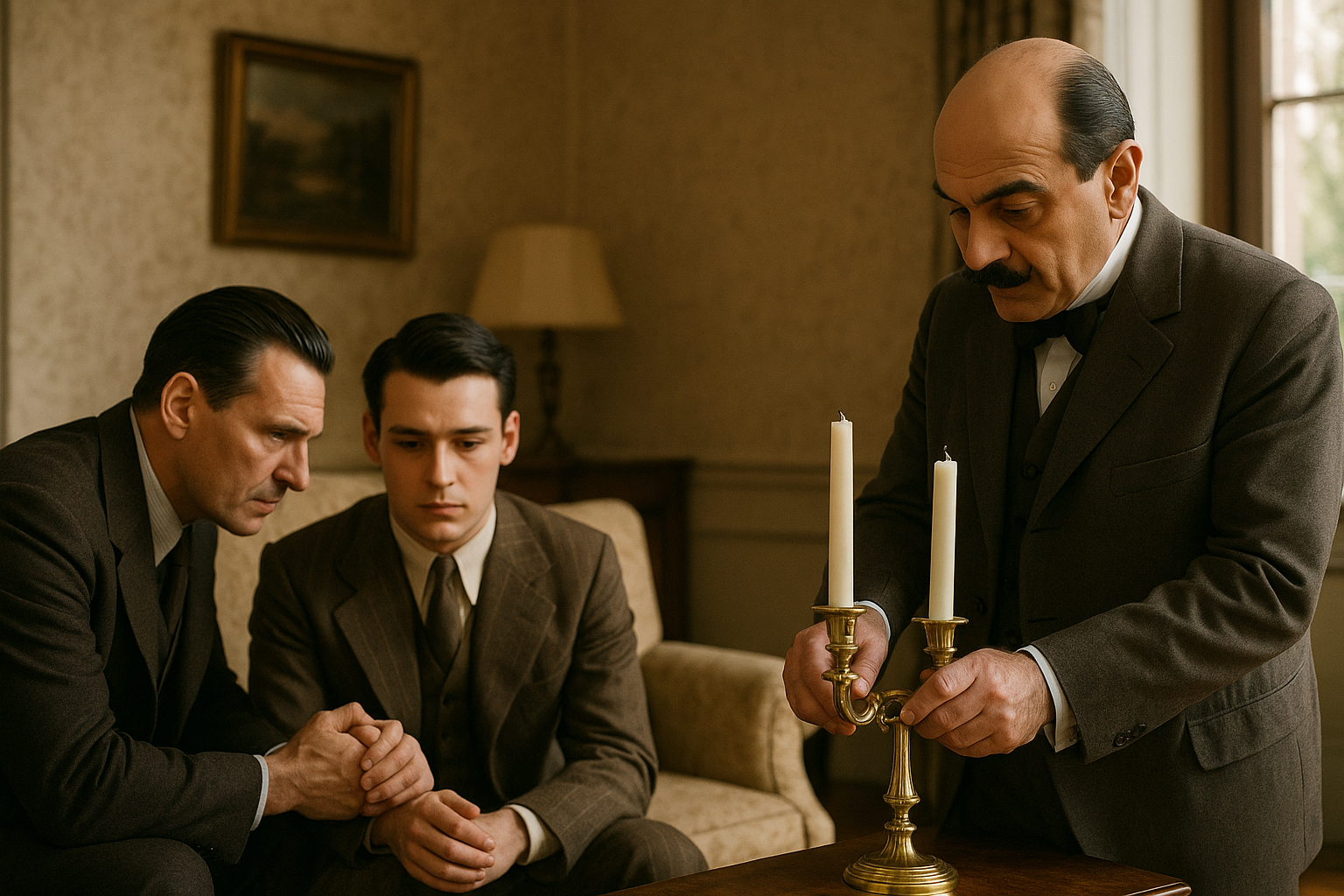
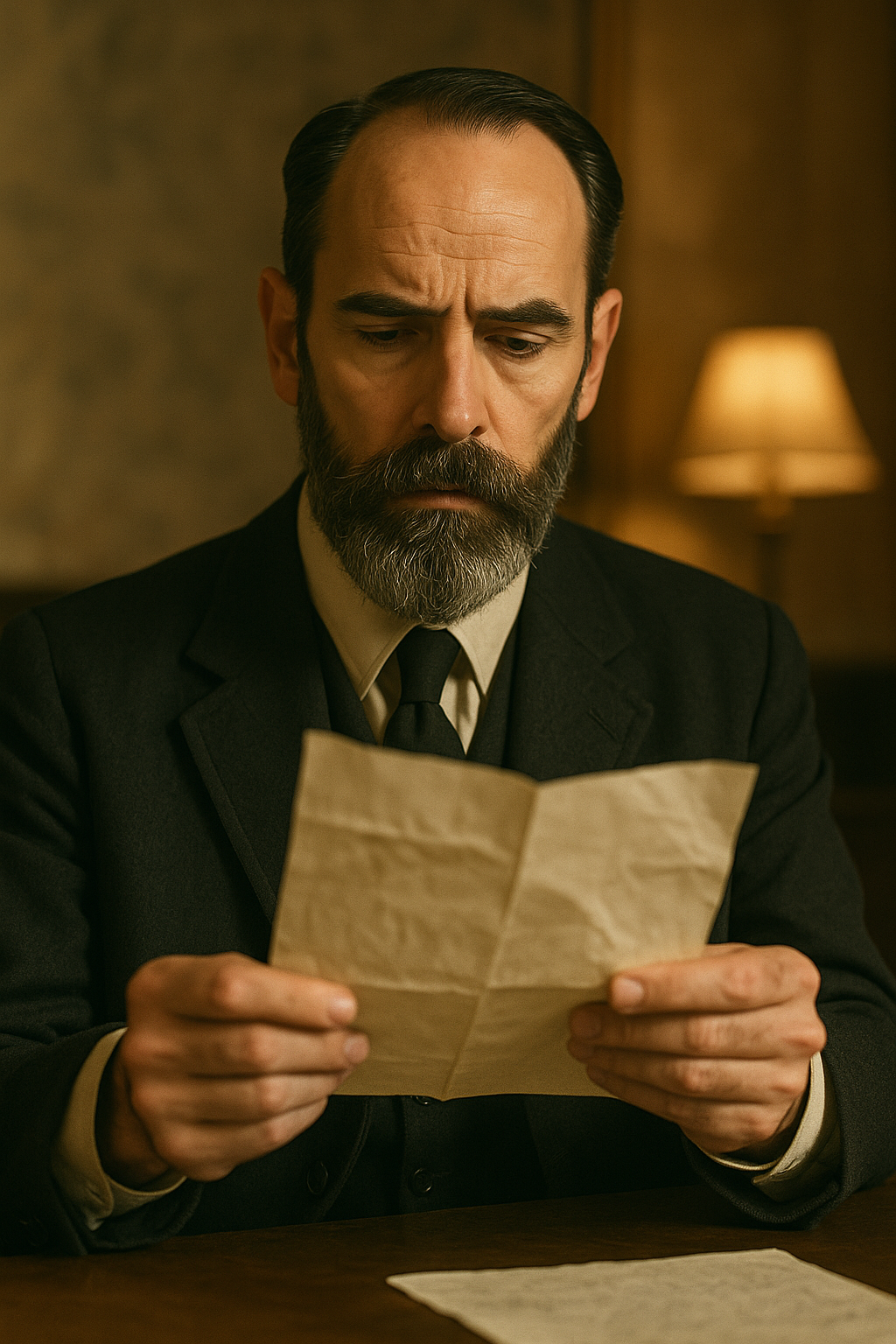
The magistrate was reading the mysterious love-letter through a last time, clinging desperately to his first theory of jealousy and a stab in the back.
予審判事は、最初の嫉妬による背後からの刺殺という説に固執するかのように、例の謎の恋文をもう一度読み返していた。

Suddenly the door burst open and the commissary rushed in.
“M. le juge! M. le juge!”
そのとき、ドアが突然開いて、ベー署長が駆け込んできた。
「判事閣下! 判事閣下!」
“But yes. What is it?”
「なんだね?」
“The dagger! It is gone!”
「短剣が! 消えているのです!」
“Comment—gone?”
「コマン(なんだと)――消えた?」
“Vanished. Disappeared. The glass jar that contained it is empty!”
「はい。消えました。あのガラス瓶の中に入れてあったのですが、今は空っぽなのです!」
“Comment—gone?”
「コマン(なんだと)――消えた?」

“What?” I cried.
“Impossible. Why, only this morning I saw—” The words died on my tongue.
「なに?」私は叫んだ。
「そんなはずはない。今朝――私は確かに――」
言葉が喉で止まった。
But the attention of the entire room was diverted to me.
“What is that you say?” cried the commissary. “This morning?”
しかし、部屋中の注意は私に向けられていた。
「どういうことですか?」とべー署長が叫んだ。
「今朝というのは?」
“I saw it there this morning,” I said slowly.
“About an hour and a half ago, to be accurate.”
「今朝、確かに見ました」私はゆっくりと答えた。
「正確には、1時間半ほど前のことです」

“You went to the shed, then? How did you get the key?”
「あなたは納屋に行ったのですか? 鍵はどうやって手に入れたんです?」
“I asked the sergent de ville for it.”
「制服巡査に頼んで貸してもらいました」
“And you went there? Why?”
「それで、あなたはそこへ行ったのですか?なぜです?」
I hesitated, but in the end I decided that the only thing to do was to make a clean breast of it.
“M. le juge,” I said.
“I have committed a grave fault, for which I must crave your indulgence.”
私はためらったが、結局すべてを正直に打ち明けるしかないと決心した。
「判事閣下」私は言った。
「私は重大な過ちを犯しました。それについてお許しを願わねばなりません」

“Eh bien! Proceed, monsieur.”
「エビヤン!(それは!)続けてください、ヘイスティングス大尉」
“The fact of the matter is,” I said, wishing myself anywhere else than where I was,
“that I met a young lady, an acquaintance of mine. She displayed a great desire to see everything that was to be seen, and I—well, in short, I took the key to show her the body.”
「実は……」私はその場から逃げ出したい気持ちを抑えつつ話し始めた。
「ある若い女性と出会いまして。私の知人です。彼女がどうしてもすべてを見たいと強く望みまして、それで……つまり、私は鍵を使って、遺体を彼女に見せたのです」
“Ah, par exemple,” cried the magistrate indignantly.
“But it is a grave fault you have committed there, Captain Hastings. It is altogether most irregular. You should not have permitted yourself this folly.”
「アッ、パール・エグザンプル(なんということだ、たとえばの話ではない)!」と判事は憤慨して叫んだ。
「それは非常に重大な過失です、ヘイスティングズ大尉。まったくもって不適切です。あなたはそんな愚かなことをしてはなりませんでした」
“I know,” I said meekly.
“Nothing that you can say could be too severe, M. le juge.”
「はい……」私は大人しく言った。
「どんなお叱りも、ごもっともです(厳しすぎるということはありません)、判事閣下」」
“You did not invite this lady to come here?”
「貴方が、その女性をここに招いたのですか?」
“Certainly not. I met her quite by accident.
She is an English lady who happens to be staying in Merlinville, though I was not aware of that until my unexpected meeting with her.”
「いえ、決してそんなことはありません。偶然出会ったのです。
彼女はイギリスのご婦人で、偶然マルランヴィルに滞在していたのです。私も会うまで知りませんでした」
“Well, well,” said the magistrate, softening.
“It was most irregular, but the lady is without doubt young and beautiful, n’est-ce pas?
What it is to be young! O jeunesse, jeunesse!” And he sighed sentimentally.
「ふむ、ふむ」判事は少し態度を和らげた。
「極めて不規則ではあるが、彼女はきっと若くて美しいのだろう、ネ・セ・パ?(そうではないか?)
若さとはなんと素晴らしいものだ!オー、ジュネス、ジュネス!(ああ、若さよ、若さ!)」と、彼は感傷的にため息をついた。

But the commissary, less romantic, and more practical, took up the tale:
“But did not you reclose and lock the door when you departed.”
だが、より現実的でロマンチックではないベー署長が話を引き継いだ。
「だが、あなたは立ち去るとき、ドアをきちんと閉めて施錠しなかったのですか?」
“That’s just it,” I said slowly.
“That’s what I blame myself for so terribly.
My friend was upset at the sight. She nearly fainted. I got her some brandy and water, and afterwards insisted on accompanying her back to town.
In the excitement, I forgot to relock the door. I only did so when I got back to the Villa.”
「それなんですが‥‥」私はゆっくりと答えた。
「自分でも本当に責めているところです。
彼女は遺体を見てショックを受け、今にも気を失いそうでした。私は彼女にブランデーと水を持ってきて、それから彼女を町まで送り届けることにしました。
その興奮の中で、ドアに鍵をかけるのを忘れてしまったのです。屋敷に戻ってからようやく施錠しました」
“Then for twenty minutes at least—” said the commissary slowly. He stopped.
「ということは、少なくとも20分間——」と警部はゆっくりと言った。彼は言葉を切った。
“Exactly,” I said.
「その通りです」私は言った。
“Twenty minutes,” mused the commissary.
「20分間か……」と警部は思案に沈んだ。
“It is deplorable,” said M. Hautet, his sternness of manner returning.
“Without precedent.”
「嘆かわしいことです」オーテ判事が厳しい口調を戻して言った。
「前例のないことです」

Suddenly another voice spoke.
“You find it deplorable, M. le juge?” asked Giraud.
そのとき、別の声が口を開いた。
「あなたはそれを嘆かわしいとおっしゃるのですね、判事閣下?」ジローが尋ねた。
“Certainly I do.”
「もちろんだ」
“Eh bien! I find it admirable,” said the other imperturbably.
This unexpected ally quite bewildered me.
「ええ、でも私はそれを賞賛すべきことだと思いますよ」ジローは平然と返した。
この思いがけない擁護者に私は完全に面食らった。
“Admirable, M. Giraud?” asked the magistrate, studying him cautiously out of the corner of his eye.
「賞賛ですって、ジロー警部?」判事は彼を警戒するように横目で見ながら尋ねた。
“Precisely.”
「まさにそうです」
“And why?”
「なぜですか?」
“Because we know now that the assassin, or an accomplice of the assassin, has been near the Villa only an hour ago. It will be strange if, with that knowledge, we do not shortly lay hands upon him.”
There was a note of menace in his voice.
He continued: “He risked a good deal to gain possession of that dagger. Perhaps he feared that finger-prints might be discovered on it.”
「なぜなら、今や我々は、犯人、あるいはその共犯者が、ほんの1時間前にヴィラの近くにいたことが分かったのです。これだけの情報があれば、すぐにでも奴を捕まえられるでしょう」
彼の声には警告するような響きがあった。
そして続けた。
「奴はその短剣を手に入れるために、かなりのリスクを冒しました。恐らく指紋が検出されるのを恐れたのでしょう」

Poirot turned to Bex.
“You said there were none?”
ポワロがベー署長に尋ねた。
「あなたは、指紋はなかったと?」

Giraud shrugged his shoulders.
“Perhaps he could not be sure.”
ジローは肩をすくめた。
「確信が持てなかったのでしょう」
Poirot looked at him.
“You are wrong, M. Giraud. The assassin wore gloves. So he must have been sure.”
ポワロは彼をじっと見つめた。
「あなたは間違っている、ジロー警部。犯人は手袋をしていた。つまり、指紋が残ることはないと確信していたはずです」
“I do not say it was the assassin himself.
It may have been an accomplice who was not aware of that fact.”
「私が言っているのは、犯人本人とは限らないということです。
事実を知らなかった共犯者かもしれない」
“Ils sont mal renseignés, les accomplices!” muttered Poirot, but he said no more.
「イル ソン マル ランセニェ、レ ザコンプリス!(まったく無知のようですな、共犯者というものは!)」とポワロが小声でつぶやいたが、それ以上何も言わなかった。

The magistrate’s clerk was gathering up the papers on the table. M. Hautet addressed us:
“Our work here is finished. Perhaps, M. Renauld, you will listen whilst your evidence is read over to you.
I have purposely kept all the proceedings as informal as possible. I have been called original in my methods, but I maintain that there is much to be said for originality.
The case is now in the clever hands of the renowned M. Giraud. He will without doubt distinguish himself. Indeed, I wonder that he has not already laid his hands upon the murderers!
Madame, again let me assure you of my heart-felt sympathy. Messieurs, I wish you all good day.”
And, accompanied by his clerk and the commissary, he took his departure.
書記官が、机の上の書類を片づけ始めていた。オーテ判事が私たちに声をかけた。
「我々のここでの作業はこれで終了です。ルノーさん、あなたの証言内容が今から読み上げられますので、どうか耳を傾けてください。
私はあえて、できるだけ非公式な雰囲気で手続きを進めてきました。私のやり方は『独創的』だとよく言われますが、独創性には大いに価値があると私は信じています。
この事件は、今や名高きジロー氏の手に委ねられました。彼なら、間違いなく手腕を発揮してくれることでしょう。いやはや、まだ犯人を捕らえていないのが不思議なくらいです!
奥様、あらためて心よりお悔やみ申し上げます。
諸君、それでは、良い一日を」
そう言って、判事は書記官とベー署長を伴って部屋を出ていった。
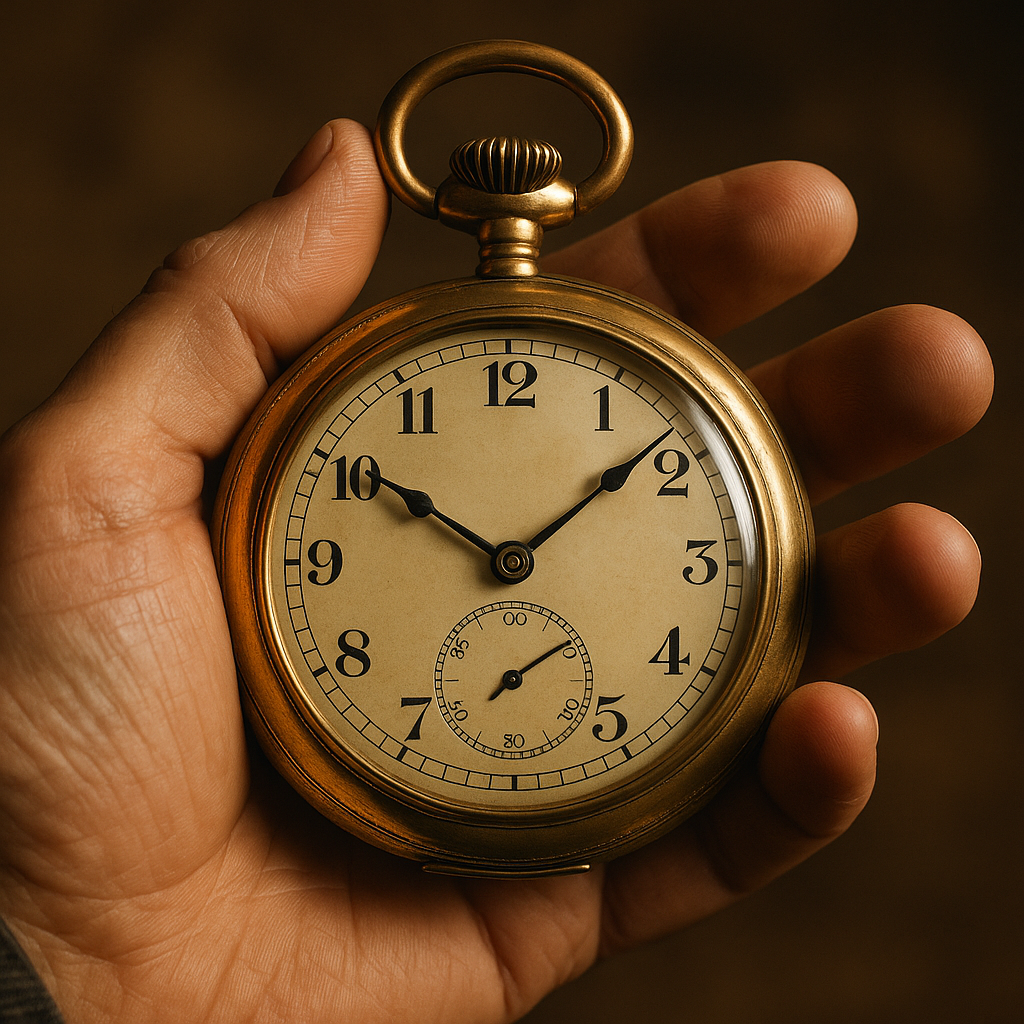
Poirot tugged out that large turnip of a watch of his, and observed the time.
ポワロは、例の巨大なカブのような懐中時計をポケットから取り出し、時刻を確認した。
“Let us return to the hotel for lunch, my friend,” he said.
“And you shall recount to me in full the indiscretions of this morning.
No one is observing us. We need make no adieux.”
「ではホテルに戻って昼食を取りましょう、ヘイスティングス」彼は言った
「それから、今朝のあなたの不始末について、すべて洗いざらい語ってもらいますよ。誰にも見られていません。挨拶も必要ありません」
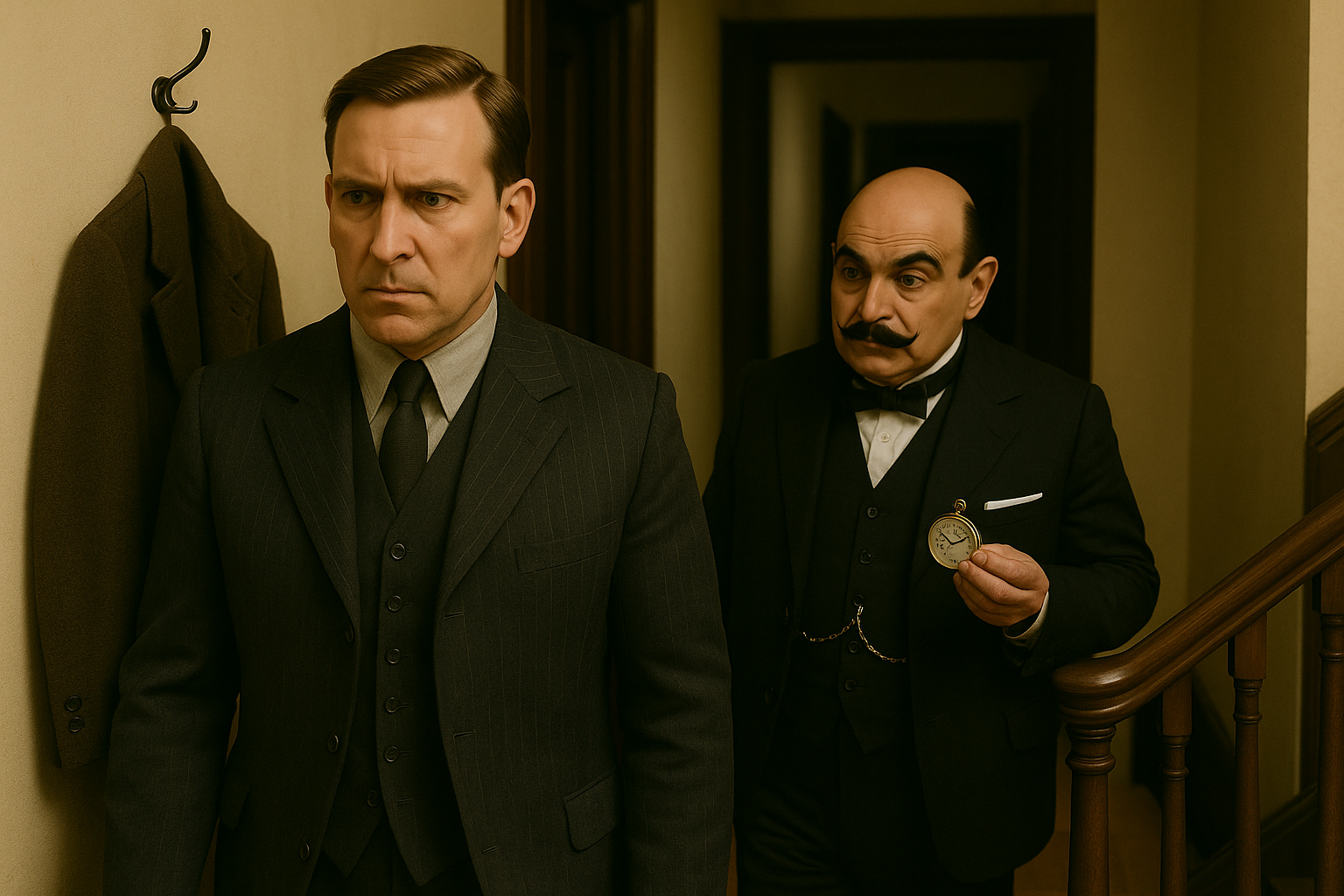
We went quietly out of the room. The examining magistrate had just driven off in his car.
I was going down the steps when Poirot’s voice arrested me:
私たちは静かに部屋を出た。
ちょうどそのとき、予審判事の車が出発したところだった。
私は階段を降りかけていたが、ポワロの声が私を呼び止めた。
“One little moment, my friend.”
「ちょっとだけ、待ってくれたまえ、ヘイスティングス」
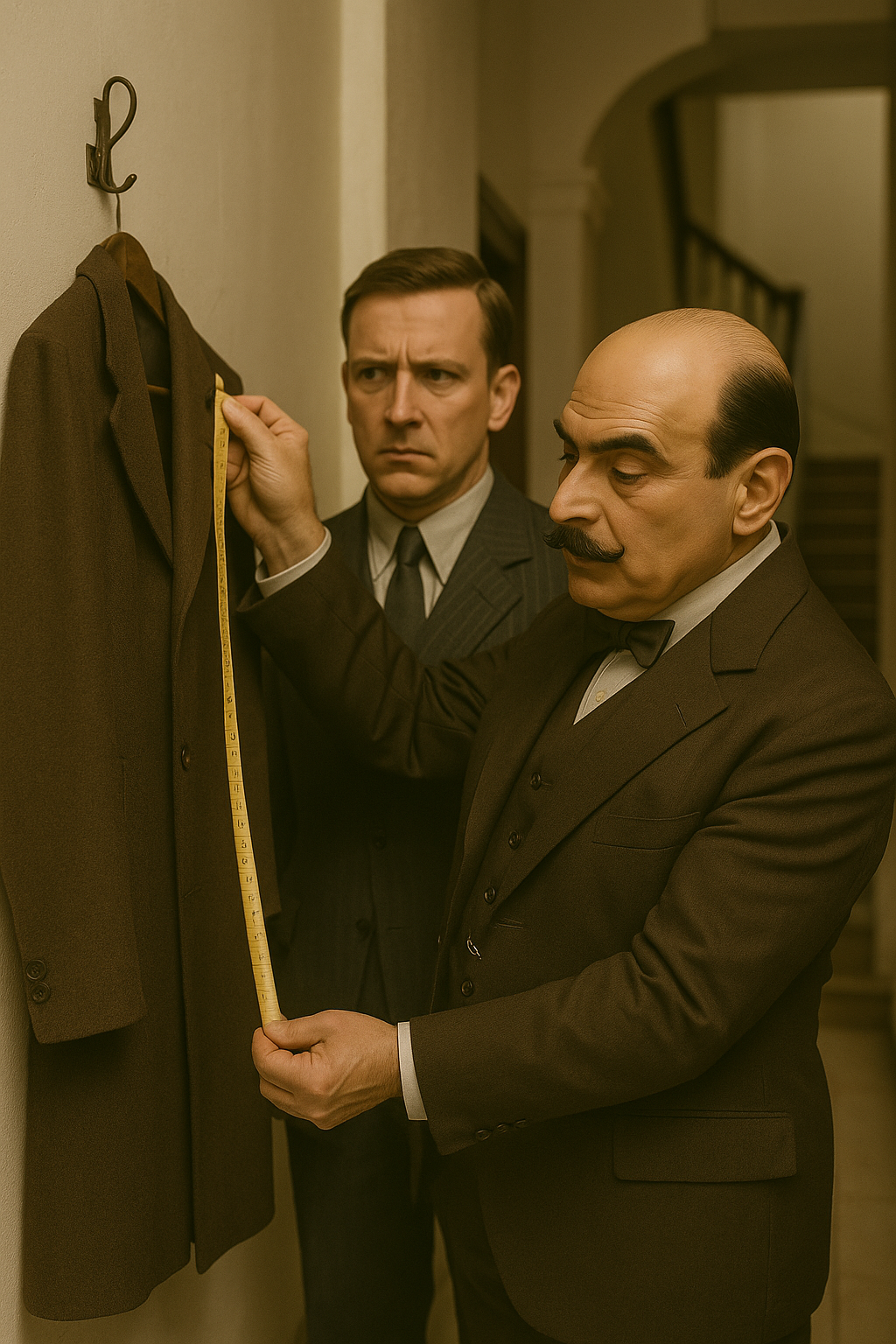
Dexterously, he whipped out his yard measure, and proceeded, quite solemnly, to measure an overcoat hanging in the hall from the collar to the hem.
I had not seen it hanging there before, and guessed that it belonged to either Mr. Stonor, or Jack Renauld.
Then, with a little satisfied grunt, Poirot returned the measure to his pocket, and followed me out into the open air.
彼は手際よく巻き尺を取り出し、きわめて真剣な様子で、ホールに掛けてあった外套の、襟から裾までの長さを測り始めた。
私はそれまでそこに外套があることに気づいておらず、それがストーナー氏かジャック・ルノーのものであると察した。
ポワロは満足げに「ふむ」と短くうなり、巻き尺をポケットにしまうと、私の後に続いて外へ出た。


- 「Valparaíso(バルパライソ)」は、チリ共和国の主要な港湾都市のひとつで、太平洋沿岸に位置しています。以下に要点をまとめます:
✅ 基本情報:
国名:チリ共和国(Republic of Chile)
位置:首都サンティアゴの西方、太平洋沿岸
役割:主要港湾都市・経済および文化の中心地の一つ
🌍 特徴:
チリ最大級の港湾都市として、国際貿易や物流の要所。
独特な地形で知られ、丘陵地に家々が密集し、美しい景観を形成。
歴史的中心部はユネスコの世界遺産(2003年登録)に指定されている。
19世紀には南米でも重要な国際商業港の一つで、多くの外国人居住者がいた。
📚 文学や歴史との関係:
19~20世紀初頭にかけて、イギリスやフランスなどヨーロッパとの貿易拠点として栄え、多くの冒険譚や商人の記録に登場します。
アガサ・クリスティの『グランド・メトロポリタン殺人事件』などの作品でも、南米の目的地として登場することがあります。
↩︎