注記(区切り記号について)
この翻訳文には、点字に対応させるための区切り記号(マス空け)を入れています。
「」 … 1マスあけ
「」 … 2マスあけ
点訳の際に必要となる区切りを、見える形で示しています。
読み進めるうちに、文章のリズムや切れ目を意識していただければ幸いです。
・固有名詞は実際の発音を標準にしますが、日本語で馴染みのあるカタカナ表記を優先しています。
・固有名詞は、原則として最初に登場した時に限って、その固有部分を「第2カギ符」で囲んでいます。
・固有名詞の複合語は、「マス空け」「中点」ではなく、一つの意味のまとまりとして一体性を保つために「第2つなぎ符」で表記しています。
『Brille Editor System ver.8』用の『BESファイル』を、ZIPファイルに圧縮して公開しています。(2025年12月16日現在)
THE BENSON MURDER CASE
S. S. VAN DINE
CHAPTER Ⅱ.
At the Scene of the Crime
ベンスン殺人事件
S.S.ヴァン_ダイン
第二章
事件現場
(Friday, June 14; 9 a.m.)
(6月14日金曜日午前9時)
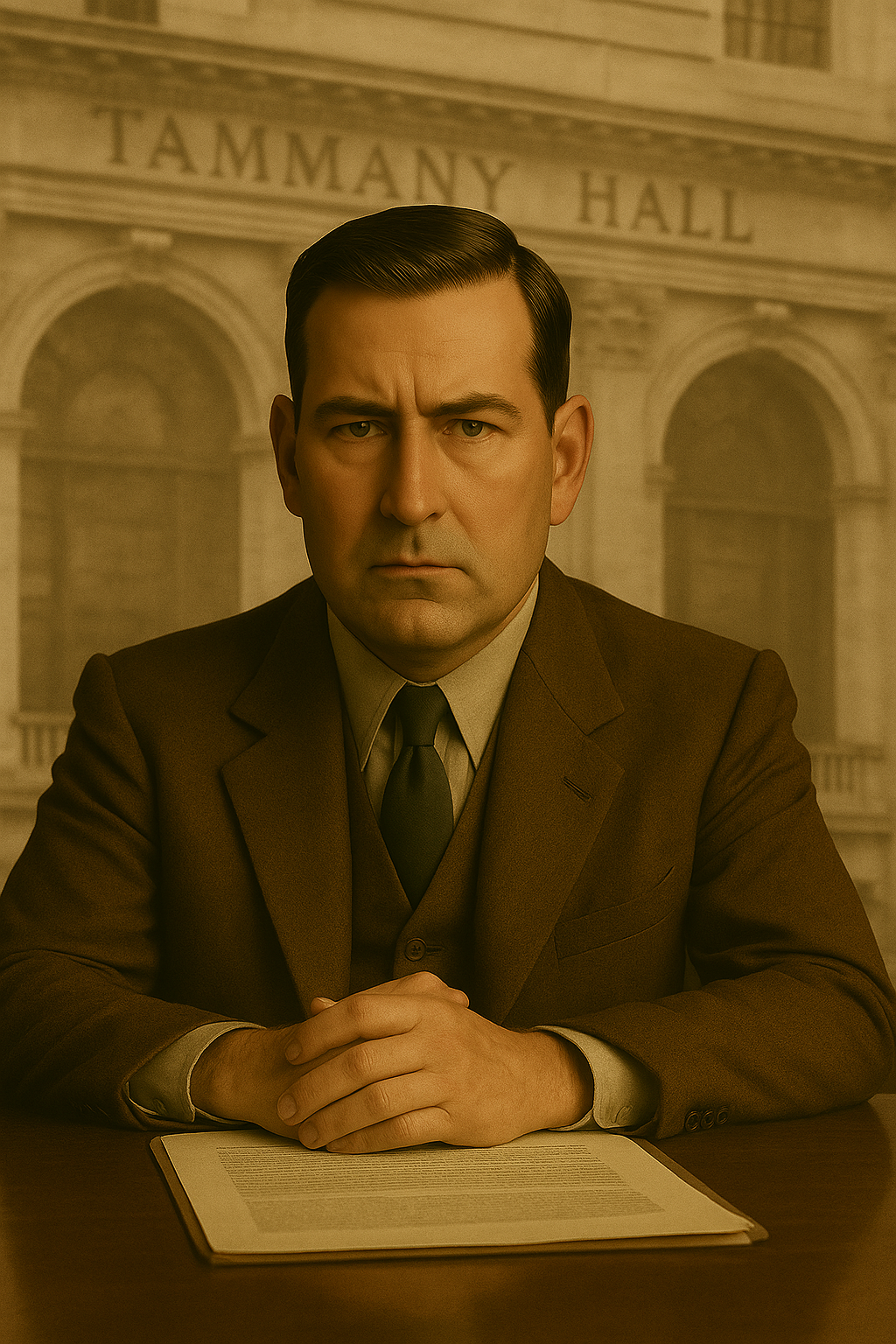
John F.-X. Markham, as you remember, had been elected District Attorney New York County on the Independent Reform Ticket during one of the city’s periodical reactions against Tammany Hall.
He served his four years, and would probably have been elected to a second term had not the ticket been hopelessly split by the political juggling of his opponents.
He was an indefatigable worker, and projected the District Attorney’s office into all manner of criminal and civil investigations.
Being utterly incorruptible, he not only aroused the fervid admiration of his constituents, but produced an almost unprecedented sense of security in those who had opposed him on partisan lines.
<ジョン=マーカム>は、ニューヨークの地方検事である。
彼は4年間の任期を務めあげたが、もしも対立候補の政治的なかけひきで、改革派の候補者名簿の分裂がなければ、おそらく2期目にも選ばれていただろう。
彼は疲れを知らぬ働き者で、地方検事局の刑事、民事のあらゆる調査に積極的に乗り出した。
まったく買収に屈しない人物だったため、彼は支持者の熱烈な称賛を呼び起こしただけでなく、党派的に反対する人たちにさえ、ほぼ前例のない安心感を与えることができた。
He had been in office only a few months when one of the newspapers referred to him as the Watch Dog; and the sobriquet clung to him until the end of his administration.
就任してからわずか数か月のうちに、ある新聞が彼を『番犬』と呼んだ。そしてそのあだ名は、彼の任期が終わるまでそう呼ばれていた。
Indeed, his record as a successful prosecutor during the four years of his incumbency was such a remarkable one that even to-day it is not infrequently referred to in legal and political discussions.
実際、4年間の在任中に達成した検事としての業績はきわめて顕著なもので、今日にいたるまで法曹界や政治の議論でしばしば引き合いに出されるほどだ。
Markham was a tall, strongly-built man in the middle forties, with a clean-shaven, somewhat youthful face which belied his uniformly grey hair.
He was not handsome according to conventional standards, but he had an unmistakable air of distinction, and was possessed of an amount of social culture rarely found in our latter-day political office-holders.
Withal he was a man of brusque and vindictive temperament; but his brusqueness was an incrustation on a solid foundation of good-breeding, not—as is usually the case—the roughness of substructure showing through an inadequately superimposed crust of gentility.
マーカムは40代半ばの、背が高くがっしりした体つきの男で、髭はなく若々しい顔立ちをしていた。
彼は、世間的な基準でいえばハンサムとはいえなかったが、まぎれもない気品をただよわせ、また近ごろの政治家にはめったに見られぬほどの教養ある社交性を身につけていた。
もっとも、彼は無愛想で容赦しない性格の男だった。
だが、その無愛想さは、しっかりした良家の育ちの良さから現れるもので、よくあるような上辺だけ上品さを纏っただけで、その下に乱暴な部分が透けて見えるというようなものではなかった。
When his nature was relieved of the stress of duty and care, he was the most gracious of men.
But early in my acquaintance with him I had seen his attitude of cordiality suddenly displaced by one of grim authority.
It was as if a new personality—hard, indomitable, symbolic of eternal justice—had in that moment been born in Markham’s body.
I was to witness this transformation many times before our association ended.
責任やストレスといった重圧から解放されたとき、彼はこの上なく親切で、愛想のよい人物だった。
だが、知り合ってまもないころ、私は彼の親しげな態度が、にわかにきびしい威厳へとすり替わるのを目にした。
それは硬い不屈の精神と、そして永遠の正義を象徴するかのような、新しい人格が、その瞬間にマーカムの体に宿ったかのようだった。
この交友関係が終わるまでに、私はこの変貌を何度も目の当たりにすることになったのだ。
In fact, this very morning, as he sat opposite to me in Vance’s living-room, there was more than a hint of it in the aggressive sternness of his expression; and I knew that he was deeply troubled over Alvin Benson’s murder.
実のところ、その日の朝、まさに、ヴァンスのリビングで私の向かいに腰をおろした彼の表情には、すでに威厳のあるきびしさが色濃くただよっていた。そして私は、アルヴィン=ベンスンの殺人事件に、彼がひどく心を悩ませているのを悟った。
He swallowed his coffee rapidly, and was setting down the cup, when Vance, who had been watching him with quizzical amusement, remarked:
彼はコーヒーをあわただしく飲みほし、カップを置こうとしたとき、ヴァンスが、おかしそうにからかうようなまなざしで彼を見つめながら、口をひらいた。

“I say; why this sad preoccupation over the passing of one Benson? You weren’t, by any chance, the murderer, what?”
「おやおや。なぜまた、ベンスン一人が死んだくらいで、そんなに深刻な顔をしているんだい?まさか、君が殺したんじゃないだろうね?」

Markham ignored Vance’s levity.
“I’m on my way to Benson’s. Do you care to come along? You asked for the experience, and I dropped in to keep my promise.”
マーカムは、ヴァンスの軽口を聞いてないふりをした。
「これからベンスンの家へ行くところだ。いっしょに来れるかい?君が一度事件現場を実際に見てみたいと言ってたので、立ち寄ったんだ」
I then recalled that several weeks before at the Stuyvesant Club, when the subject of the prevalent homicides in New York was being discussed, Vance had expressed a desire to accompany the District Attorney on one of his investigations; and that Markham had promised to take him on his next important case.
Vance’s interest in the psychology of human behavior had prompted the desire, and his friendship with Markham, which had been of long standing, had made the request possible.
そのとき、私は思い出した。数週間前、<スタイヴェサント=クラブ>で、ニューヨークで多発する殺人事件の話題が出ていたとき、ヴァンスが、いつもの気まぐれから、一度そういう事件現場を見てみたいと言ったことがあった。その時マーカムは、次の重大事件のときには必ず来てもらうと言っていたのだ。
それは、マーカムが地方検事として、常に困難を極める事件捜査を判断する重責の中で、ヴァンスの人間行動心理学への稀なる知識が、自分の仕事に役立つかもしれないと期待するところがあったようだ。
“You remember everything, don’t you?” Vance replied lazily.
“An admirable gift, even if an uncomfortable one.”
He glanced at the clock on the mantel: it lacked a few minutes of nine. “But what an indecent hour! Suppose someone should see me.”
「君はなんでも覚えているね?」と、ヴァンスはくつろいで答えた。
「たしかに立派な才能だが、都合の悪い時もあるんだよ」
彼はマントルピースの上の時計に目をやった。九時までにまだ数分あった。
「しかしなんと不適切な時刻だ!誰かに見られたらどうする?」

Markham moved forward impatiently in his chair.
“Well, if you think the gratification of your curiosity would compensate you for the disgrace of being seen in public at nine o’clock in the morning, you’ll have to hurry. I certainly won’t take you in dressing-gown and bed-room slippers. And I most certainly won’t wait over five minutes for you to get dressed.”
マーカムはいすの上でいら立たしげに身を乗り出した。
「まあ、君が気まぐれでも見たいと言ったからには、朝の九時に人前に出るという不名誉を負ってでも急いでもらうしかないな。まあ、寝間着にガウンと部屋履きスリッパ姿の君を連れて行こうとまでは思わんがね。そもそも僕自身、君の着がえに五分以上待つ余裕はまったくないんだ」
“Why the haste, old dear?” Vance asked, yawning. “The chap’s dead, don’t y’ know; he can’t possibly run away.”
「ねえ、君。どうしてそんなにせかすのさ?」と、ヴァンスはあくびをしながらたずねた。
「だって、その男はもう死んでるんだろ。逃げ出すはずもないじゃないか」
“Come, get a move on, you orchid,”
the other urged.
“This affair is no joke. It’s damned serious; and from the looks of it, it’s going to cause an ungodly scandal.—What are you going to do?”
「いいから、さっさと支度しろよ。この上品ぶった奴め」と相手はせき立てた。
「この件は冗談ごとじゃないぞ。重大事件だ。見たところとんでもないスキャンダルをまき起こすことになりそうなんだ。どうする?来ないのか?」
“Do? I shall humbly follow the great avenger of the common people,” returned Vance, rising and making an obsequious bow.
He rang for Currie, and ordered his clothes brought to him.
“I’m attending a levee which Mr. Markham is holding over a corpse, and I want something rather spiffy. Is it warm enough for a silk suit? . . . And a lavender tie, by all means.”
「どうするって?私は謹んで市民の偉大なる正義の味方である地方検事どのに従うまでです」と、言いながら、ヴァンスは立ち上がってマーカムに媚びるようなお辞儀をした。
彼はカーリーを呼び、自分の服を持ってくるように命じた。
「ミスター=マーカムが死体を前にして開く謁見式に出るのだから、ちょっと洒落た服装がいいね。シルクのスーツでもいいくらい暖かいかな?それから、ぜひラヴェンダー色のネクタイを」

“I trust you won’t also wear your green carnation,” grumbled Markham.
「まさか緑の<カーネーション>までつけるんじゃないだろうな」と、マーカムはイライラしながら言った。
“Tut! Tut!” Vance chided him.
“You’ve been reading Mr. Hichens. Such heresy in a district attorney!
Anyway, you know full well I never wear boutonnières.
The decoration has fallen into disrepute. The only remaining devotees of the practice are roués and saxophone players. . . . But tell me about the departed Benson.”
「チェッ!」と、ヴァンスは舌打ちした。
「君は<オスカー=ワイルド>みたいな風俗小説を読んでるのか。地方検事のくせに、そんな悪趣味な話を持ち出すとは!だいたい僕は襟に花飾りなんてつけないことを君もよく知ってるだろう。あんな飾りはすっかり評判が悪くなってしまったからね。いまだに好き好んで着けているのは、女たらしとサックス奏者くらいのもんさ。ところで、死んだベンスンのことについて聞かせてくれ」
Vance was now dressing, with Currie’s assistance, at a rate of speed I had rarely seen him display in such matters.
Beneath his bantering pose I recognized the true eagerness of the man for a new experience and one that promised such dramatic possibilities for his alert and observing mind.
ヴァンスは今やカーリーに手伝ってもらいながら、私が普段見たことのない速さで着替えていた。
私には、その冷やかすような態度の奥に、実は目新しい経験ができることを楽しみにしているのが見て取れた。しかもそれは、彼の明晰な頭脳と鋭い観察力を大いに発揮できる劇的な展開が期待できるのだ。
“You knew Alvin Benson casually, I believe,” the District Attorney said.
“Well, early this morning his housekeeper ’phoned the local precinct station that she had found him shot through the head, fully dressed and sitting in his favorite chair in his living-room.
「君はアルヴィン=ベンスンと面識があったと思うが」と、マーカムが言った。
「今朝早く、彼の家政婦が、主人が頭を銃で撃たれて死んでいるのを見つけたと、近くの警察署に電話で知らせてきたんだ。服を着たままリビングのお気に入りの椅子に座っていたそうだ」
The message, of course, was put through at once to the Telegraph Bureau at Headquarters, and my assistant on duty notified me immediately. I was tempted to let the case follow the regular police routine.
But half an hour later Major Benson, Alvin’s brother, ’phoned me and asked me, as a special favor, to take charge.
「その通報は、もちろんただちに本部の通信局へ回され、当直の私の部下がすぐさま私に知らせてくれた。私は当初、この事件を警察の通常の手続きに任せようと考えていた。だがその30分後、アルヴィンの兄である<ベンスン=少佐>が私に電話をかけてきて、特別に私に担当してほしいと頼んできたのだ」
I’ve known the Major for twenty years, and I couldn’t very well refuse. So I took a hurried breakfast and started for Benson’s house.
He lived in West Forty-eighth Street; and as I passed your corner I remembered your request, and dropped by to see if you cared to go along.”
「私は少佐とは20年来の付き合いで、とても断るわけにはいかなかった。そこで急いで朝食を済ませ、ベンスンの家へと向かった。彼は西48丁目に住んでいたが、君の家の角を通りかかった。そこでふと君が言ったことを思い出して、一緒に行くかどうか確かめようと立ち寄ったのさ」
“Most consid’rate,” murmured Vance, adjusting his four-in-hand before a small polychrome mirror by the door. Then he turned to me.
“Come, Van. We’ll all gaze upon the defunct Benson. I’m sure some of Markham’s sleuths will unearth the fact that I detested the bounder and accuse me of the crime; and I’ll feel safer, don’t y’ know, with legal talent at hand. . . . No objections—eh, what, Markham?”
「それはご親切なことで」と、ヴァンスは、扉の脇にある飾り付きの小さな鏡の前で、ネクタイの結び目を直しながらつぶやいた。それから彼は私の方を振り向いた。
「ヴァン、君も来てくれ。二人で亡くなったベンスンの顔を拝みに行くことにしよう。きっとマーカムの部下の刑事どもが、僕があの成金男を嫌っていたことを嗅ぎつけて、僕を犯人に仕立て上げるにちがいない。その時は弁護士の君が僕を守ってくないと困るんだ。異論はないよね、マーカム?」
“Certainly not,” the other agreed readily, although I felt that he would rather not have had me along. But I was too deeply interested in the affair to offer any ceremonious objections, and I followed Vance and Markham downstairs.
「もちろん、異論はない」とマーカムは快く応じてくれた。マーカムは、私が同じ法律家で、ヴァンスの代理人であることは知っていたし、警察との間でヴァンスが面倒なことを起こす前に、私がうまく立ち回ってくれると思ったのだろう。
私も少なからず事件現場に興味があり断る理由もなかったので、ヴァンスとマーカムのあとについて1階へ降りていった。
As we settled back in the waiting taxicab and started up Madison Avenue, I marvelled a little, as I had often done before, at the strange friendship of these two dissimilar men beside me—Markham forthright, conventional, a trifle austere, and over-serious in his dealings with life; and Vance casual, mercurial, debonair, and whimsically cynical in the face of the grimmest realities.
待たせてあったタクシーに腰を落ち着け、車が<マディソン=アヴェニュー>を走り出すと、私はこれまでにも幾度となく感じてきたように、隣に並ぶまったく対照的な二人の間に結ばれた奇妙な関係に、改めて驚かされた。
マーカムは率直で、常識的、やや堅苦しく、人の生き方について、あまりにも真面目に考えすぎる性格だった。
一方ヴァンスは、気ままな気分屋で愛想がよく、どんなに深刻な現実を前にしても、常に冷やかに考えている皮肉屋だった。
And yet this temperamental diversity seemed, in some wise, the very cornerstone of their friendship: it was as if each saw in the other some unattainable field of experience and sensation that had been denied himself.
Markham represented to Vance the solid and immutable realism of life, whereas Vance symbolized for Markham the care-free, exotic, gypsy spirit of intellectual adventure.
Their intimacy, in fact, was even greater than showed on the surface; and despite Markham’s exaggerated deprecations of the other’s attitudes and opinions, I believe he respected Vance’s intelligence more profoundly than that of any other man he knew.
それにもかかわらず、この性格の違いこそが、ある意味、まさに彼らの関係の礎であるように思われた。まるで互いに相手の中に、自分自身には備わっていない、手の届かぬ経験や感覚を求めているかのようだった。
マーカムはヴァンスにとって、人生の揺るぎない現実そのものを、具現化してくれる存在だった。一方でヴァンスは、マーカムにとって、気ままで風変わりな知的冒険を楽しむ自由人気質の象徴だった。
実際には、二人の親密な関係は見かけ以上だった。マーカムはヴァンスの態度や考え方を大げさに否定してみせることが多かったが、心の底では、彼は、他の誰よりもヴァンスの知性を高く評価しているのだ。
そうでなければ、重大事件の初動捜査の現場に、我々のような民間人を連れて行こうなどとは考えないだろう。
As we rode up town that morning Markham appeared preoccupied and gloomy. No word had been spoken since we left the apartment; but as we turned west into Forty-eighth Street Vance asked:
その朝、タクシーで<アップタウン>方面へ向かうあいだ、マーカムは、思いつめたように暗い表情をしていた。アパートを出てから一言も言葉を交わさず、やがて48丁目を西に折れたとき、ヴァンスが口を開いた。

“What is the social etiquette of these early-morning murder functions, aside from removing one’s hat in the presence of the body?”
「こんな朝っぱらの殺人現場での社交的なマナーは何かあるのかな?せめて遺体の前では帽子をとるくらいは別にしてさ」
“You keep your hat on,” growled Markham.
「帽子なんか脱がなくていい、かぶってろ」マーカムが怒鳴るように言った。
“My word! Like a synagogue, what? Most int’restin’! Perhaps one takes off one’s shoes so as not to confuse the footprints.”
「これは驚いた!まるでユダヤ教の礼拝堂みたいじゃないか。いやはや興味深いね!足跡が混ざらないように、靴を脱ぐ決まりでもあるのかな」
“No,” Markham told him. “The guests remain fully clothed—in which the function differs from the ordinary evening affairs of your smart set.”
「脱がない」と、マーカムが言った。
「ここでは皆んな服も着たままだ。そのあたりは君たちのような気取った仲間の夜のパーティーとは違うんだ」
“My dear Markham!”—Vance’s tone was one of melancholy reproof—“The horrified moralist in your nature is at work again. That remark of yours was pos’tively Epworth Leaguish.”
「やれやれ、マーカム!」
ヴァンスは憐れむような口調で不満げに言った。
「また、君の堅苦しい道徳観が顔を出したね。今の発言は、まるで禁酒だの禁欲など、厳格な道徳規律を重んじた、どこぞのキリスト教の青年組織みたいだよ」
Markham was too abstracted to follow up Vance’s badinage.
マーカムはぼんやりと考えごとをしているのか、ヴァンスの軽口は相手にしなかった。
“There are one or two things,” he said soberly, “that I think I’d better warn you about. From the looks of it, this case is going to cause considerable noise, and there’ll be a lot of jealousy and battling for honors.
I won’t be fallen upon and caressed affectionately by the police for coming in at this stage of the game; so be careful not to rub their bristles the wrong way.
My assistant, who’s there now, tells me he thinks the Inspector has put Heath in charge. Heath’s a sergeant in the Homicide Bureau, and is undoubtedly convinced at the present moment that I’m taking hold in order to get the publicity.”
「ちょっと忠告しておいた方がいいことがいくつかある」
マーカムは真剣な声で言った。
「この事件は、どうやら相当な騒ぎになりそうだ。それに手柄争いや出し抜き、それに絡んだ嫉みとか、あちこちで起こるだろう。この段階で私が事件に顔を出したところで、警察が心よく歓迎してくれるわけじゃない。だから、警察の気に障るような真似はしないように注意してくれ。今、現場にいる私の部下の話では、警察は<ヒース>を事件捜査の担当に据えたらしい。ヒースは殺人課の巡査部長で、きっと今ごろ、私が事件に乗り出そうとしているのは、売名目的だと決めつけているに違いないんだ」
“Aren’t you his technical superior?” asked Vance.
「君は司法制度においては、彼より偉い立場じゃないのか?」と、ヴァンスが聞いた。
“Of course; and that makes the situation just so much more delicate. . . . I wish to God the Major hadn’t called me up.”
「もちろんそうだ。だからこそ事態はいっそうややこしくなる。まったく、大佐が私に電話なんかしてこなければよかったと思うくらいだ」
“Eheu!” sighed Vance. “The world is full of Heaths. Beastly nuisances.”
「あーあー!」とヴァンスはため息をついた。
「世の中にはヒースのような奴がごまんといる。まったく厄介な連中だ」
“Don’t misunderstand me,” Markham hastened to assure him.
“Heath is a good man—in fact, as good a man as we’ve got. The mere fact that he was assigned to the case shows how seriously the affair is regarded at Headquarters. There’ll be no unpleasantness about my taking charge, you understand; but I want the atmosphere to be as halcyon as possible.
Heath’ll resent my bringing along you two chaps as spectators, anyway; so I beg of you, Vance, emulate the modest violet.”
「誤解してくれるなよ」と、マーカムはあわてて念を押した。
「ヒースは優秀な奴だ。実際、我々の中では最高の人物と言っていい。今回、彼が担当になった事実自体が、本部がこの事件をいかに重く見ているかを示している。君たちも理解しておいて欲しい。私が指揮をとることでトラブルになることはないと思うが、できるだけ穏やかな雰囲気にしておきたい。ヒースは、君たち二人を見物人として連れて行くと、いずれにせよひどく嫌がると思う。だから、ヴァンス。慎ましくすみれの花になったつもりで現場を見てくれよ」
“I prefer the blushing rose, if you don’t mind,” Vance protested.
“However, I’ll instantly give the hypersensitive Heath one of my choicest Régie cigarettes with the rose-petal tips.”
「僕はね、控えめなすみれよりも、はにかんで顔を赤らめたバラの方が好みなんだが、それでよろしいかな?」とヴァンスは言い返した。
「それではさっそく、神経過敏なヒースには、僕のとっておきのフランスの高級タバコを1本差し上げるとしよう。吸い口にバラの花びらがついてるんだ」
“If you do,” smiled Markham, “he’ll probably arrest you as a suspicious character.”
「そんなことをしたらな」と、マーカムは笑った。
「ヒースはきっと君を、不審人物として逮捕するだろうよ」
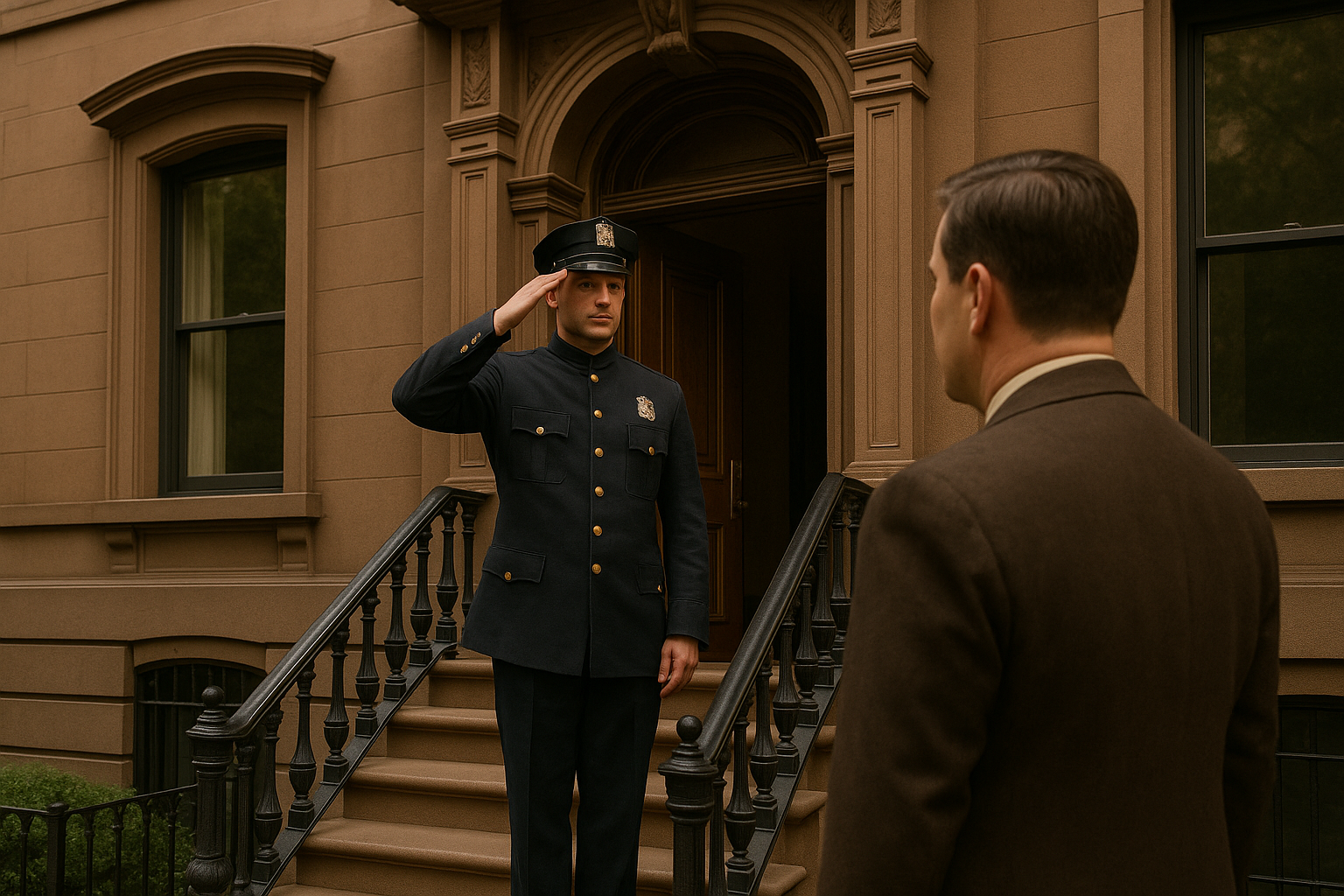
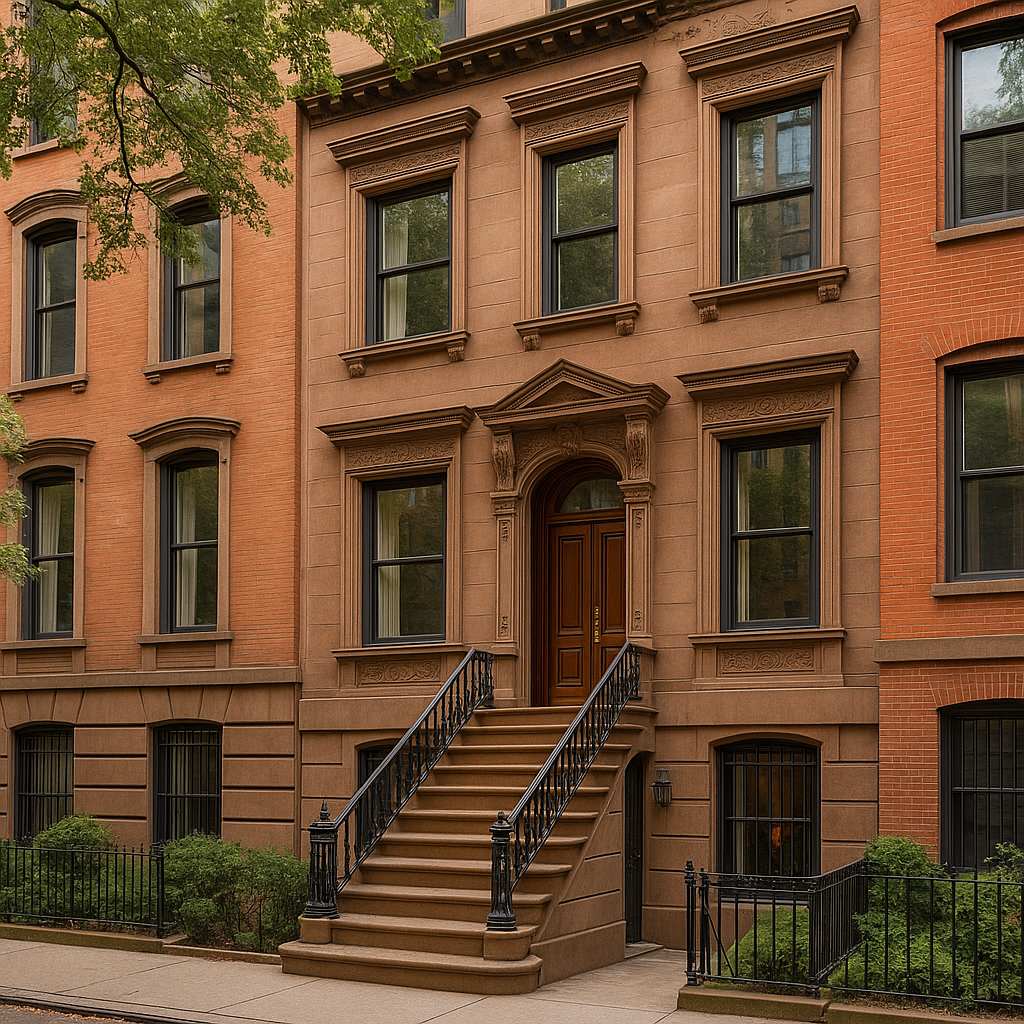
We had drawn up abruptly in front of an old brownstone residence on the upper side of Forty-eighth Street, near Sixth Avenue. It was a house of the better class, built on a twenty-five-foot lot in a day when permanency and beauty were still matters of consideration among the city’s architects.
The design was conventional, to accord with the other houses in the block, but a touch of luxury and individuality was to be seen in its decorative copings and in the stone carvings about the entrance and above the windows.
私たちの乗った車は、48丁目の6番街近く、通りの北側にある、茶色の石を使った古い建築様式の建物の前で、突然止まった。
それは間口が約8メートル弱の屋敷で、まだ都市の建築家たちが、耐久性と美しさを重んじていた時代に建てられたものだった。
その設計は、ごくありふれたもので、その区画のほかの家並と調和していた。だが、壁や屋根の装飾や、入口や窓の上に施された石彫りには、多少の贅沢さと独自性が見られた。
There was a shallow paved areaway between the street line and the front elevation of the house; but this was enclosed in a high iron railing, and the only entrance was by way of the front door, which was about six feet above the street level at the top of a flight of ten broad stone stairs.
Between the entrance and the right-hand wall were two spacious windows covered with heavy iron grilles.
家の正面と通りとの間には、狭い舗装された通路があった。だが、そこは高い鉄の手すりで囲まれており、地下に勝手口はなく、入口は唯一10段の幅広い石の階段を上がって、通りから2メートルほど高くなった玄関から入るしかなかった。
玄関と右側の壁との間には、二つの大きな窓があるが、頑丈な鉄格子がはめられていた。
A considerable crowd of morbid onlookers had gathered in front of the house; and on the steps lounged several alert-looking young men whom I took to be newspaper reporters.
The door of our taxicab was opened by a uniformed patrolman who saluted Markham with exaggerated respect and ostentatiously cleared a passage for us through the gaping throng of idlers.
家の前には、かなりの数のヤジ馬が集まっていた。
玄関の石段には、数人の若い男たちが腰を下ろしたりぶらぶらしていたが、その目は鋭くあたりを見まわしていた。私は彼らを新聞記者と受け取った。
タクシーのドアを開けたのは制服の巡査で、彼はマーカムに大げさなほど恭しく敬礼すると、わざとらしく私たちのために道を開けた。その道は、ぽかんと口をあけている野次馬の群衆の中に通じていた。
Another uniformed patrolman stood in the little vestibule, and on recognizing Markham, held the outer door open for us and saluted with great dignity.
もう一人の制服警官が小さな玄関に立っていた。
彼はマーカムに気づくと、私たちのために扉を開けたまま、いかにも重々しく敬礼した。

“Ave, Cæsar, te salutamus,” whispered Vance, grinning.
「<カエサル>万歳」と、ヴァンスが笑いながらささやいた。
“Be quiet,” Markham grumbled.
“I’ve got troubles enough without your garbled quotations.”
「黙ってろ」と、マーカムが不満げに言った。
「君のデタラメな例え話に付き合うほど、今は暇じゃないんだ」
As we passed through the massive carved-oak front door into the main hallway, we were met by Assistant District Attorney Dinwiddie, a serious, swarthy young man with a prematurely lined face, whose appearance gave one the impression that most of the woes of humanity were resting upon his shoulders.
私たちは、重厚な彫刻の入った木製の正面玄関を抜けると広いホールに入った。
そこで出迎えたのは、検事補のディンウィディだった。
浅黒い肌に、若いにも関わらず皺の刻まれた真面目そうな顔つきをしており、まるで人類のあらゆる悲哀をその肩に背負っているかのような印象を与える男だった。

“Good morning, Chief,” he greeted Markham, with eager relief.
“I’m damned glad you’ve got here. This case’ll rip things wide open. Cut-and-dried murder, and not a lead.”
「おはようございます、チーフ」と、彼はほっとしたように勢いよくマーカムに声をかけた。
「来てくださって本当に助かりました。この事件は大騒動になりますよ。ありふれた殺人なんですが、手がかりがまるっきりないんです」
Markham nodded gloomily, and looked past him into the living-room.
マーカムは深刻そうにうなずき、彼の肩越しに広い部屋の中を見回した。
“Who’s here?” he asked.
「誰が来てる?」と、彼は尋ねた。

“The whole works, from the Chief Inspector down,” Dinwiddie told him, with a hopeless shrug, as if the fact boded ill for all concerned.
「勢揃いですよ。主任警部から下っ端まで」と、ディンウィディは肩をすくめて、まるで、そのこと自体が関係者全員にとって悪い兆しのように言った。
At that moment a tall, massive, middle-aged man with a pink complexion and a closely-cropped white moustache, appeared in the doorway of the living-room. On seeing Markham he came forward stiffly with outstretched hand. I recognized him at once as Chief Inspector O’Brien, who was in command of the entire Police Department.
そのとき、広い部屋の入口に、背が高く、がっしりした中年の男が現れた。
血色のよい顔に、短く刈りそろえた白い口髭をたくわえている。
彼はマーカムを見るなり、姿勢を正して手を差し出しながら歩み寄った。
私はすぐに、それが警察全体を統括する主任警部の<オブライエン>だとわかった。
Dignified greetings were exchanged between him and Markham, and then Vance and I were introduced to him. Inspector O’Brien gave us each a curt, silent nod, and turned back to the living-room, with Markham, Dinwiddie, Vance and myself following.
マーカムとオブライエンのあいだで、重々しい挨拶が交わされた。
つづいてヴァンスと私が紹介されると、オブライエンは私たちに短く無言のうなずきを返し、そのまま広い部屋へ向き直った。
マーカム、ディンウィディ、ヴァンス、そして私がそのあとに続いた。
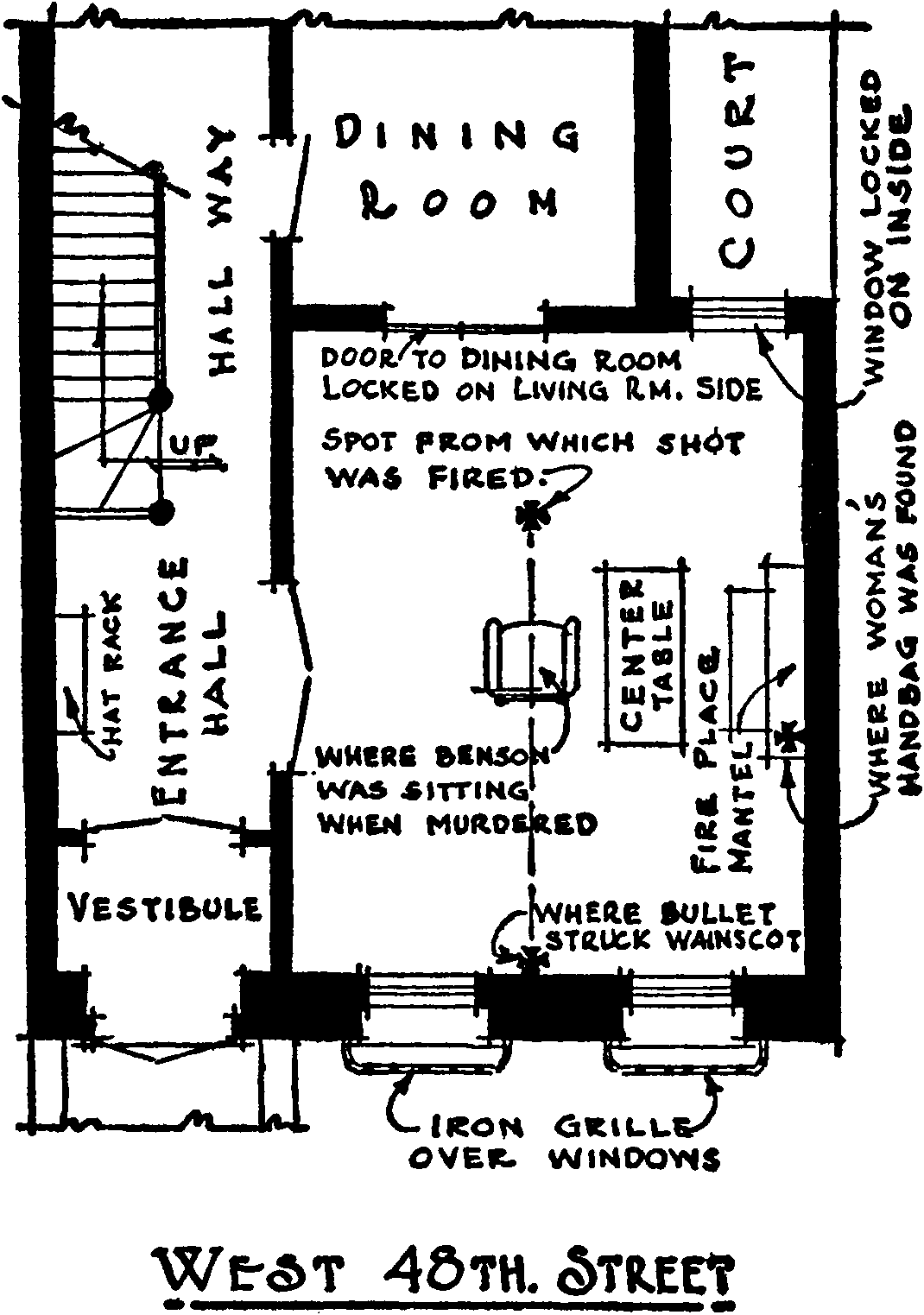
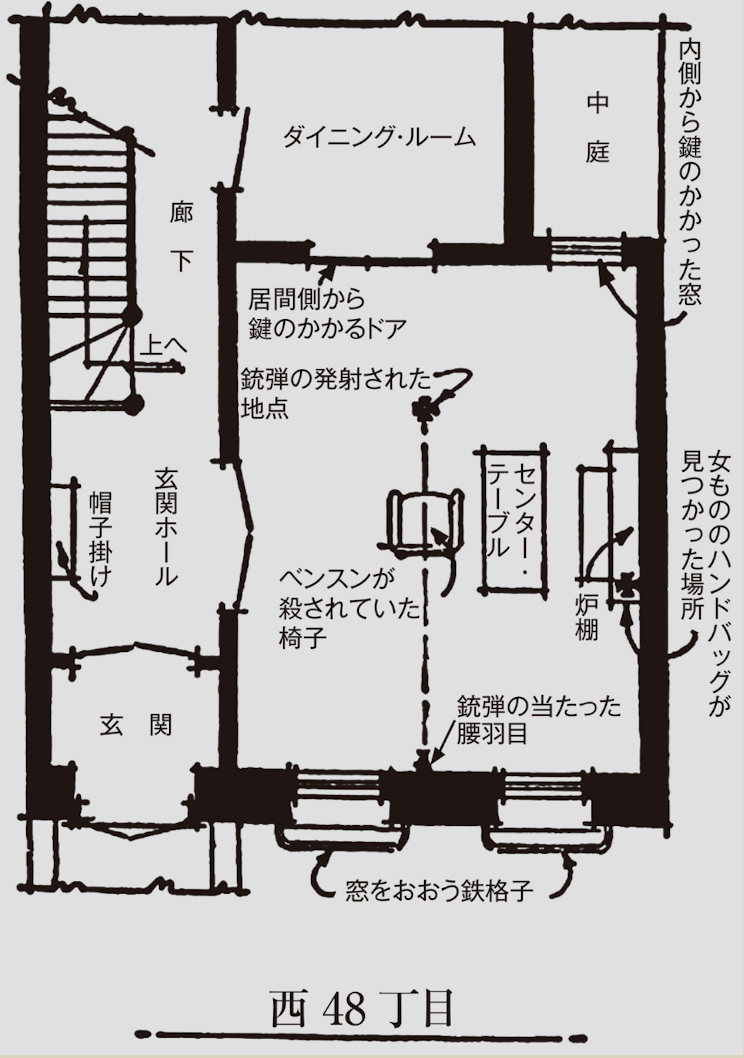
The room, which was entered by a wide double door about ten feet down the hall, was a spacious one, almost square, and with high ceilings.
Two windows gave on the street; and on the extreme right of the north wall, opposite to the front of the house, was another window opening on a paved court. To the left of this window were the sliding doors leading into the dining-room at the rear.
その部屋は、廊下を十フィートほど進んだ先の、幅の広い両開きの扉から入るようになっていた。
広々としてほとんど正方形に近く、天井も高い。
通りに面した窓が二つあり、北側の壁のいちばん右手、つまり家の正面とは反対側には、石畳の中庭に面したもう一つの窓があった。
その窓の左側には、奥の食堂へ通じる引き戸が設けられていた。

The room presented an appearance of garish opulence.
About the walls hung several elaborately framed paintings of race-horses and a number of mounted hunting trophies.
A highly-colored oriental rug covered nearly the entire floor.
In the middle of the east wall, facing the door, was an ornate fireplace and carved marble mantel.
Placed diagonally in the corner on the right stood a walnut upright piano with copper trimmings.
その部屋は、けばけばしいほどの豪華さを放っていた。
壁には、豪華な額縁に収められた数枚の競走馬の絵と、いくつもの動物の剥製が飾られていた。
床全体は、きわめて鮮やかな東洋の絨毯が敷き詰められていた。
東の壁の中央、つまり入って正面には、装飾を凝らした暖炉と、彫刻の施された大理石のマントルピースがあった。
右手の隅には、アップライトピアノが斜めに置かれ、ブロンズの装飾で縁取られていた。
Then there was a mahogany bookcase with glass doors and figured curtains, a sprawling tapestried davenport, a squat Venetian tabouret with inlaid mother of pearl, a teak-wood stand containing a large brass samovar, and a buhl-topped center table nearly six feet long.
そのほかにも、ガラス扉と模様入りのカーテンを備えたマホガニーの書棚。横たわることができるほど大きな革張りのソファ。螺鈿細工をほどこした脚の短い飾り椅子。大きな真鍮製の湯沸かし器を載せたテーブル。そして長さ六フィート近い<ルイ14世>時代の家具職人の手によるセンターテーブルが置かれていた。
At the side of the table nearest the hallway, with its back to the front windows, stood a large wicker lounge chair with a high, fan-shaped back.
このテーブルのいちばん廊下に近い、正面の窓に背を向けた位置に、大きな安楽椅子が置かれていた。それは枝で編まれ背もたれが扇形に高く広がった椅子だった。
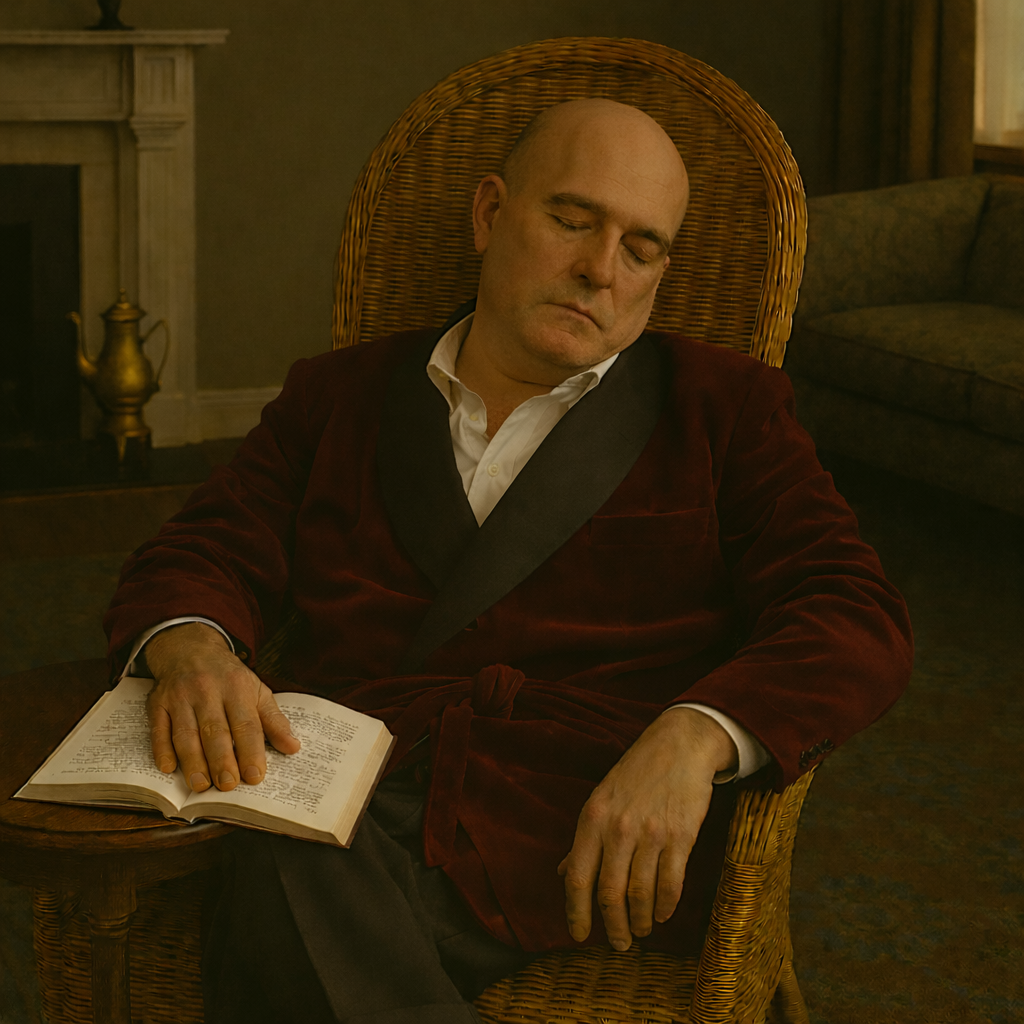
In this chair reposed the body of Alvin Benson.
その椅子に、アルヴィン=ベンスンの遺体が横たわっていた。
Though I had served two years at the front in the World War and had seen death in many terrible guises, I could not repress a strong sense of revulsion at the sight of this murdered man. In France death had seemed an inevitable part of my daily routine, but here all the organisms of environment were opposed to the idea of fatal violence.
第一次大戦で二年間、前線勤務を経験し、あらゆる凄惨な形の死を見てきた私だったが、この殺された男を目にしたときには、どうしても激しい嫌悪の感情を抑えることができなかった。
戦場のフランスでは、『死』というものは、日常の一部として当然のように存在していた。
だがここでは、すべてのものが、戦争という概念の対局にあるように思えたのだ。
The bright June sunshine was pouring into the room, and through the open windows came the continuous din of the city’s noises, which, for all their cacophony, are associated with peace and security and the orderly social processes of life.
明るい六月の太陽の光が部屋いっぱいに差し込み、開け放たれた窓からは、都会のざわめきが絶え間なく流れ込んでくる。
その騒音の入り混じった雑踏の中にも、どこか平和と安定、そして社会生活の秩序ある営みを思わせる響きがあった。
Benson’s body was reclining in the chair in an attitude so natural that one almost expected him to turn to us and ask why we were intruding upon his privacy.
His head was resting against the chair’s back. His right leg was crossed over his left in a position of comfortable relaxation.
His right arm was resting easily on the center-table, and his left arm lay along the chair’s arm.
But that which most strikingly gave his attitude its appearance of naturalness, was a small book which he held in his right hand with his thumb still marking the place where he had evidently been reading.5
ベンスンの死体は椅子にもたれかかるように座っていた。
その姿勢があまりにも自然だったので、我々が部屋に立ち入った理由を尋ねようとして、彼が今にも振り向くのではないかと思われるほどだった。
彼の頭は椅子の背にもたれていた。右脚は左脚の上に組まれ、いかにも楽にくつろいだ姿勢だった。
彼の右腕はセンターテーブルの上にだらりと置かれ、左腕は椅子の肘掛けに沿って伸ばされていた。
だが、彼の姿勢をとりわけ自然なものに見せていたのは、右手に持っている小さな本であり、親指がつい先ほどまで読んでいた箇所を押さえたままになっていた。
He had been shot through the forehead from in front; and the small circular bullet mark was now almost black as a result of the coagulation of the blood.
A large dark spot on the rug at the rear of the chair indicated the extent of the hemorrhage caused by the grinding passage of the bullet through his brain.
Had it not been for these grisly indications one might have thought that he had merely paused momentarily in his reading to lean back and rest.
彼は真正面から額を撃ち抜かれていた。額に残された小さな円形の弾痕は、血液が固まって、いまではほとんど黒くなっていた。
椅子の後に敷かれたの絨毯には、大きな黒い染みがあった。弾丸が脳をえぐり抜けてことで生じた出血の激しさを物語っていた。
こうした陰惨な痕跡がなかったなら、彼は読書の途中でほんのひととき手を休め、椅子にもたれて休んでいるだけだに見えたかもしれない。
He was attired in an old smoking-jacket and red felt bed-room slippers, but still wore his dress trousers and evening shirt, though he was collarless, and the neck band of the shirt had been unbuttoned as if for comfort.
He was not an attractive man physically, being almost completely bald and more than a little stout.
His face was flabby, and the puffiness of his neck was doubly conspicuous without its confining collar.
With a slight shudder of distaste I ended my brief contemplation of him, and turned to the other occupants of the room.
彼は年季の入った室内用のベルベットの上着に、赤いフェルトの寝室用スリッパを履いていたが、ズボンは正装のままで、パーティー用のシャツも着たままだった。ただし襟は外され、シャツの首回りのバンドは、楽になるためか、外されていた。
彼は容貌の点では魅力的とは言えず、頭は禿げ上がり、しかもかなり太り気味だった。彼の顔はたるみがちで、首元は、締め付ける襟がないためか、むくんだ肌がいっそう目立っていた。
私は、少し嫌気がさして身震いすると、彼を観察するのはすぐに打ち切って、部屋に居合わせた他の者たちへと目を向けた。
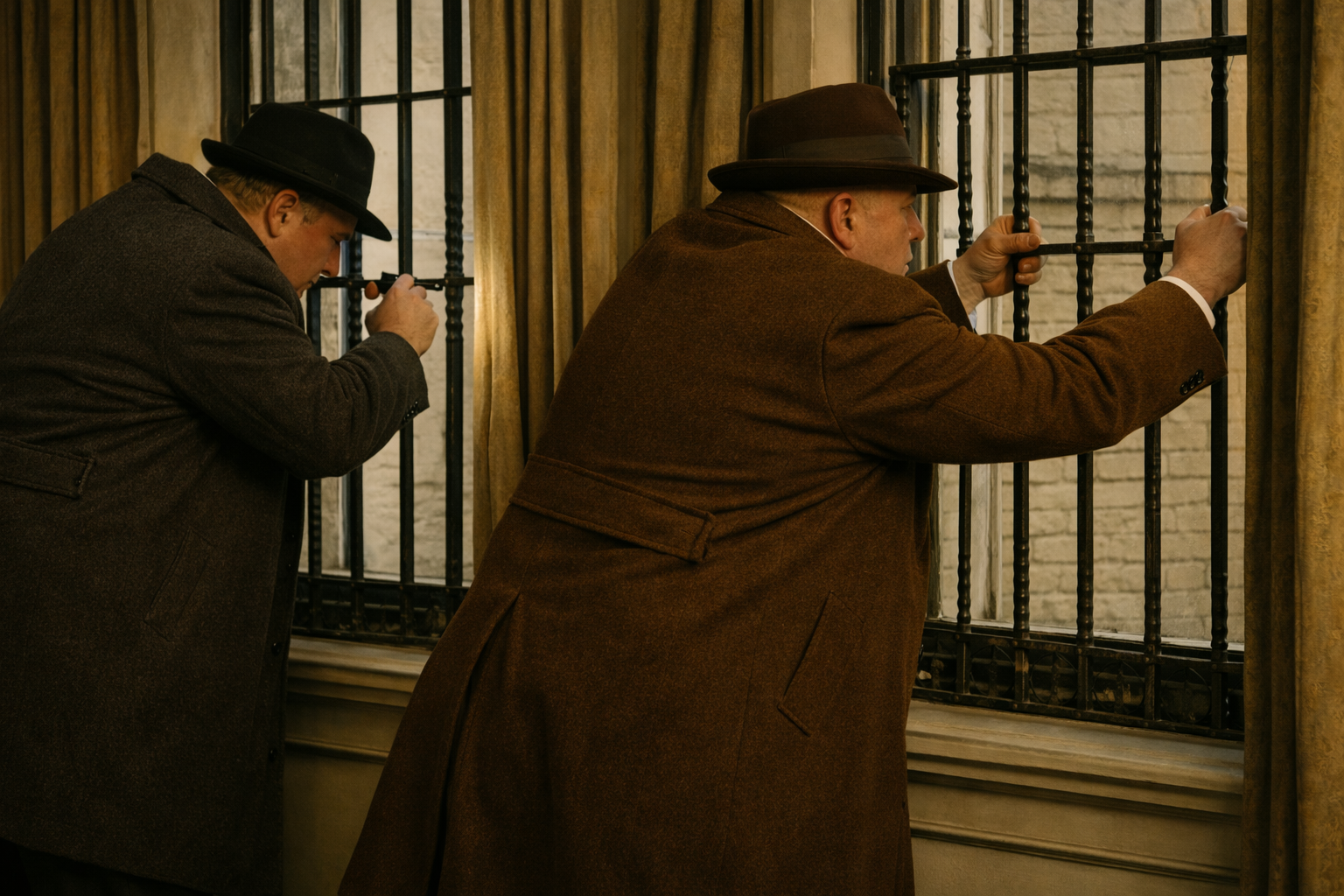
Two burly fellows with large hands and feet, their black felt hats pushed far back on their heads, were minutely inspecting the iron grill-work over the front windows.
They seemed to be giving particular attention to the points where the bars were cemented into the masonry; and one of them had just taken hold of a grille with both hands and was shaking it, simian-wise, as if to test its strength.
Another man, of medium height and dapper appearance, with a small blond moustache, was bending over in front of the grate looking intently, so it seemed, at the dusty gas-logs.
On the far side of the table a thickset man in blue serge and a derby hat, stood with arms a-kimbo scrutinizing the silent figure in the chair.
His eyes, hard and pale blue, were narrowed, and his square prognathous jaw was rigidly set.
He was gazing with rapt intensity at Benson’s body, as though he hoped, by the sheer power of concentration, to probe the secret of the murder.
手足の大きいがっしりした男が二人、黒いフェルト帽を深く後ろへずらし、正面の窓に取り付けられた鉄製の格子を細かいところまで念入りに調べていた。
彼らは、とりわけ格子が石積みのセメントに固定されている箇所に注意を向けているようで、そのうちの一人は、ちょうど両手で格子をつかみ猿のような身ぶりで揺さぶって、その強度を確かめていた。
もう一人の中肉中背の男は、小ぎれいな身なりで金色の小さな口ひげを生やし、暖炉の前に身をかがめ、みをかげめほこりをかぶったガス暖炉の装飾を、じっと見つめているようだった。
テーブルの向こう側では、青いサージの服に山高帽をかぶったがっしりした男が、両手を腰に当てた姿勢で、椅子に座る無言の人物をじっと見据えていた。
彼の厳しく淡い青色の目は細められ、四角ばって突き出た下顎は、きつく据えられていた。
彼は、まるで集中力そのものの力で殺人の秘密を見抜こうとでもするかのように、ベンスンの遺体を、息をのむほどじっと凝視していた。
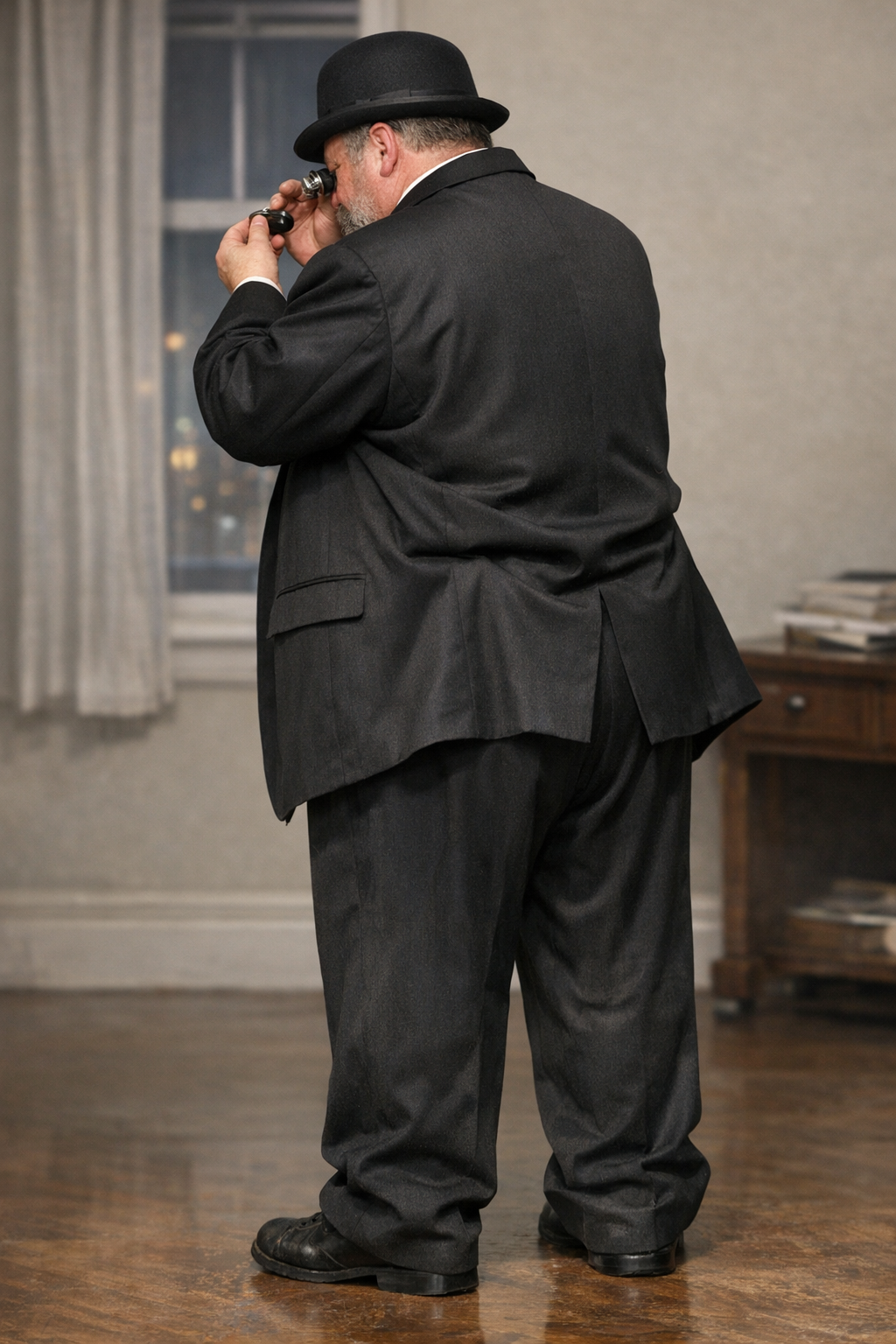
Another man, of unusual mien, was standing before the rear window, with a jeweller’s magnifying glass in his eye, inspecting a small object held in the palm of his hand.
From pictures I had seen of him I knew he was Captain Carl Hagedorn, the most famous fire-arms expert in America.
He was a large, cumbersome, broad-shouldered man of about fifty; and his black shiny clothes were several sizes too large for him. His coat hitched up behind, and in front hung half way down to his knees; and his trousers were baggy and lay over his ankles in grotesquely comic folds. His head was round and abnormally large, and his ears seemed sunken into his skull. His mouth was entirely hidden by a scraggly, grey-shot moustache, all the hairs of which grew downwards, forming a kind of lambrequin to his lips. Captain Hagedorn had been connected with the New York Police Department for thirty years, and though his appearance and manner were ridiculed at Headquarters, he was profoundly respected. His word on any point pertaining to fire-arms and gunshot wounds was accepted as final by Headquarters men.
もう一人、どこか異様な風貌の男が、奥の窓の前に立ち、宝石鑑定の拡大鏡を片目に当て、手のひらに載せた小さな物体を調べていた。
私は以前、彼の写真を見たことがあった。彼はアメリカで最も名高い銃器の専門家、<カール=ヘイゲドルン>だった。陸軍大尉で、歳は五十くらい、大柄で動きの鈍そうな、肩幅の広い男だった。黒く光る服は、どれも彼にはサイズ的にあまりに大きすぎるように見えた。
コートは後ろでつり上がり、前では膝の中ほどまでだらりと垂れ下がっていた。ズボンはぶかぶかで、足首の上に奇妙に滑稽なひだを作ってたるんでいた。
頭は丸く、異様なほど大きく、耳は頭蓋骨に沈み込んでいるように見えた。
口元は白髪まじりの、ぼさぼさした口ひげにすっかり覆われていた。その髭はすべて下向きに伸び、唇の前に一種の垂れ飾りのような形を作っていた。
ヘイゲドルンは、三十年にわたってニューヨーク警察と関わってきた人物であり、外見や物腰は、本部ではしばしば物笑いの的になっていたが、その専門分野においては、深く尊敬されていた。
銃器に関するいかなる問題についても、彼の見解は、警察本部の人間たちによって、最終的な判断として受け入れられていた。
In the rear of the room, near the dining-room door, stood two other men talking earnestly together. One was Inspector William M. Moran, Commanding Officer of the Detective Bureau; the other, Sergeant Ernest Heath of the Homicide Bureau, of whom Markham had already spoken to us.
部屋の奥、食堂の扉の近くには、ほかに二人の男が立っていて、真剣な様子で話し込んでいた。
一人は、刑事局の警部で捜査の指揮官でもある<ウィリアム=モラン>で、もう一人は、殺人課の巡査部長<アーネスト=ヒース>であり、この人物についてはマーカムがすでに我々に話してくれていた。
As we entered the room in the wake of Chief Inspector O’Brien everyone ceased his occupation for a moment and looked at the District Attorney in a spirit of uneasy, but respectful, recognition. Only Captain Hagedorn, after a cursory squint at Markham, returned to the inspection of the tiny object in his hand, with an abstracted unconcern which brought a faint smile to Vance’s lips.
オブライエンに続いて我々が部屋に入ると、その場にいた全員が一瞬それぞれの作業をやめ、不安げではあるものの、敬意を持った面持ちで、地方検事のほうを見た。
ただしヘイゲドルンだけは、マーカムをちらりと見ただけで、手の中の小さな物体の調査に再び戻り、その没頭した無関心ぶりに、ヴァンスはその唇にかすかな微笑を浮かべた。
Inspector Moran and Sergeant Heath came forward with stolid dignity; and after the ceremony of hand-shaking (which I later observed to be a kind of religious rite among the police and the members of the District Attorney’s staff), Markham introduced Vance and me, and briefly explained our presence. The Inspector bowed pleasantly to indicate his acceptance of the intrusion, but I noticed that Heath ignored Markham’s explanation, and proceeded to treat us as if we were non-existent.
モランとヒースが、事務的な威厳を持って前に進み出た。そして握手という儀式(これは後になって私が気づいたのだが、警察と地方検事局の職員のあいだでは一種の宗教的な礼儀らしかった)を済ませると、マーカムがヴァンスと私を紹介した。ヴァンスはマーカムの友人であり、彼の助言が事件解決に有用であること、私が彼の弁護士として同席していることを、マーカムは手短かだが威厳を持って説明した。警部は穏やかに一礼して、この立ち入りを受け入れる意思を示したが、ヒースのほうはマーカムの説明を無視し、まるで我々が存在しないかのように振る舞い続けた。
Inspector Moran was a man of different quality from the others in the room. He was about sixty, with white hair and a brown moustache, and was immaculately dressed. He looked more like a successful Wall Street broker of the better class than a police official.6
モランは、この部屋にいるほかの連中とは明らかに質の異なる男だった。
年は六十歳ほど、白髪に茶色の口ひげをたくわえ、身なりは非の打ちどころなく整っていた。警察官というよりも、一流の成功した<ウォール=街>の証券ブローカーのように見えた。

“I’ve assigned Sergeant Heath to the case, Mr. Markham,” he explained in a low, well-modulated voice.
“It looks as though we were in for a bit of trouble before it’s finished. Even the Chief Inspector thought it warranted his lending the moral support of his presence to the preliminary rounds.
He has been here since eight o’clock.”
「私はこの件を巡査部長のヒースに担当させています、ミスター=マーカム」と、彼は声を低く抑えて慎重に説明した。
「どうやらこれは、片づくまでに多少厄介なことになりそうです。主任警部でさえ、初動の段階で現場に来て、精神的にサポートするべきと判断したほどでしてね。彼は八時からここに詰めています」
“Well, I think I’ll be going,” Moran added. “They had me out of bed at seven-thirty, and I haven’t had any breakfast yet. I won’t be needed anyway now that you’re here. . . . Good-morning.” And again he shook hands.
「さて、私はこれで失礼します」と、モランは付け加えた。
「七時半にたたき起こされて、まだ朝食もとってないんです。あなたがいらした以上、ヒースには今後はあなたの判断に従って動くように言ってあります。それではこれで」
そう言って彼はもう一度握手をした。
Inspector O’Brien had left us immediately upon entering the room, and now stood between the front windows, watching the proceedings with a grave, indecipherable face.
主任警部のオブライエンは、私たちが部屋に入るなり私たちのもとを離れ、いまは正面の窓のあいだに立って、真剣に無表情のまま、事の成り行きを見守っていた。
When he had gone Markham turned to the Assistant District Attorney.
モランが立ち去ると、マーカムは副検事のほうへ向き直った。
“Look after these two gentlemen, will you, Dinwiddie? They’re babes in the wood, and want to see how these affairs work. Explain things to them while I have a little confab with Sergeant Heath.”
この二人を頼むよ、ディンウィディ。事件現場はまだ右も左も分からない雛鳥みたいな二人だが、現場がどう動くのか見せてやれば、きっと役に立つ連中なんだ。私がヒースと少し内密の話をしているあいだ、いろいろ説明してやってくれないか」
Dinwiddie accepted the assignment eagerly. I think he was glad of the opportunity to have someone to talk to by way of venting his pent-up excitement.
As the three of us turned rather instinctively toward the body of the murdered man—he was, after all, the hub of this tragic drama—I heard Heath say in a sullen voice:
“I suppose you’ll take charge now, Mr. Markham.”
Dinwiddie and Vance were talking together, and I watched Markham with interest after what he had told us of the rivalry between the Police Department and the District Attorney’s office.
Markham looked at Heath with a slow gracious smile, and shook his head.
“No, Sergeant,” he replied. “I’m here to work with you, and I want that relationship understood from the outset. In fact, I wouldn’t be here now if Major Benson hadn’t ’phoned me and asked me to lend a hand. And I particularly want my name kept out of it. It’s pretty generally known—and if it isn’t, it will be—that the Major is an old friend of mine; so, it will be better all round if my connection with the case is kept quiet.”
Heath murmured something I did not catch, but I could see that he had, in large measure, been placated. He, in common with all other men who were acquainted with Markham, knew his word was good; and he personally liked the District Attorney.
“If there’s any credit coming from this affair,” Markham went on, “the Police Department is to get it; therefore I think it best for you to see the reporters. . . . And, by the way,” he added good-naturedly, “if there’s any blame coming, you fellows will have to bear that, too.”
“Fair enough,” assented Heath.
“And now, Sergeant, let’s get to work,” said Markham.
5
The book was O. Henry’s Strictly Business, and the place at which it was being held open was, curiously enough, the story entitled “A Municipal Report.”
その本は<O=ヘンリー>の『完璧なお仕事』(政治やビジネスを題材に、事務的な言葉遣いの裏に皮肉を込めた短編集)で、しかも奇妙なことに、開かれていた箇所は『市町村広報』と題された箇所だった。