“The Incredible Theft” is an expanded version of the story “The Submarine Plans, ” which was first published in The Sk etch, November 7, 1923.
「The Incredible Theft(謎の盗難事件)」は、1923年11月7日に雑誌『ザ・スケッチ(The Sketch)』に初めて掲載された物語「潜水艦の設計図(The Submarine Plans)」を元に拡張されたバージョンです。
注記(区切り記号について)
この翻訳文には、点字に対応させるための区切り記号(マス空け)を入れています。
「|」 … 1マスあけ
「||」 … 2マスあけ
点訳の際に必要となる区切りを、見える形で示しています。
読み進めるうちに、文章のリズムや切れ目を意識していただければ幸いです。
・固有名詞は実際の発音を標準にしますが、日本語で馴染みのあるカタカナ表記を優先しています。
・固有名詞は、原則として最初に登場した時に限って、その固有部分を「第2カギ符」で囲んでいます。
・固有名詞の複合語は、「マス空け」「中点」ではなく、一つの意味のまとまりとして一体性を保つために「第2つなぎ符」で表記しています。
『Brille Editor System ver.8』用の『BESファイル』を、ZIPファイルに圧縮して公開しています。(2025年11月23日現在)
Murder in the Mews, 1937
THE INCREDIBLE THEFT
死人の鏡(短編集,1937)
謎の|盗難|事件
As the butler handed round the soufflé, Lord Mayfield leaned confidentially towards his neighbour on the right, Lady Julia Carrington. Known as a perfect host, Lord Mayfield took trouble to live up to his reputation.Although unmarried, he was always charming to women.
執事がスフレを配って回る中、メイフィールド卿は右隣に座るジュリア・キャリントン夫人の方へ親しげに身を乗り出した。
理想的なホストとして知られるメイフィールド卿は、その評判に違わぬよう常に気を配っていた。
独身ではあったが、彼はいつも女性たちに対して魅力的な態度を崩さなかった。
Lady Julia Carrington was a woman of forty, tall, dark and vivacious.
She was very thin, but still beautiful.
Her hands and feet in particular were exquisite.
Her manner was abrupt and restless, that of a woman who lived on her nerves.
About opposite to her at the round table sat her husband, Air Marshal Sir George Carrington.
His career had begun in the Navy, and he still retained the bluff breeziness of the ex-Naval man.
He was laughing and chaffing the beautiful Mrs. Vanderlyn, who was sitting on the other side of her host.
Mrs. Vanderlyn was an extremely good-looking blonde.
Her voice held a soupçon of American accent, just enough to be pleasant without undue exaggeration.
On the other side of Sir George Carrington sat Mrs.
Macatta, M.P. Mrs. Macatta was a great authority on Housingand Infant Welfare.
She barked out short sentences rather than spoke them, and was generally of somewhat alarming aspect.
It was perhaps natural that the Air Marshal would find his right-hand neighbour the pleasanter to talk to.
Mrs. Macatta, who always talked shop wherever she was, barked out short spates of information on her special subjects to her left-hand neighbour, young Reggie Carrington.
Reggie Carrington was twenty-one, and completely uninterested in Housing, Infant Welfare, and indeed any political subject.
He said at intervals, “How frightful!” and “I absolutely agree with you,” and his mind was clearly elsewhere.
Mr. Carlile, Lord Mayfield’s private secretary, sat between young Reggie and his mother.
A pale young man with pince-nez and an air of intelligent reserve, he talked little, but was always ready to fling himself into any conversational breach.
Noticing that Reggie Carrington was struggling with a yawn, he leaned forward and adroitly asked Mrs. Macatta a question about her “Fitness for Children” scheme.
ジュリア・キャリントン夫人は40歳の女性で、背が高く、髪は黒く、活気にあふれていた。
非常に痩せていたが、それでもなお美しかった。
とりわけ手と足は非常に優美だった。
彼女の態度はぶっきらぼうで落ち着きがなく、まるで神経で生きているかのような女性だった。
円卓の彼女のほぼ正面に座っていたのは、彼女の夫であるジョージ・キャリントン卿空軍元帥だった。
彼の経歴は海軍に始まり、今なお元海軍士官特有のざっくばらんな陽気さを保っていた。
彼はその場のホストである自分の隣に座っていた美しいヴァンダリン夫人と冗談を言い合い、楽しそうに笑っていた。
ヴァンダリン夫人は非常に魅力的な金髪の女性だった。
彼女の声にはほんの少しアメリカ訛りがあり、それは耳に心地よく、行き過ぎた感じではなかった。
キャリントン卿の反対側に座っていたのはマカッタ夫人で、国会議員だった。
マカッタ夫人は住宅問題と乳児福祉において著名な専門家であり、話し方は話すというよりも「吠える」と言った方が正確だった。
彼女の外見は全体的にやや威圧的で、空軍元帥が右隣のヴァンダリン夫人との会話を楽しんでいたのも、ある意味自然なことだった。
マカッタ夫人はどこにいても「仕事の話」をするタイプで、左隣に座っていた若きレジー・キャリントンに向かって、自身の専門分野について短く鋭い情報を立て続けにまくし立てていた。
レジー・キャリントンは21歳で、住宅問題にも乳児福祉にも、さらには政治全般にも全く興味がなかった。
彼は時おり「それはひどいですね!」や「まったく同感です!」と口にしていたが、その心は明らかに別のところにあった。
ロード・メイフィールドの私設秘書であるカーライル氏は、若いレジーとその母親(ジュリア夫人)の間に座っていた。
カライル氏は顔色の悪い若者で、鼻眼鏡をかけ、知的で控えめな雰囲気を漂わせていた。
彼はあまり話さなかったが、会話の隙間をうまく埋めることができるタイプだった。
レジー・キャリントンがあくびをこらえているのに気づいた彼は、機転を利かせてマカッタ夫人に「子どもの健康促進計画」について質問を投げかけた。
Round the table, moving silently in the subdued amber light, a butler and two footmen offered dishes and filled up wine glasses. Lord Mayfield paid a very high salary to his chef, and was noted as a connoisseur of wines.
テーブルのまわりを|控えめな琥珀色の光の中で|静かに動きながら|一人の執事と|二人のフットマンが|料理を差し出し|ワイングラスを|満たして回っていた。
ロード・メイフィールドは|自分の料理人に|非常に高い給料を|払っており|また|ワインの目利きとして|知られていた。
The table was a round one, but there was no mistaking who was the host. Where Lord Mayfield sat was so very decidedly the head of the table. A big man, square-shouldered, with thick silvery hair, a big straight nose and a slightly prominent chin. It was a face that lent itself easily to caricature. As Sir Charles McLaughlin, Lord Mayfield had combined a political career with being the head of a big engineering firm. He was himself a first-class engineer. His peerage had come a year ago, and at the same time he had
テーブルは|円卓だったが|誰が主人であるかは|見まちがえる余地がなかった。
ロード・メイフィールドが|座っている場所こそ|はっきりと|テーブルの主座だった。彼は|大柄な男で|肩幅が広く|銀色の濃い髪と|大きくまっすぐな鼻と|やや突き出た顎を|していた。それは|風刺画にするには|いかにも描きやすそうな|顔だった。
サー・チャールズ・マクラフリンとして|ロード・メイフィールドは|政治家としての経歴と|大きな工学会社の長であることを|兼ねていた。
彼自身|一流の|技術者|でもあった。||彼の貴族爵位は|一年前に|授けられ|そして|同時に|彼は|兵器大臣に|任命された。||それは|つい最近|設立されたばかりの|新しい省だった。
The dessert had been placed on the table. The port had circulated once. Catching Mrs. Vanderlyn’s eye, Lady Julia rose. The three women left the room.
デザートは|すでに|テーブルに|置かれていた。
ポート酒は|一度|回されていた。
ミセス・ヴァンダリンの|視線を|受けとめると、
レディ・ジュリアは|立ち上がった。
三人の|女性は|部屋を|出て行った。
The port passed once more, and Lord Mayfield referred lightly to pheasants. The conversation for five minutes or so was sporting. Then Sir George said:
ポート酒は|もう一度|回された。
そして|ロード・メイフィールドは|キジ猟のことを|軽く|話題にした。
それから|五分ほどのあいだ|会話は|狩猟の話だった。
やがて|サー・ジョージが|言った。
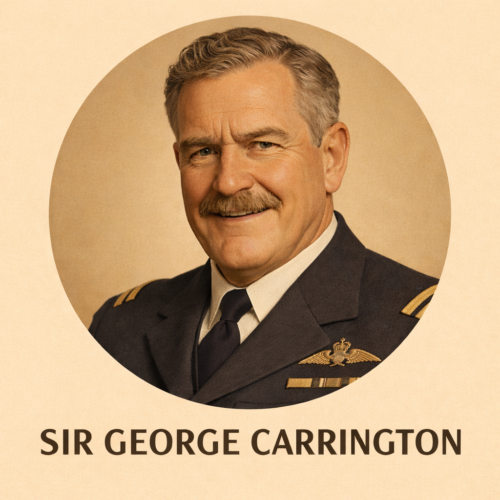
“Expect you’d like to join the others in the drawing room, Reggie, my boy. Lord Mayfield won’t mind.”
「お前も|ほかの連中といっしょに|応接室へ行きたいだろう、|レジー。||ロード=メイフィールドも|気にしないよ」
The boy took the hint easily enough.
その若者は|遠回しに言われたことを|すぐに理解した
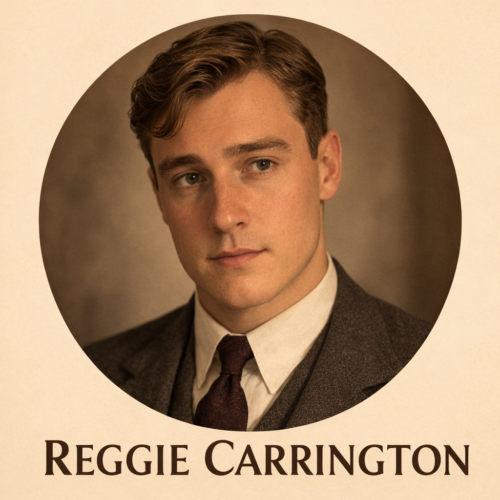
“Thanks, Lord Mayfield, I think I will.”
ありがとう|ロード=メイフィールド。||では|そうさせて|いただきます
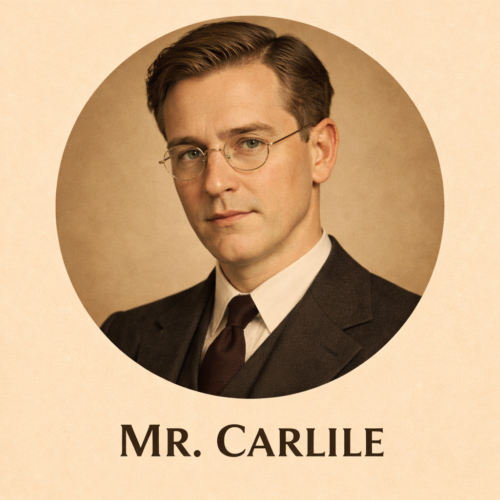
Mr. Carlile mumured:
“If you’ll excuse me, Lord Mayfield―certain memoranda and other work to get through. . . .”
カーライルが|小声で|言った
もし|お許し|いただけるなら|メイフィールド卿――
片づけて|おかなければ|ならない|覚え書きや|仕事が|いくつか|ありまして……
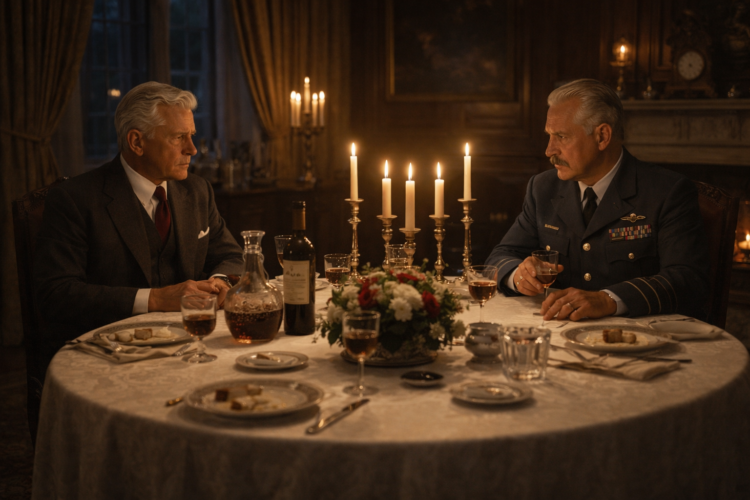
Lord Mayfield nodded. The two young men left the room. The servants had retired some time before. The Minister for Armaments and the head of the Air Force were alone.
ロード・メイフィールドは|うなずいた。
ふたりの|若い男は|部屋を|出ていった。
召使いたちは|しばらく前に|もう|下がっていた。
軍需大臣と|空軍の長官だけが|その場に|残った。
After a minute or two, Carrington said: “Well―O.K.?”
一、二分ほど|沈黙がつづいたあとで、|キャリントンが言った。
「さて——|どうだ?」

“Absolutely! There’s nothing to touch this new bomber in any country in Europe.”
「もちろんだ!|この|新型爆撃機に|かなうものは、|ヨーロッパのどの国にも|存在しない。」
“Make rings round ’em, eh? That’s what I thought.”
ぐるぐる|まわして|圧倒できる、|というわけか?|私も|そう思っていた。
“Supremacy of the air,” said Lord Mayfield decisively.
「制空権|だ」|と、|ロード・メイフィールドは|きっぱり|言った。|
Sir George Carrington gave a deep sigh.
サー・ジョージ・キャリントンは|深く|ため息をついた。
“About time! You know, Charles, we’ve been through a ticklish spell. Lots of gunpowder everywhere all over Europe. And we weren’t ready, damn it! We’ve had a narrow squeak. And we’re not out of the wood yet, however much we hurry on construction.”
「やっと|その時が来たな!|チャールズ、|わかっているだろうが、|我々は|きわどい|時期を|くぐり抜けてきた。
ヨーロッパじゅうに|火薬が|山ほど|積まれている|ような|状況だった。
それなのに|我々は|準備が|できていなかった、|まったく!
危うく|大事に|なるところだった。
そして|建造を|どれほど|急ごうとも、|まだ|危険を|脱した|わけではない。」
Lord Mayfield murmured:
“Nevertheless, George, there are some advantages in starting late. A lot of the European stuff is out of date already―and they’re perilously near bankruptcy.”
ロード・メイフィールドは、低い声で言った。
「それでも|ジョージ、|遅れて|始めることにも|いくつか|利点は|ある。
ヨーロッパの|航空機の|多くは、|すでに|時代遅れに|なっている。
しかも|連中は|危ういほど|破産に|近づいている。」
“I don’t believe that means anything,” said Sir George gloomily.
「それが|何かの|意味を|持つとは|思えない」と|サー・ジョージは|暗い声で|言った。
“One’s always hearing this nation and that is bankrupt! But they carry on just the same. You know, finance is an absolute mystery to me.”
「いつも|この国が|破産だ、|あの国が|破産だ、|と|聞かされる。||だが|連中は|相変わらず|やっている。||実を言うと、|金融というものは|私には|まったく|わからない。」
Lord Mayfield’s eyes twinkled a little.
Sir George Carrington was always so very much the old-fashioned “bluff, honest old sea dog.”
There were people who said that it was a pose he deliberately adopted.
ロード・メイフィールドの|目が|少し|きらりと|光った。
サー・ジョージ・キャリントンは、|まさに|昔気質の|「豪放で|正直な|老いた|海の男」|そのものだった。
それは|彼が|わざと|とっている|ポーズに|すぎない、|と|言う|者も|いた。
Changing the subject, Carrington said in a slightly overcasual manner:
話題を|変えて、|キャリントンは|少し|わざとらしく|気軽な|調子で|言った。
“Attractive woman, Mrs. Vanderlyn―eh?”
「魅力的な|女性だな、|ミセス・ヴァンダリンは」
Lord Mayfield said:
“Are you wondering what she’s doing here?”
メイフィールド卿は言った。
「君は|彼女が|ここで|何を|しているのかと|思っているのかね?」
His eyes were amused.
Carrington looked a little confused.
彼の|目には|おもしろがる|色が|浮かんでいた。
キャリントンは|少し|当惑した|様子を|見せた。
“Not at all―not at all.”
「いや|そんなことは|ない。|まったく|ない」
“Oh, yes, you were! Don’t be an old humbug, George. You were wondering, in a slightly dismayed fashion, whether I was the latest victim!”
「いや|そうだよ、|君は|そう|思っていた。||そんな|古い|ごまかしを|するな、|ジョージ。||君は|少し|困った|顔で、|私が|彼女の|最新の|犠牲者に|なったのでは|ないかと|思っていたんだ」
Carrington said slowly:
“I’ll admit that it did seem a trifle odd to me that she should be here―well, this particular weekend.”
キャリントンは|ゆっくり|言った。
「それは|たしかに|少しばかり|妙に|思えたよ。
彼女が|ここに|いるというのは。||まあ|この|特別な|週末に|だが。」
Lord Mayfield nodded.
メイフィールドは|うなずいた。
“Where the carcass is, there are the vultures gathered together. We’ve got a very definite carcass, and Mrs. Vanderlyn might be described as Vulture No. 1.”
「死骸の|ある|ところには、|ハゲタカが|集まるものだ。||ここには|はっきりした|死骸が|ある。||そして|ミセス・ヴァンダリンは|言ってみれば|第一号の|ハゲタカ|という|わけだ」
The Air Marshal said abruptly:“Know anything about this Vanderlyn woman?”
空軍元帥は|ぶっきらぼうに|言った。
「この|ヴァンダリン|という|女について|何か|知っているのか?」
Lord Mayfield clipped off the end of a cigar, lit it with precision and, throwing his head back, dropped out his words with careful deliberation.
メイフィールド卿は|葉巻の|先を|切り落とし、|きちんと|火を|つけ、|頭を|後ろに|反らせて、|言葉を|一つ|一つ|慎重に|落とす|ように|話した。
“What do I know about Mrs. Vanderlyn? I know that she’s an American subject. I know that she’s had three husbands, one Italian, one German and one Russian, and that in consequence she has made useful what I think are called ‘contacts’ in three countries. I know that she manages to buy very expensive clothes and live in a very luxurious manner, and that there is some slight uncertainty as to where the income comes from which permits her to do so.”
「ヴァンダリン夫人について|私が|知っている|ことか?||彼女が|アメリカ国籍の|人物だという|ことは|知っている。||彼女には|三人の|夫が|いた|ことも|知っている。||一人は|イタリア人、|一人は|ドイツ人、|もう一人は|ロシア人だ。
そして|その|結果として、|彼女は|三つの|国で|いわゆる|「コネ」|というものを|うまく|作っている。||また|非常に|高価な|服を|買い、|きわめて|ぜいたくな|暮らしを|している|ことも|知っている。||そして|それを|可能にしている|収入が|いったい|どこから|来ているのかについては、|多少|はっきりしない|ところが|ある。」
With a grin, Sir George Carrington murmured:
“Your spies have not been inactive, Charles, I see.”
キャリントンは|にやりと|笑って、|低い|声で|言った。
「君の|スパイたちは|どうやら|怠けては|いなかった|ようだな、|チャールズ。」
“I know,” Lord Mayfield continued, “that in addition to having a seductive type of beauty, Mrs. Vanderlyn is also a very good listener, and that she can display a fascinating interest in what we call ‘shop.’ That is to say, a man can tell her all about his job and feel that he is being intensely interesting to the lady! Sundry young officers have gone a little too far in their zeal to be interesting, and their careers have suffered in consequence. They have told Mrs. Vanderlyn a little more than they should have done. Nearly all the lady’s friends are in the Services―but last winter she was hunting in a certain county near one of our largest armament firms, and she formed various friendships not at all sporting in character. To put it briefly, Mrs. Vanderlyn is a very useful person to . . .”
「私は|知っている」|と、|メイフィールドは|続けた。
「ヴァンダリン夫人は|人を|惹きつける|タイプの|美貌を|持っている|だけでなく、|たいへん|聞き上手でも|ある。||そして|私たちが|いわゆる|「仕事の話」|と|呼ぶ|ものに|強い|興味を|示すことも|できる。||つまり|男は|自分の|仕事の|ことを|何でも|彼女に|話してしまい、|しかも|自分が|その|ご婦人にとって|たいそう|興味深い|人物に|なっている|ように|感じてしまうのだ。||若い|将校の|何人かは|興味を|持たせようと|熱心に|なりすぎて、|少しばかり|行き過ぎてしまった。||その|結果、|彼らの|経歴は|傷ついた。||彼らは|ヴァンダリン夫人に|話しては|いけない|ことを|少しばかり|話しすぎたのだ。||この|ご婦人の|友人の|ほとんどは|軍関係者だ。||しかし|去年の|冬、|彼女は|わが国の|最大級の|兵器会社の|一つの|近くにある|ある|州で|狩猟を|していて、|そして|狩猟とは|まったく|関係の|ない|種類の|友人関係を|いくつも|作った。||要するに|簡単に|言えば、|ヴァンダリン夫人は|たいへん|役に立つ|人物なのだ」
He described a circle in the air with his cigar.
彼は|葉巻で|空中に|円を|描いた。
“Perhaps we had better not say to whom! We will just say to a European power―and perhaps to more than one European power.”
「おそらく|誰に|とって|役に立つかは|言わない|ほうが|よいだろう。||ただ|ヨーロッパの|ある|国家に|とって、|と|言っておこう。||そして|おそらく|一つ|だけでは|なく、|複数の|ヨーロッパの|国家に|とってだ」
Carrington drew a deep breath.
キャリントンは|深く|息を|吸った。
“You take a great load off my mind, Charles.”
「それで|私の|気がかりは|ずいぶん|軽くなったよ、|チャールズ。」
“You thought I had fallen for the siren? My dear George! Mrs. Vanderlyn is just a little too obvious in her methods for a wary old bird like me. Besides, she is, as they say, not quite so young as she once was. Your young squadron leaders wouldn’t notice that. But I am fifty-six, my boy. In another four years I shall probably be a nasty old man continually haunting the society of unwilling debutantes.”
「君は|私が|あの|セイレーンに|引っかかったと|思ったのかね?||やれやれ、|ジョージ。||ヴァンダリン夫人の|やり方は|私の|ような|用心深い|年寄りの|鳥には|少々|露骨すぎるのだ。||それに|あの|ご婦人は|いわば|昔ほど|若くは|ない。||君の|若い|飛行隊長たちは|そんな|ことには|気づかない|だろう。||だが|私は|五十六歳だ、|君。||あと|四年も|すれば、|おそらく|私は|嫌われ者の|年寄りに|なって、|気の進まない|デビュタントたちの|社交界を|うろついている|だろうよ。」
“I was a fool,” said Carrington apologetically, “but it seemed a bit odd―”
「私が|愚かだった」|と、|キャリントンは|すまなそうに|言った。
「だが|少しばかり|妙に|思えたのだ」
“It seemed to you odd that she should be here, in a somewhat intimate family party just at the moment when you and I were to hold an unofficial conference over a discovery that will probably revolutionize the whole problem of air defence?”
「彼女が|ここに|いるのが|妙に|思えたのだろう。||それも|やや|内輪の|家庭的な|集まりの|席で、|しかも|まさに|君と|私が|航空防衛の|問題を|おそらく|全面的に|変えてしまう|発見について|非公式の|協議を|行う|その|時に|だ」
Sir George Carrington nodded.
サー・ジョージ・キャリントンは|うなずいた。
Lord Mayfield said, smiling:
“That’s exactly it. That’s the bait.”
メイフィールド卿は|微笑みながら|言った。
「まさに|それだ。|それが|餌なのだ」
“The bait?”
「餌だって?」
“You see, George, to use the language of the movies, we’ve nothing actually ‘on’ the woman. And we want something! She’s got away with rather more than she should in the past. But she’s been careful―damnably careful. We know what she’s been up to, but we’ve got no definite proof of it. We’ve got to tempt her with something big.”
「あなたにも|わかるだろうが、ジョージ、|映画の言葉で|言うならば、|われわれは|あの女について|まだ|何ひとつ|“証拠を|つかんでいない”。||しかし|われわれは|何かを|つかみたいのだ。||あの女は|これまで|本来なら|許されないほどのことを|うまく|切り抜けてきた。||だが|やつは|用心深かった――|まったく|忌々しいほど|用心深い。||われわれは|彼女が|何をしてきたかは|知っている。||しかし|それを|証明する|はっきりした|証拠が|ない。||だから|われわれは|大きな餌で|彼女を|誘い出さなければならない。」
“Something big being the specification of the new bomber?”
「何か|大きなもの|というのは|その|新型爆撃機の|仕様|ということか」
“Exactly. It’s got to be something big enough to induce her to take a risk―to come out into the open. And then― we’ve got her!”
「その通りだ。||それは|彼女を|危険を冒させるほど|大きなもの|でなければ|ならない。||つまり|彼女が|姿を|表すほどの|ものだ。||そして|そのとき|われわれは|彼女を|捕まえる。」
Sir George grunted.
サー・ジョージは|うなった。
“Oh, well,” he said. “I dare say it’s all right. But suppose she won’t take the risk?”
「まあ|そうだな。||たぶん|それで|うまくいくのだろう。||だが|もし|彼女が|その危険を|冒さなかったら|どうする?」
“That would be a pity,” said Lord Mayfield.
「それは|残念なこと|だろうな|と|ロード・メイフィールドは|言った。」
Then he added:
それから|彼は|付け加えた。
“But I think she will. . . .”
「だが|彼女は|きっと|やるつもりだと|思う」
He rose.
彼は立ち上がった
“Shall we join the ladies in the drawing room? We mustn’t deprive your wife of her bridge.”
「では|奥方たちと|応接間で|合流しようか。
君の|奥さんから|ブリッジを|取り上げてしまう|わけには|いかないからね」
Sir George grunted:
“Julia’s a damned sight too fond of her bridge. Drops a packet over it. She can’t afford to play as high as she does, and I’ve told her so. The trouble is, Julia’s a born gambler.”
Coming round the table to join his host, he said: “Well, I hope your plan comes off, Charles.”
II
In the drawing room conversation had flagged more than once. Mrs. Vanderlyn was usually at a disadvantage when left alone with members of her own sex. That charming sympathetic manner of hers, so much appreciated by members of the male sex, did not for some reason or other commend itself to women. Lady Julia was a woman whose manners were either very good or very bad. On this occasion she disliked Mrs. Vanderlyn, and was bored by Mrs. Macatta, and made no secret of her feelings. Conversation languished, and might have ceased altogether but for the latter.
Mrs. Macatta was a woman of great earnestness of purpose. Mrs. Vanderlyn she dismissed immediately as a useless and parasitic type. Lady Julia she tried to interest in a forthcoming charity entertainment which she was organizing. Lady Julia answered vaguely, stifled a yawn or two and retired into her own inner preoccupation. Why didn’t Charles and George come? How tiresome men were. Her comments became even more perfunctory as she became absorbed in her own thoughts and worries.
The three women were sitting in silence when the men finally entered the room.
Lord Mayfield thought to himself:
“Julia looks ill tonight. What a mass of nerves the woman is.”
Aloud he said:
“What about a rubber―eh?”
Lady Julia brightened at once. Bridge was as the breath of life to her.
Reggie Carrington entered the room at that minute, and a four was arranged. Lady Julia, Mrs. Vanderlyn, Sir George and young Reggie sat down to the card table. Lord Mayfield devoted himself to the task of entertaining Mrs. Macatta.
When two rubbers had been played, Sir George looked ostentatiously at the clock on the mantelpiece.
“Hardly worth while beginning another,” he remarked. His wife looked annoyed.
“It’s only a quarter to eleven. A short one.”
“They never are, my dear,” said Sir George good-temperedly. “Anyway, Charles and I have some work to do.”
Mrs. Vanderlyn murmured:
“How important that sounds! I suppose you clever men who are at the top of things never get a real rest.”
“No forty-eight hour week for us,” said Sir George. Mrs. Vanderlyn murmured:
“You know, American, but
I feel rather ashamed of myself as a raw I do get so thrilled at meeting people who
control the destinies of a country. I expect that seems a very crude point of view to you, Sir George.”
“My dear Mrs. Vanderlyn, I should never think of you as ‘crude’ or ‘raw.’ ”
He smiled into her eyes. There was, perhaps, a hint of irony in the voice which she did not miss. Adroitly she turned to Reggie, smiling sweetly into his eyes.
“I’m sorry we’re not continuing our partnership. That was a frightfully clever four no-trump call of yours.”
Flushed and pleased, Reggie mumbled: “Bit of a fluke that it came off.”
“Oh, no, it was really a clever bit of deduction on your part. You’d deduced from the bidding exactly where the cards must be, and you played accordingly. I thought it was brilliant.”
Lady Julia rose abruptly.
“The woman lays it on with a palette knife,” she thought disgustedly.
Then her eyes softened as they rested on her son. He believed it all. How pathetically young and pleased he looked. How incredibly naïve he was. No wonder he got into scrapes. He was too trusting. The truth of it was he had too sweet a nature. George didn’t understand him in the least. Men were so unsympathetic in their judgments. They forgot that they had ever been young themselves. George was much too harsh with Reggie.
Mrs. Macatta had risen. Goodnights were said.
The three women went out of the room. Lord Mayfield helped himself to a drink after giving one to Sir George, then he looked up as Mr. Carlile appeared at the door.
“Get out the files and all the papers, will you, Carlile? Including the plans and the prints. The Air Marshal and I will be along shortly. We’ll just take a turn outside first, eh, George? It’s stopped raining.”
Mr. Carlile, turning to depart, murmured an apology as he almost collided with Mrs. Vanderlyn.
She drifted towards them, murmuring: “My book, I was reading it before dinner.”
Reggie sprang forward and held up a book. “Is this it? On the sofa?”
“Oh, yes. Thank you so much.”
She smiled sweetly, said goodnight again and went out of the room.
Sir George had opened one of the French windows. “Beautiful night now,” he announced. “Good idea of yours
to take a turn.” Reggie said:
“Well, goodnight, sir. I’ll be toddling off to bed.” “Goodnight, my boy,” said Lord Mayfield.
Reggie picked up a detective story which he had begun earlier in the evening and left the room.
Lord Mayfield and Sir George stepped out upon the terrace.
It was a beautiful night, with a clear sky studded with stars.
Sir George drew a deep breath.
“Phew, that woman uses a lot of scent,” he remarked. Lord Mayfield laughed.
“Anyway, it’s not cheap scent. One of the most expensive brands on the market, I should say.”
Sir George gave a grimace.
“I suppose one should be thankful for that.”
“You should, indeed. I think a woman smothered in cheap scent is one of the greatest abominations known to mankind.”
Sir George glanced up at the sky.
“Extraordinary the way it’s cleared. I heard the rain beating down when we were at dinner.”
The two men strolled gently along the terrace.
The terrace ran the whole length of the house. Below it the ground sloped gently away, permitting a magnificent view over the Sussex weald.
Sir George lit a cigar.
“About this metal alloy―” he began.
The talk became technical.
As they approached the far end of the terrace for the fifth time, Lord Mayfield said with a sigh:
“Oh, well, I suppose we’d better get down to it.” “Yes, good bit of work to get through.”
The two men turned, and Lord Mayfield uttered a surprised ejaculation.
“Hallo! See that?”
“See what?” asked Sir George.
“Thought I saw someone slip across the terrace from my study window.”
“Nonsense, old boy. I didn’t see anything.” “Well, I did―or I thought I did.”
“Your eyes are playing tricks on you. I was looking straight down the terrace, and I’d have seen anything there was to be seen. There’s precious little I don’t see―even if I do have to hold a newspaper at arm’s length.”
Lord Mayfield chuckled.
“I can put one over on you there, George. I read easily without glasses.”
“But you can’t always distinguish the fellow on the other side of the House. Or is that eyeglass of yours sheer intimidation?”
Laughing, the two men entered Lord Mayfield’s study, the French window of which was open.
Mr. Carlile was busy arranging some papers in a file by the safe.
He looked up as they entered. “Ha, Carlile, everything ready?”
“Yes, Lord Mayfield, all the papers are on your desk.”
The desk in question was a big important-looking writing table of mahogany set across a corner by the window. Lord
Mayfield went over to it, and began sorting through the various documents laid out.
“Lovely night now,” said Sir George. Mr. Carlile agreed.
“Yes, indeed. Remarkable the way it’s cleared up after the rain.”
Putting away his file, Mr. Carlile asked:
“Will you want me any more tonight, Lord Mayfield?”
“No, I don’t think so, Carlile. I’ll put all these away myself. We shall probably be late. You’d better turn in.”
“Thank you. Goodnight, Lord Mayfield. Goodnight, Sir George.”
“Goodnight, Carlile.”
As the secretary was about to leave the room, Lord Mayfield said sharply:
“Just a minute, Carlile. You’ve forgotten the most important of the lot.”
“I beg your pardon, Lord Mayfield.” “The actual plans of the bomber, man.” The secretary stared.
“They’re right on the top, sir.” “They’re nothing of the sort.” “But I’ve just put them there.” “Look for yourself, man.”
With a bewildered expression, the young man came forward and joined Lord Mayfield at the desk.
Somewhat impatiently the Minister indicated the pile of papers. Carlile sorted through them, his expression of bewilderment growing.
“You see, they’re not there.” The secretary stammered:
“But―but it’s incredible. I laid them there not three minutes ago.”
Lord Mayfield said good-humouredly:
“You must have made a mistake, they must be still in the safe.”
“I don’t see how―I know I put them there!”
Lord Mayfield brushed past him to the open safe. Sir George joined them. A very few minutes sufficed to show that the plans of the bomber were not there.
Dazed and unbelieving, the three men returned to the desk and once more turned over the papers.
“My God!” said Mayfield. “They’re gone!” Mr. Carlile cried:
“But it’s impossible!”
“Who’s been in this room?” snapped out the Minister. “No one. No one at all.”
“Look here, Carlile, those plans haven’t vanished into thin air. Someone has taken them. Has Mrs. Vanderlyn been in here?”
“Mrs. Vanderlyn? Oh, no, sir.”
“I’ll back that,” said Carrington. He sniffed the air! “You’d soon smell if she had. That scent of hers.”
“Nobody has been in here,” insisted Carlile. “I can’t understand it.”
“Look here, Carlile,” said Lord Mayfield. “Pull yourself together. We’ve got to get to the bottom of this. You’re absolutely sure the plans were in the safe?”
“Absolutely.”
“You actually saw them? You didn’t just assume they were among the others?”
“No, no, Lord Mayfield. I saw them. I put them on top of the others on the desk.”
“And since then, you say, nobody has been in the room. Have you been out of the room?”
“No―at least―yes.”
“Ah!” cried Sir George. “Now we’re getting at it!” Lord Mayfield said sharply:
“What on earth―” when Carlile interrupted.
“In the normal course of events, Lord Mayfield, I should not, of course, have dreamt of leaving the room when important papers were lying about, but hearing a woman scream―”
“A woman scream?” ejaculated Lord Mayfield in a surprised voice.
“Yes, Lord Mayfield. It startled me more than I can say. I was just laying the papers on the desk when I heard it, and naturally I ran out into the hall.”
“Who screamed?”
“Mrs. Vanderlyn’s French maid. She was standing halfway up the stairs, looking very white and upset and shaking all over. She said she had seen a ghost.”
“Seen a ghost?”
“Yes, a tall woman dressed all in white who moved without a sound and floated in the air.”
“What a ridiculous story!”
“Yes, Lord Mayfield, that is what I told her. I must say she seemed rather ashamed of herself. She went off upstairs and I came back in here.”
“How long ago was this?”
“Just a minute or two before you and Sir George came in.” “And you were out of the room―how long?”
The secretary considered.
“Two minutes―at the most three.”
“Long enough,” groaned Lord Mayfield. Suddenly he clutched his friend’s arm.
“George, that shadow I saw―slinking away from this window. That was it! As soon as Carlile left the room, he nipped in, seized the plans and made off.”
“Dirty work,” said Sir George.
Then he seized his friend by the arm.
“Look here, Charles, this is the devil of a business. What the hell are we going to do about it?”
III
“At any rate give it a trial, Charles.”
It was half an hour later. The two men were in Lord Mayfield’s study, and Sir George had been expending a considerable amount of persuasion to induce his friend to adopt a certain course.
Lord Mayfield, at first most unwilling, was gradually becoming less averse to the idea.
Sir George went on:
“Don’t be so damned pigheaded, Charles.” Lord Mayfield said slowly:
“Why drag in a wretched foreigner we know nothing about?”
“But I happen to know a lot about him. The man’s a marvel.”
“Humph.”
“Look here, Charles. It’s a chance! Discretion is the essence of this business. If it leaks out―”
“When it leaks out is what you mean!”
“Not necessarily. This man, Hercule Poirot―”
“Will come down here and produce the plans like a conjurer taking rabbits out of his hat, I suppose?”
“He’ll get at the truth. And the truth is what we want. Look here, Charles, I take all responsibility on myself.”
Lord Mayfield said slowly:
“Oh, well, have it your own way, but I don’t see what the fellow can do. . . .”
Sir George picked up the phone.
“I’m going to get through to him―now.” “He’ll be in bed.”
“He can get up. Dash it all, Charles, you can’t let that woman get away with it.”
“Mrs. Vanderlyn, you mean?”
“Yes. You don’t doubt, do you, that she’s at the bottom of this?”
“No, I don’t. She’s turned the tables on me with a vengeance. I don’t like admitting, George, that a woman’s been too clever for us. It goes against the grain. But it’s true. We shan’t be able to prove anything against her, and yet we both know that she’s been the prime mover in the affair.”
“Women are the devil,” said Carrington with feeling. “Nothing to connect her with it, damn it all! We may
believe that she put the girl up to that screaming trick, and that the man lurking outside was her accomplice, but the devil of it is we can’t prove it.”
“Perhaps Hercule Poirot can.” Suddenly Lord Mayfield laughed.
“By the Lord, George, I thought you were too much of an old John Bull to put your trust in a Frenchman, however clever.”
“He’s not even a Frenchman, he’s a Belgian,” said Sir George in a rather shamefaced manner.
“Well, have your Belgian down. Let him try his wits on this business. I’ll bet he can’t make more of it than we can.”
Without replying, Sir George stretched a hand to the telephone.
IV
Blinking a little, Hercule Poirot turned his head from one man to the other. Very delicately he smothered a yawn.
It was half past two in the morning. He had been roused from sleep and rushed down through the darkness in a big Rolls-Royce. Now he had just finished hearing what the two men had to tell him.
“Those are the facts, M. Poirot,” said Lord Mayfield.
He leaned back in his chair, and slowly fixed his monocle in one eye. Through it a shrewd, pale-blue eye watched Poirot attentively. Besides being shrewd the eye was definitely sceptical. Poirot cast a swift glance at Sir George Carrington.
That gentleman was leaning forward with an expression of almost childlike hopefulness on his face.
Poirot said slowly:
“I have the facts, yes. The maid screams, the secretary goes out, the nameless watcher comes in, the plans are there on top of the desk, he snatches them up and goes. The facts―they are all very convenient.”
Something in the way he uttered the last phrase seemed to attract Lord Mayfield’s attention. He sat up a little straighter, his monocle dropped. It was as though a new alertness came to him.
“I beg your pardon, M. Poirot?”
“I said, Lord Mayfield, that the facts were all very convenient―for the thief. By the way, you are sure it was a man you saw?”
Lord Mayfield shook his head.
“That I couldn’t say. It was just a―shadow. In fact, I was almost doubtful if I had seen anyone.”
Poirot transferred his gaze to the Air Marshal.
“And you, Sir George? Could you say if it was a man or a woman?”
“I didn’t see anyone myself.”
Poirot nodded thoughtfully. Then he skipped suddenly to his feet and went over to the writing table.
“I can assure you that the plans are not there,” said Lord Mayfield. “We have all three been through those papers half a dozen times.”
“All three? You mean, your secretary also?” “Yes, Carlile.”
Poirot turned suddenly.
“Tell me, Lord Mayfield, which paper was on top when you went over to the desk?”
Mayfield frowned a little in the effort of remembrance. “Let me see―yes, it was a rough memorandum of some
sort of our air defence positions.”
Deftly, Poirot nipped out a paper and brought it over. “Is this the one, Lord Mayfield?”
Lord Mayfield took it and glanced over it. “Yes, that’s the one.”
Poirot took it over to Carrington.
“Did you notice this paper on the desk?”
Sir George took it, held it away from him, then slipped on his pince-nez.
“Yes, that’s right. I looked through them too, with Carlile and Mayfield. This was on top.”
Poirot nodded thoughtfully. He replaced the paper on the desk. Mayfield looked at him in a slightly puzzled manner.
“If there are any other questions―” he began.
“But yes, certainly there is a question. Carlile. Carlile is the question!”
Lord Mayfield’s colour rose a little.
“Carlile, M. Poirot, is quite above suspicion! He has been my confidential secretary for nine years. He has access to all my private papers, and I may point out to you that he could
have made a copy of the plans and a tracing of the specifications quite easily without anyone being the wiser.”
“I appreciate your point,” said Poirot. “If he had been guilty there would be no need for him to stage a clumsy robbery.”
“In any case,” said Lord Mayfield, “I am sure of Carlile. I will guarantee him.”
“Carlile,” said Carrington gruffly, “is all right.” Poirot spread out his hands gracefully.
“And this Mrs. Vanderlyn―she is all wrong?” “She’s a wrong ’un all right,” said Sir George. Lord Mayfield said in more measured tones:
“I think, M. Poirot, that there can be no doubt of Mrs. Vanderlyn’s―well―activities. The Foreign Office can give you more precious data as to that.”
“And the maid, you take it, is in with her mistress?” “Not a doubt of it,” said Sir George.
“It seems to me a plausible assumption,” said Lord Mayfield more cautiously.
There was a pause. Poirot sighed, and absentmindedly rearranged one or two articles on a table at his right hand. Then he said:
“I take it that these papers represented money? That is, the stolen papers would be definitely worth a large sum in cash.”
“If presented in a certain quarter―yes.” “Such as?”
Sir George mentioned the names of two European powers.
Poirot nodded.
“That fact would be known to anyone, I take it?” “Mrs. Vanderlyn would know it all right.”
“I said to anyone?”
“I suppose so, yes.”
“Anyone with a minimum of intelligence would appreciate the cash value of the plans?”
“Yes, but M. Poirot―” Lord Mayfield was looking rather uncomfortable.
Poirot held up a hand.
“I do what you call explore all the avenues.”
Suddenly he rose again, stepped nimbly out of the window and with a flashlight examined the edge of the grass at the farther side of the terrace.
The two men watched him.
He came in again, sat down and said:
“Tell me, Lord Mayfield, this malefactor, this skulker in the shadows, you do not have him pursued?”
Lord Mayfield shrugged his shoulders.
“At the bottom of the garden he could make his way out to a main road. If he had a car waiting there, he would soon be out of reach―”
“But there are the police―the A.A. scouts―” Sir George interrupted.
“You forget, M. Poirot. We cannot risk publicity. If it were to get out that these plans had been stolen, the result would be extremely unfavourable to the Party.”
“Ah, yes,” said Poirot. “One must remember La Politique. The great discretion must be observed. You send instead for me. Ah well, perhaps it is simpler.”
“You are hopeful of success, M. Poirot?” Lord Mayfield sounded a trifle incredulous.
The little man shrugged his shoulders.
“Why not? One has only to reason―to reflect.” He paused a moment and then said:
“I would like now to speak to Mr. Carlile.”
“Certainly.” Lord Mayfield rose. “I asked him to wait up. He will be somewhere at hand.”
He went out of the room. Poirot looked at Sir George.
“Eh bien,” he said. “What about this man on the terrace?” “My dear M. Poirot. Don’t ask me! I didn’t see him, and I
can’t describe him.” Poirot leaned forward.
“So you have already said. But it is a little different from that is it not?”
“What d’you mean?” asked Sir George abruptly.
“How shall I say it? Your disbelief, it is more profound.” Sir George started to speak, then stopped.
“But yes,” said Poirot encouragingly. “Tell me. You are both at the end of the terrace. Lord Mayfield sees a shadow slip from the window and across the grass. Why do you not see that shadow?”
Carrington stared at him.
“You’ve hit it, M. Poirot. I’ve been worrying about that ever since. You see, I’d swear that no one did leave this window. I thought Mayfield had imagined it―branch of a tree waving―something of that kind. And then when we came in here and found there had been a robbery, it seemed as though Mayfield must have been right and I’d been wrong. And yet―”
Poirot smiled.
“And yet you still in your heart of hearts believe in the evidence (the negative evidence) of your own eyes?”
“You’re right, M. Poirot, I do.” Poirot gave a sudden smile. “How wise you are.”
Sir George said sharply:
“There were no footprints on the grass edge?”
Poirot nodded.
“Exactly. Lord Mayfield, he fancies he sees a shadow. Then there comes the robbery and he is sure―but sure! It is no longer a fancy―he actually saw the man. But that is not so. Me, I do not concern myself much with footprints and such things but for what it is worth we have that negative evidence. There were no footprints on the grass. It had rained heavily this evening. If a man had crossed the terrace to the grass this evening his footprints would have shown.”
Sir George said, staring: “But then―but then―”
“It brings us back to the house. To the people in the house.”
He broke off as the door opened and Lord Mayfield entered with Mr. Carlile.
Though still looking very pale and worried, the secretary had regained a certain composure of manner. Adjusting his pince-nez he sat down and looked at Poirot inquiringly.
“How long had you been in this room when you heard the scream, monsieur?”
Carlile considered.
“Between five and ten minutes, I should say.”
“And before that there had been no disturbance of any kind?”
“No.”
“I understand that the house party had been in one room for the greater part of the evening.”
“Yes, the drawing room.” Poirot consulted his notebook.
“Sir George Carrington and his wife. Mrs. Macatta. Mrs. Vanderlyn. Mr. Reggie Carrington. Lord Mayfield and yourself. Is that right?”
“I myself was not in the drawing room. I was working here the greater part of the evening.”
Poirot turned to Lord Mayfield. “Who went up to bed first?”
“Lady Julia Carrington, I think. As a matter of fact, the three ladies went out together.”
“And then?”
“Mr. Carlile came in and I told him to get out the papers as Sir George and I would be along in a minute.”
“It was then that you decided to take a turn on the terrace?”
“It was.”
“Was anything said in Mrs. Vanderlyn’s hearing as to your working in the study?”
“The matter was mentioned, yes.”
“But she was not in the room when you instructed Mr. Carlile to get out the papers?”
“No.”
“Excuse me, Lord Mayfield,” said Carlile. “Just after you had said that, I collided with her in the doorway. She had come back for a book.”
“So you think she might have overheard?” “I think it quite possible, yes.”
“She came back for a book,” mused Poirot. “Did you find her her book, Lord Mayfield?”
“Yes, Reggie gave it to her.”
“Ah, yes, it is what you call the old gasp―no, pardon, the old wheeze―that―to come back for a book. It is often useful!”
“You think it was deliberate?” Poirot shrugged his shoulders.
“And after that, you two gentlemen go out on the terrace. And Mrs. Vanderlyn?”
“She went off with her book.”
“And the young M. Reggie. He went to bed also?”
“Yes.”
“And Mr. Carlile he comes here and sometime between five and ten minutes later he heard a scream. Continue, M. Carlile. You heard a scream and you went out into the hall. Ah, perhaps it would be simplest if you reproduced exactly your actions.”
Mr. Carlile got up a little awkwardly.
“Here I scream,” said Poirot helpfully. He opened his mouth and emitted a shrill bleat. Lord Mayfield turned his head away to hide a smile and Mr. Carlile looked extremely uncomfortable.
“Allez! Forward! March!” cried Poirot. “It is your cue that I give you there.”
Mr. Carlile walked stiffly to the door, opened it and went out. Poirot followed him. The other two came behind.
“The door, did you close it after you or leave it open?”
“I can’t really remember. I think I must have left it open.” “No matter. Proceed.”
Still with extreme stiffness, Mr. Carlile walked to the bottom of the staircase and stood there looking up.
Poirot said:
“The maid, you say, was on the stairs. Whereabouts?” “About halfway up.”
“And she was looking upset.” “Definitely so.”
“Eh bien, me, I am the maid.” Poirot ran nimbly up the stairs. “About here?”
“A step or two higher.” “Like this?”
Poirot struck an attitude.
“Well―er―not quite like that.” “How then?”
“Well, she had her hands to her head.”
“Ah, her hands to her head. That is very interesting. Like this?” Poirot raised his arms, his hands rested on his head just above each ear.
“Yes that’s it.”
“Aha! And tell me, M. Carlile, she was a pretty girl―yes?” “Really, I didn’t notice.”
Carlile’s voice was repressive.
“Aha, you did not notice? But you are a young man. Does not a young man notice when a girl is pretty?”
“Really, M. Poirot, I can only repeat that I did not do so.” Carlile cast an agonized glance at his employer. Sir
George Carrington gave a sudden chuckle.
“M. Poirot seems determined to make you out a gay dog, Carlile,” he remarked.
“Me, I always notice when a girl is pretty,” announced Poirot as he descended the stairs.
The silence with which Mr. Carlile greeted this remark was somewhat pointed. Poirot went on:
“And it was then she told this tale of having seen a ghost?”
“Yes.”
“Did you believe the story?” “Well, hardly, M. Poirot!”
“I do not mean, do you believe in ghosts. I mean, did it strike you that the girl herself really thought she had seen something?”
“Oh, as to that, I couldn’t say. She was certainly breathing fast and seemed upset.”
“You did not see or hear anything of her mistress?”
“Yes, as a matter of fact I did. She came out of her room in the gallery above and called, ‘Leonie.’ ”
“And then?”
“The girl ran up to her and I went back to the study.”
“Whilst you were standing at the foot of the stairs here, could anyone have entered the study by the door you had left open?”
Carlile shook his head.
“Not without passing me. The study door is at the end of the passage, as you see.”
Poirot nodded thoughtfully. Mr. Carlile went on in his careful, precise voice.
“I may say that I am very thankful that Lord Mayfield actually saw the thief leaving the window. Otherwise I myself should be in a very unpleasant position.”
“Nonsense, my dear Carlile,” broke in Lord Mayfield impatiently. “No suspicion could possibly attach to you.”
“It is very kind of you to say so, Lord Mayfield, but facts are facts, and I can quite see that it looks badly for me. In any case I hope that my belongings and myself may be searched.”
“Nonsense, my dear fellow,” said Mayfield. Poirot murmured:
“You are serious in wishing that?” “I should infinitely prefer it.”
Poirot looked at him thoughtfully for a minute or two and murmured, “I see.”
Then he asked:
“Where is Mrs. Vanderlyn’s room situated in regard to the study?”
“It is directly over it.”
“With a window looking out over the terrace?” “Yes.”
Again Poirot nodded. Then he said: “Let us go to the drawing room.”
Here he wandered round the room, examined the fastenings of the windows, glanced at the scorers on the
bridge table and then finally addressed Lord Mayfield.
“This affair,” he said, “is more complicated than it appears. But one thing is quite certain. The stolen plans have not left this house.”
Lord Mayfield stared at him.
“But, my dear M. Poirot, the man I saw leaving the study ―”
“There was no man.” “But I saw him―”
“With the greatest respect, Lord Mayfield, you imagined you saw him. The shadow cast by the branch of a tree deceived you. The fact that a robbery occurred naturally seemed a proof that what you had imagined was true.”
“Really, M. Poirot, the evidence of my own eyes―”
“Back my eyes against yours any day, old boy,” put in Sir George.
“You must permit me, Lord Mayfield, to be very definite on that point. No one crossed the terrace to the grass.”
Looking very pale and speaking stiffly, Mr. Carlile said:
“In that case, if M. Poirot is correct, suspicion automatically attaches itself to me. I am the only person who could possibly have committed the robbery.”
Lord Mayfield sprang up.
“Nonsense. Whatever M. Poirot thinks about it, I don’t agree with him. I am convinced of your innocence, my dear Carlile. In fact, I’m willing to guarantee it.”
Poirot murmured mildly:
“But I have not said that I suspect M. Carlile.” Carlile answered:
“No, but you’ve made it perfectly clear that no one else had a chance to commit the robbery.”
“Du tout! Du tout!”
“But I have told you nobody passed me in the hall to get to the study door.”
“I agree. But someone might have come in through the study window.”
“But that is just what you said did not happen?”
“I said that no one from outside could have come and left without leaving marks on the grass. But it could have been managed from inside the house. Someone could have gone out from his room by one of these windows, slipped along the terrace, in at the study window, and back again in here.”
Mr. Carlile objected:
“But Lord Mayfield and Sir George Carrington were on the
terrace.”
“They were on the promenade. Sir George
terrace, yes, but they were en Carrington’s eyes may be of the
most reliable”―Poirot made a little bow―“but he does not keep them in the back of his head! The study window is at the extreme left of the terrace, the windows of this room come next, but the terrace continues to the right past one, two, three, perhaps four rooms?”
“Dining room, billiard room, morning room and library,” said Lord Mayfield.
“And you walked up and down the terrace, how many times?”
“At least five or six.”
“You see, it is easy enough, the thief has only to watch for the right moment!”
Carlile said slowly:
“You mean that when I was in the hall, talking to the French girl, the thief was waiting in the drawing room?”
“That is my suggestion. It is, of course, only a suggestion.”
“It doesn’t sound very probable to me,” said Lord Mayfield. “Too risky.”
The Air Marshal demurred.
“I don’t agree with you, Charles. It’s perfectly possible. Wonder I hadn’t the wits to think of it for myself.”
“So you see,” said Poirot, “why I believe that the plans are still in the house. The problem now is to find them!”
Sir George snorted.
“That’s simple enough. Search everybody.”
Lord Mayfield made a movement of dissent, but Poirot spoke before he could.
“No, no, it is not so simple as that. The person who took those plans will anticipate that a search will be made and will make quite sure that they are not found amongst his or her belongings. They will have been hidden in neutral ground.”
“Do you suggest that we’ve got to go playing hide and seek all over the bally house?”
Poirot smiled.
“No, no, we need not be so crude as that. We can arrive at the hiding place (or alternatively at the identity of the guilty person) by reflection. That will simplify matters. In the morning I would like an interview with every person in the house. It would, I think, be unwise to seek those interviews now.”
Lord Mayfield nodded.
“Cause too much comment,” he said, “if we dragged everybody out of their beds at three in the morning. In any case you’ll have to proceed with a good deal of camouflage, M. Poirot. This matter has got to be kept dark.”
Poirot waved an airy hand.
“Leave it to Hercule Poirot. The lies I invent are always most delicate and most convincing. Tomorrow, then, I
conduct my investigations. But tonight, I should like to begin by interviewing you, Sir George and you, Lord Mayfield.”
He bowed to them both. “You mean―alone?” “That was my meaning.”
Lord Mayfield raised his eyes slightly, then he said: “Certainly. I’ll leave you alone with Sir George. When you
want me, you’ll find me in my study. Come, Carlile.”
He and the secretary went out, shutting the door behind them.
Sir George sat down, reaching mechanically for a cigarette. He turned a puzzled face to Poirot.
“You know,” he said slowly. “I don’t quite get this.”
“That is very simply explained,” said Poirot with a smile. “In two words, to be accurate. Mrs. Vanderlyn!”
“Oh,” said Carrington. “I think I see. Mrs. Vanderlyn?” “Precisely. It might be, you see, that it would not be very
delicate to ask Lord Mayfield the question I want to ask. Why Mrs. Vanderlyn? This lady, she is known to be a suspicious character. Why, then, should she be here? I say to myself there are three explanations. One, that Lord Mayfield has a penchant for the lady (and that is why I seek to talk to you alone. I do not wish to embarrass him). Two, that Mrs. Vanderlyn is perhaps the dear friend of someone else in the house?”
“You can count me out!” said Sir George with a grin.
“Then, if neither of those cases is returns in redoubled force. Why Mrs.
true, the question Vanderlyn? And it
seems to me I perceive a reason. Her presence at
shadowy answer. There was a this particular juncture was
definitely desired by Lord Mayfield for a special reason. Am I right?”
Sir George nodded.
“You’re quite right,” he said. “Mayfield is too old a bird to fall for her wiles. He wanted her here for quite another reason. It was like this.”
He retailed the conversation that had taken place at the dinner table. Poirot listened attentively.
“Ah,” he said. “I comprehend now. Nevertheless, it seems that the lady has turned the tables on you both rather neatly!”
Sir George swore freely.
Poirot watched him with some slight amusement, then he said:
“You do not doubt that this theft is her doing―I mean, that she is responsible for it, whether or no she played an active part?”
Sir George stared.
“Of course not! There isn’t any doubt of that. Why, who else would have any interest in stealing those plans?”
“Ah!” said Hercule Poirot. He leaned back and looked at the ceiling. “And yet, Sir George, we agreed, not a quarter of an hour ago, that these papers represented very definitely money. Not perhaps, in quite so obvious a form as banknotes, or gold, or jewellery, but nevertheless they were potential money. If there were anyone here who was hard up ―”
The other interrupted him with a snort.
“Who isn’t these days? I suppose I can say it without incriminating myself.”
He smiled and Poirot smiled politely back at him and murmured:
“Mais oui, you can say what you like, for you, Sir George, have the one unimpeachable alibi in this affair.”
“But I’m damned hard up myself!”
Poirot shook his head sadly.
“Yes, indeed, a man in your position has heavy living expenses. Then you have a young son at a most expensive age―”
Sir George groaned.
“Education’s bad enough, then debts on top of it. Mind you, this lad’s not a bad lad.”
Poirot listened sympathetically. He heard a lot of the Air Marshal’s accumulated grievances. The lack of grit and stamina in the younger generation, the fantastic way in which mothers spoilt their children and always took their side, the curse of gambling once it got hold of a woman, the folly of playing for higher stakes than you could afford. It was couched in general terms, Sir George did not allude directly to either his wife or his son, but his natural transparency made his generalizations very easy to see through.
He broke off suddenly.
“Sorry, mustn’t take up your time with something that’s right off the subject, especially at this hour of the night―or rather, morning.”
He stifled a yawn.
“I suggest, Sir George, that you should go to bed. You have been most kind and helpful.”
“Right, think I will turn in. You really think there is a chance of getting the plans back?”
Poirot shrugged his shoulders.
“I mean to try. I do not see why not.” “Well, I’ll be off. Goodnight.”
He left the room.
Poirot remained in his chair staring thoughtfully at the ceiling, then he took out a little notebook and turning to a clean page, he wrote:
Mrs. Vanderlyn?
Lady Julia Carrington? Mrs. Macatta?
Reggie Carrington? Mr. Carlile?
Underneath he wrote:
Mrs. Vanderlyn and Mr. Reggie Carrington? Mrs. Vanderlyn and Lady Julia?
Mrs. Vanderlyn and Mr. Carlile?
He shook his head in a dissatisifed manner, murmuring: “C’est plus simple que ça.”
Then he added a few short sentences.
Did Lord Mayfield see a “shadow?” If not, why did he say he did? Did Sir George see anything? He was positive he had seen nothing AFTER I examined flower bed. Note: Lord Mayfield is nearsighted, can read without glasses but has to use a monocle to look across a room. Sir George is long-sighted. Therefore, from the far end of the terrace, his sight is more to be depended upon than Lord Mayfield’s. Yet Lord Mayfield is very positive that he DID see something and is quite unshaken by his friend’s denial.
Can anyone be quite as above suspicion as Mr. Carlile appears to be? Lord Mayfield is very emphatic as to his innocence. Too much so. Why? Because he secretly suspects him and is ashamed of his suspicions? Or because he definitely suspects some
other person? That is to say, some person OTHER than Mrs. Vanderlyn?
He put the notebook away.
Then, getting up, he went along to the study.
V
Lord Mayfield was seated at his desk when Poirot entered the study. He swung round, laid down his pen, and looked up inquiringly.
“Well, M. Poirot, had your interview with Carrington?” Poirot smiled and sat down.
“Yes, Lord Mayfield. He cleared up a point that had puzzled me.”
“What was that?”
“The reason for Mrs. Vanderlyn’s presence here. You comprehend, I thought it possible―”
Mayfield was quick to realize the cause of Poirot’s somewhat exaggerated embarrassment.
“You thought I had a weakness for the lady? Not at all. Far from it. Funnily enough, Carrington thought the same.”
“Yes, he has told me of the conversation he held with you on the subject.”
Lord Mayfield looked rather rueful.
“My little scheme didn’t come off. Always annoying to have to admit that a woman has got the better of you.”
“Ah, but she has not got the better of you yet, Lord Mayfield.”
“You think we may yet win? Well, I’m glad to hear you say so. I’d like to think it was true.”
He sighed.
“I feel I’ve acted like a complete fool―so pleased with my stratagem for entrapping the lady.”
Hercule Poirot said, as he lit one of his tiny cigarettes: “What was your stratagem exactly, Lord Mayfield?” “Well,” Lord Mayfield hesitated. “I hadn’t exactly got
down to details.”
“You didn’t discuss it with anyone?” “No.”
“Not even with Mr. Carlile?” “No.”
Poirot smiled.
“You prefer to play a lone hand, Lord Mayfield.”
“I have usually found it the best way,” said the other a little grimly.
“Yes, you are wise. Trust no one. But you did mention the matter to Sir George Carrington?”
“Simply because I realized that the dear fellow was seriously perturbed about me.”
Lord Mayfield smiled at the remembrance. “He is an old friend of yours?”
“Yes. I have known him for over twenty years.” “And his wife?”
“I have known his wife also, of course.”
“But (pardon me if I am impertinent) you are not on the same terms of intimacy with her?”
“I don’t really see what my personal relationships to people has to do with the matter in hand, M. Poirot.”
“But I think, Lord Mayfield, that they may have a good deal to do with it. You agreed, did you not, that my theory of someone in the drawing room was a possible one?”
“Yes. In fact, I agree with you that that is what must have happened.”
“We will not say ‘must.’ That is too self-confident a word. But if that theory of mine is true, who do you think the person in the drawing room could have been?”
“Obviously Mrs. Vanderlyn. She had been back there once for a book. She could have come back for another book, or a handbag, or a dropped handkerchief―one of a dozen feminine excuses. She arranges with her maid to scream and get Carlile away from the study. Then she slips in and out by the windows as you said.”
“You forget it could not have been Mrs. Vanderlyn. Carlile heard her call the maid from upstairs while he was talking to the girl.”
Lord Mayfield bit his lip.
“True. I forgot that.” He looked thoroughly annoyed.
“You see,” said Poirot gently. “We progress. We have first the simple explanation of a thief who comes from outside and makes off with the booty. A very convenient theory as I said at the time, too convenient to be readily accepted. We have disposed of that. Then we come to the theory of the foreign agent, Mrs. Vanderlyn, and that again seems to fit together beautifully up to a certain point. But now it looks as though that, too, was too easy―too convenient―to be accepted.”
“You’d wash Mrs. Vanderlyn out of it altogether?”
“It was not Mrs. Vanderlyn in the drawing room. It may have been an ally of Mrs. Vanderlyn’s who committed the theft, but it is just possible that it was committed by another person altogether. If so, we have to consider the question of motive.”
“Isn’t this rather far-fetched, M. Poirot?”
“I do not think so. Now what motives could there be? There is the motive of money. The papers may have been stolen with the object of turning them into cash. That is the
simplest motive to consider. But the motive might possibly be something quite different.”
“Such as―” Poirot said slowly:
“It might have been done definitely with the idea of damaging someone.”
“Who?”
“Possibly Mr. Carlile. He would be the obvious suspect. But there might be more to it than that. The men who control the destiny of a country, Lord Mayfield, are particularly vulnerable to displays of popular feeling.”
“Meaning that the theft was aimed at damaging me?” Poirot nodded.
“I think I am correct in saying, Lord Mayfield, that about five years ago you passed through a somewhat trying time. You were suspected of friendship with a European Power at that time bitterly unpopular with the electorate of this country.”
“Quite true, M. Poirot.”
“A statesman in these days has a difficult task. He has to pursue the policy he deems advantageous to his country, but he has at the same time to recognize the force of popular feeling. Popular feeling is very often sentimental, muddleheaded, and eminently unsound, but it cannot be disregarded for all that.”
“How well you express it! That is exactly the curse of a politician’s life. He has to bow to the country’s feeling, however dangerous and foolhardy he knows it to be.”
“That was your dilemma, I think. There were rumours that you had concluded an agreement with the country in question. This country and the newspapers were up in arms about it. Fortunately the Prime Minister was able categorically to deny the story, and you repudiated it,
though still making no secret of the way your sympathies lay.”
“All this is quite true, M. Poirot, but why rake up past history?”
“Because I consider it possible that an enemy, disappointed in the way you surmounted that crisis, might endeavour to stage a further dilemma. You soon regained public confidence. Those particular circumstances have passed away, you are now, deservedly, one of the most popular figures in political life. You are spoken of freely as the next Prime Minister when Mr. Hunberly retires.”
“You think this is an attempt to discredit me? Nonsense!” “Tout de même, Lord Mayfield, it would not look well if it
were known that the plans of Britain’s new bomber had been stolen during a weekend when a certain very charming lady had been your guest. Little hints in the newspapers as to your relationship with that lady would create a feeling of distrust in you.”
“Such a thing could not really be taken seriously.”
“My dear Lord Mayfield, you know perfectly well it could! It takes so little to undermine public confidence in a man.”
“Yes, that’s true,” said Lord Mayfield. He looked suddenly very worried. “God! how desperately complicated this business is becoming. Do you really think―but it’s impossible―impossible.”
“You know of nobody who is―jealous of you?” “Absurd!”
“At any rate you will admit that my questions about your personal relationships with the members of this house party are not totally irrelevant.”
“Oh, perhaps―perhaps. You asked me about Julia Carrington. There’s really not very much to say. I’ve never taken to her very much, and I don’t think she cares for me.
She’s one of these restless, nervy women, recklessly extravagant and mad about cards. She’s old-fashioned enough, I think, to despise me as being a self-made man.”
Poirot said:
“I looked you up in Who’s Who before I came down. You were the head of a famous engineering firm and you are yourself a first-class engineer.”
“There’s certainly nothing I don’t know about the practical side. I’ve worked my way up from the bottom.”
Lord Mayfield spoke rather grimly.
“Oh la la!” cried Poirot. “I have been a fool―but a fool!” The other stared at him.
“I beg your pardon, M. Poirot?”
“It is that a portion of the puzzle has become clear to me. Something I did not see before . . . But it all fits in. Yes―it fits in with beautiful precision.”
Lord Mayfield looked at him in somewhat astonished inquiry.
But with a slight smile Poirot shook his head.
“No, no, not now. I must arrange my ideas a little more clearly.”
He rose.
“Goodnight, Lord Mayfield. I think I know where those plans are.”
Lord Mayfield cried out:
“You know? Then let us get hold of them at once!” Poirot shook his head.
“No, no, that would not do. Precipitancy would be fatal. But leave it all to Hercule Poirot.”
He went out of the room. Lord Mayfield raised his shoulders in contempt.
“Man’s a mountebank,” he muttered. Then, putting away his papers and turning out the lights, he, too, made his way
up to bed.
VI
“If there’s been a burglary, why the devil doesn’t old Mayfield send for the police?” demanded Reggie Carrington.
He pushed his chair slightly back from the breakfast table.
He was the last down. His host, Mrs. Macatta and Sir George had finished their breakfasts some time before. His mother and Mrs. Vanderlyn were breakfasting in bed.
Sir George, repeating his statement on the lines agreed upon between Lord Mayfield and Hercule Poirot, had a feeling that he was not managing it as well as he might have done.
“To send for a queer foreigner like this seems very odd to me,” said Reggie. “What has been taken, Father?”
“I don’t know exactly, my boy.”
Reggie got up. He looked rather nervy and on edge this morning.
“Nothing―important? No―papers or anything like that?” “To tell you the truth, Reggie, I can’t tell you exactly.” “Very hush-hush, is it? I see.”
Reggie ran up the stairs, paused for a moment halfway with a frown on his face, and then continued his ascent and tapped on his mother’s door. Her voice bade him enter.
Lady Julia was sitting up in bed, scribbling figures on the back of an envelope.
“Good morning, darling.” She looked up, then said sharply:
“Reggie, is anything the matter?”
“Nothing much, but it seems there was a burglary last night.”
“A burglary? What was taken?”
“Oh, I don’t know. It’s all very hush-hush. There’s some odd kind of private inquiry agent downstairs asking everybody questions.”
“How extraordinary!”
“It’s rather unpleasant,” said Reggie slowly, “staying in a house when that kind of thing happens.”
“What did happen exactly?”
“Don’t know. It was some time after we all went to bed. Look out, Mother, you’ll have that tray off.”
He rescued the breakfast tray and carried it to a table by the window.
“Was money taken?”
“I tell you I don’t know.” Lady Julia said slowly:
“I suppose this inquiry man is asking everybody questions?”
“I suppose so.”
“Where they were last night? All that kind of thing?” “Probably. Well, I can’t tell him much. I went straight up
to bed and was asleep in next to no time.” Lady Julia did not answer.
“I say, Mother, I suppose you couldn’t let me have a spot of cash. I’m absolutely broke.”
“No, I couldn’t,” his mother replied decisively. “I’ve got the most frightful overdraft myself. I don’t know what your father will say when he hears about it.”
There was a tap at the door and Sir George entered.
“Ah, there you are, Reggie. Will you go down to the library? M. Hercule Poirot wants to see you.”
Poirot had just concluded an interview with the redoubtable Mrs. Macatta.
A few brief questions had elicited the information that Mrs. Macatta had gone up to bed just before eleven, and had heard or seen nothing helpful.
Poirot slid gently from the topic of the burglary to more personal matters. He himself had a great admiration for Lord Mayfield. As a member of the general public he felt that Lord Mayfield was a truly great man. Of course, Mrs. Macatta, being in the know, would have a far better means of estimating that than himself.
“Lord Mayfield has brains,” allowed Mrs. Macatta. “And he has carved his career out entirely for himself. He owes nothing to hereditary influence. He has a certain lack of vision, perhaps. In that I find all men sadly alike. They lack the breadth of a woman’s imagination. Woman, M. Poirot, is going to be the great force in government in ten years’ time.”
Poirot said that he was sure of it.
He slid to the topic of Mrs. Vanderlyn. Was it true, as he had heard hinted, that she and Lord Mayfield were very close friends?
“Not in the least. To tell you the truth I was very surprised to meet her here. Very surprised indeed.”
Poirot invited Mrs. Macatta’s opinion of Mrs. Vanderlyn― and got it.
“One of those absolutely useless women, M. Poirot. Women that make one despair of one’s own sex! A parasite, first and last a parasite.”
“Men admired her?”
“Men!” Mrs. Macatta spoke the word with contempt. “Men are always taken in by those very obvious good looks. That boy, now, young Reggie Carrington, flushing up every time she spoke to him, absurdly flattered by being taken notice of
by her. And the silly way she flattered him too. Praising his bridge―which actually was far from brilliant.”
“He is not a good player?”
“He made all sorts of mistakes last night.” “Lady Julia is a good player, is she not?”
“Much too good in my opinion,” said Mrs. Macatta. “It’s almost a profession with her. She plays morning, noon, and night.”
“For high stakes?”
“Yes, indeed, much higher than I would care to play. Indeed I shouldn’t consider it right.”
“She makes a good deal of money at the game?” Mrs. Macatta gave a loud and virtuous snort.
“She reckons on paying her debts that way. But she’s been having a run of bad luck lately, so I’ve heard. She looked last night as though she had something on her mind. The evils of gambling, M. Poirot, are only slightly less than the evils caused by drink. If I had my way this country should be purified―”
Poirot was forced to listen to a somewhat lengthy discussion on the purification of England’s morals. Then he closed the conversation adroitly and sent for Reggie Carrington.
He summed the young man up carefully as he entered the room, the weak mouth camouflaged by the rather charming smile, the indecisive chin, the eyes set far apart, the rather narrow head. He thought that he knew Reggie Carrington’s type fairly well.
“Mr. Reggie Carrington?” “Yes. Anything I can do?”
“Just tell me what you can about last night?”
“Well, let me see, we played bridge―in the drawing room. After that I went up to bed.”
“That was at what time?”
“Just before eleven. I suppose the robbery took place after that?”
“Yes, after that. You did not hear or see anything?” Reggie shook his head regretfully.
“I’m afraid not. I went straight to bed and I sleep pretty soundly.”
“You went straight up from the drawing room to your bedroom and remained there until the morning?”
“That’s right.” “Curious,” said Poirot. Reggie said sharply:
“What do you mean, curious?”
“You did not, for instance, hear a scream?” “No, I didn’t.”
“Ah, very curious.”
“Look here, I don’t know what you mean.” “You are, perhaps, slightly deaf?” “Certainly not.”
Poirot’s lips moved. It was possible that he was repeating the word curious for the third time. Then he said:
“Well, thank you, Mr. Carrington, that is all.” Reggie got up and stood rather irresolutely.
“You know,” he said, “now you come to mention it, I believe I did hear something of the kind.”
“Ah, you did hear something?”
“Yes, but you see, I was reading a book―a detective story as a matter of fact―and I―well, I didn’t really quite take it in.”
“Ah,” said Poirot, “a most satisfying explanation.” His face was quite impassive.
Reggie still hesitated, then he turned and walked slowly to the door. There he paused and asked:
“I say, what was stolen?”
“Something of great value, Mr. Carrington. That is all I am at liberty to say.”
“Oh,” said Reggie rather blankly. He went out.
Poirot nodded his head.
“It fits,” he murmured. “It fits very nicely.”
He touched a bell and inquired courteously if Mrs. Vanderlyn was up yet.
VII
Mrs. Vanderlyn swept into the room looking very handsome. She was wearing an artfully-cut russet sports suit that showed up the warm lights of her hair. She swept to a chair and smiled in a dazzling fashion at the little man in front of her.
For a moment something showed through the smile. It might have been triumph, it might almost have been mockery. It was gone almost immediately, but it had been there. Poirot found the suggestion of it interesting.
“Burglars? Last night? But how dreadful! Why no, I never heard a thing. What about the police? Can’t they do anything?”
Again, just for a moment, the mockery showed in her eyes.
Hercule Poirot thought:
“It is very clear that you are not afraid of the police, my lady. You know very well that they are not going to be called in.”
And from that followed―what? He said soberly:
“You comprehend, madame, it is an affair of the most discreet.”
“Why, naturally, M.―Poirot―isn’t it?―I shouldn’t dream of breathing a word. I’m much too great an admirer of dear Lord Mayfield’s to do anything to cause him the least little bit of worry.”
She crossed her knees. A highly-polished slipper of brown leather dangled on the tip of her silk-shod foot.
She smiled, a warm, compelling smile of perfect health and deep satisfaction.
“Do tell me if there’s anything at all I can do?”
“I thank you, madame. You played bridge in the drawing room last night?”
“Yes.”
“I understand that then all the ladies went up to bed?” “That is right.”
“But someone came back to fetch a book. That was you, was it not, Mrs. Vanderlyn?”
“I was the first one to come back―yes.”
“What do you mean―the first one?” said Poirot sharply.
“I came back right away,” explained Mrs. Vanderlyn. “Then I went up and rang for my maid. She was a long time in coming. I rang again. Then I went out on the landing. I heard her voice and I called her. After she had brushed my hair I sent her away, she was in a nervous, upset state and tangled the brush in my hair once or twice. It was then, just as I sent her away, that I saw Lady Julia coming up the stairs. She told me she had been down again for a book, too. Curious, wasn’t it?”
Mrs. Vanderlyn smiled as she finished, a wide, rather feline smile. Hercule Poirot thought to himself that Mrs. Vanderlyn did not like Lady Julia Carrington.
“As you say, madame. Tell me, did you hear your maid scream?”
“Why, yes, I did hear something of that kind.” “Did you ask her about it?”
“Yes. She told me she thought she had seen a floating figure in white―such nonsense!”
“What was Lady Julia wearing last night?”
“Oh, you think perhaps―Yes, I see. She was wearing a white evening dress. Of course, that explains it. She must have caught sight of her in the darkness just as a white figure. These girls are so superstitious.”
“Your maid has been with you a long time, madame?” “Oh, no.” Mrs. Vanderlyn opened her eyes rather wide.
“Only about five months.”
“I should like to see her presently, if you do not mind, madame.”
Mrs. Vanderlyn raised her eyebrows. “Oh, certainly,” she said rather coldly.
“I should like, you understand, to question her.” “Oh, yes.”
Again a flicker of amusement. Poirot rose and bowed.
“Madame,” he said. “You have my complete admiration.” Mrs. Vanderlyn for once seemed a trifle taken aback. “Oh, M. Poirot, how nice of you, but why?”
“You are, madame, so perfectly armoured, so completely sure of yourself.”
Mrs. Vanderlyn laughed a little uncertainly.
“Now I wonder,” she said, “if I am to take that as a compliment?”
Poirot said:
“It is, perhaps, a warning―not to treat life with arrogance.”
Mrs. Vanderlyn laughed with more assurance. She got up and held out a hand.
“Dear M. Poirot, I do wish you all success. Thank you for all the charming things you have said to me.”
She went out. Poirot murmured to himself:
“You wish me success, do you? Ah, but you are very sure I am not going to meet with success! Yes, you are very sure indeed. That, it annoys me very much.”
With a certain petulance, he pulled the bell and asked that Mademoiselle Leonie might be sent to him.
His eyes roamed over her appreciatively as she stood hesitating in the doorway, demure in her black dress with her neatly parted black waves of hair and her modestly-dropped eyelids. He nodded slow approval.
“Come in, Mademoiselle Leonie,” he said. “Do not be afraid.”
She came in and stood demurely before him.
“Do you know,” said Poirot with a sudden change of tone, “that I find you very good to look at.”
Leonie responded promptly. She flashed him a glance out of the corner of her eyes and murmured softly:
“Monsieur is very kind.”
“Figure to yourself,” said Poirot. “I demand of M. Carlile whether you are or not good-looking and he replies that he does not know!”
Leonie cocked her chin up contemptuously. “That image!”
“That describes him very well.”
“I do not believe he has ever looked at a girl in his life, that one.”
“Probably not. A pity. He has missed a lot. But there are others in this house who are more appreciative, is it not so?”
“Really, I do not know what monsieur means.”
“Oh, yes, Mademoiselle Leonie, you know very well. A pretty history that you recount last night about a ghost that you have seen. As soon as I hear that you are standing there with your hands to your head, I know very well that there is no question of ghosts. If a girl is frightened she clasps her heart, or she raises her hands to her mouth to stifle a cry, but if her hands are on her hair it means something very different. It means that her hair has been ruffled and that she is hastily getting it into shape again! Now then, mademoiselle, let us have the truth. Why did you scream on the stairs?”
“But monsieur it is true, I saw a tall figure all in white―” “Mademoiselle, do not insult my intelligence. That story,
it may have been good enough for M. Carlile, but it is not good enough for Hercule Poirot. The truth is that you had just been kissed, is it not so? And I will make a guess that it was M. Reggie Carrington who kissed you.”
Leonie twinkled an unabashed eye at him.
“Eh bien,” she demanded, “after all, what is a kiss?” “What, indeed?” said Poirot gallantly.
“You see, the young gentleman he came up behind me and caught me round the waist―and so naturally he startled me and I screamed. If I had known―well, then naturally I would not have screamed.”
“Naturally,” agreed Poirot.
“But he came upon me like a cat. Then the study door opened and out came M. le secrétaire and the young gentleman slipped away upstairs and there I was looking like a fool. Naturally I had to say something―especially to―” she broke into French, “un jeune homme comme ça, tellement comme il faut!”
“So you invent a ghost?”
“Indeed, monsieur, it was all I could think of. A tall figure all in white, that floated. It is ridiculous but what else could I do?”
“Nothing. So now, all is explained. I had my suspicions from the first.”
Leonie shot him a provocative glance.
“Monsieur is very clever, and very sympathetic.”
“And since I am not going to make you any embarrassments over the affair you will do something for me in return?”
“Most willingly, monsieur.”
“How much do you know of your mistress’s affairs?” The girl shrugged her shoulders.
“Not very much, monsieur. I have my ideas, of course.” “And those ideas?”
“Well, it does not escape me that the friends of madame are always soldiers or sailors or airmen. And then there are other friends―foreign gentlemen who come to see her very quietly sometimes. Madame is very handsome, though I do not think she will be so much longer. The young men, they find her very attractive. Sometimes I think, they say too much. But it is only my idea, that. Madame does not confide in me.”
“What you would have me to understand is that madame plays a lone hand?”
“That is right, monsieur.”
“In other words, you cannot help me.”
“I fear not, monsieur. I would do if I could.”
“Tell me, your mistress is in a good mood today?” “Decidedly, monsieur.”
“Something has happened to please her?”
“She has been in good spirits ever since she came here.” “Well, Leonie, you should know.”
The girl answered confidently:
“Yes, monsieur. I could not be mistaken there. I know all madame’s moods. She is in high spirits.”
“Positively triumphant?”
“That is exactly the word, monsieur.” Poirot nodded gloomily.
“I find that―a little hard to bear. Yet I perceive that it is inevitable. Thank you, mademoiselle, that is all.”
Leonie threw him a coquettish glance.
“Thank you, monsieur. If I meet monsieur on the stairs, be well-assured that I shall not scream.”
“My child,” said Poirot with dignity. “I am of advanced years. What have I to do with such frivolities?”
But with a little twitter of laughter, Leonie took herself off.
Poirot paced slowly up and down the room. His face became grave and anxious.
“And now,” he said at last, “for Lady Julia. What will she say, I wonder?”
Lady Julia came into the room with a quiet air of assurance. She bent her head graciously, accepted the chair that Poirot drew forward and spoke in a low, well-bred voice.
“Lord Mayfield says that you wish to ask me some questions.”
“Yes, madame. It is about last night.” “About last night, yes?”
“What happened after you had finished your game of bridge?”
“My husband thought it was too late to begin another. I went up to bed.”
“And then?”
“I went to sleep.” “That is all?”
“Yes. I’m afraid I can’t tell you anything of much interest. When did this”―she hesitated―“burglary occur?”
“Very soon after you went upstairs.” “I see. And what exactly was taken?” “Some private papers, madame.” “Important papers?”
“Very important.”
She frowned a little and then said: “They were―valuable?”
“Yes, madame, they were worth a good deal of money.” “I see.”
There was a pause, and then Poirot said: “What about your book, madame?”
“My book?” She raised bewildered eyes to him.
“Yes, I understand Mrs. Vanderlyn to say that some time after you three ladies had retired you went down again to fetch a book.”
“Yes, of course, so I did.”
“So that, as a matter of fact, you did not go straight to bed when you went upstairs? You returned to the drawing room?”
“Yes, that is true. I had forgotten.”
“While you were in the drawing room, did you hear someone scream?”
“No―yes―I don’t think so.”
“Surely, madame. You could not have failed to hear it in the drawing room.”
Lady Julia flung her head back and said firmly: “I heard nothing.”
Poirot raised his eyebrows, but did not reply.
The silence grew uncomfortable. Lady Julia asked abruptly:
“What is being done?”
“Being done? I do not understand you, madame.”
“I mean about the robbery. Surely the police must be doing something.”
Poirot shook his head.
“The police have not been called in. I am in charge.”
She stared at him, her restless haggard face sharpened and tense. Her eyes, dark and searching, sought to pierce his impassivity.
They fell at last―defeated.
“You cannot tell me what is being done?”
“I can only assure you, madame, that I am leaving no stone unturned.”
“To catch the thief―or to―recover the papers?”
“The recovery of the papers is the main thing, madame.” Her manner changed. It became bored, listless.
“Yes,” she said indifferently. “I suppose it is.” There was another pause.
“Is there anything else, M. Poirot?”
“No, madame. I will not detain you further.” “Thank you.”
He opened the door for her. She passed out without glancing at him.
Poirot went back to the fireplace and carefully rearranged the ornaments on the mantelpiece. He was still at it when Lord Mayfield came in through the window.
“Well?” said the latter.
“Very well, I think. Events are shaping themselves as they should.”
Lord Mayfield said, staring at him: “You are pleased.”
“No, I am not pleased. But I am content.” “Really, M. Poirot, I cannot make you out.” “I am not such a charlatan as you think.”
“I never said―”
“No, but you thought! No matter. I am not offended. It is sometimes necessary for me to adopt a certain pose.”
Lord Mayfield looked at him doubtfully with a certain amount of distrust. Hercule Poirot was a man he did not understand. He wanted to despise him, but something warned him that this ridiculous little man was not so futile as he appeared. Charles McLaughlin had always been able to recognize capability when he saw it.
“Well,” he said, “we are in your hands. What do you advise next?”
“Can you get rid of your guests?”
“I think it might be arranged . . . I could explain that I have to go to London over this affair. They will then probably offer to leave.”
“Very good. Try and arrange it like that.” Lord Mayfield hesitated.
“You don’t think―?”
“I am quite sure that that would be the wise course to take.”
Lord Mayfield shrugged his shoulders. “Well, if you say so.”
He went out.
VIII
The guests left after lunch. Mrs. Vanderlyn and Mrs. Macatta went by train, the Carringtons had their car. Poirot was standing in the hall as Mrs. Vanderlyn bade her host a charming farewell.
“So terribly sorry for you having this bother and anxiety. I do hope it will turn out all right for you. I shan’t breathe a word of anything.”
She pressed his hand and went out to where the Rolls was waiting to take her to the station. Mrs. Macatta was already inside. Her adieu had been curt and unsympathetic.
Suddenly Leonie, who had been getting in front with the chauffeur, came running back into the hall.
“The dressing case of madame, it is not in the car,” she exclaimed.
There was a hurried search. At last Lord Mayfield discovered it where it had been put down in the shadow of an old oak chest. Leonie uttered a glad little cry as she seized the elegant affair of green morocco, and hurried out with it.
Then Mrs. Vanderlyn leaned out of the car.
“Lord Mayfield, Lord Mayfield.” She handed him a letter. “Would you mind putting this in your postbag? If I keep it meaning to post it in town, I’m sure to forget. Letters just stay in my bag for days.”
Sir George Carrington was fidgeting with his watch, opening and shutting it. He was a maniac for punctuality.
“They’re cutting it fine,” he murmured. “Very fine. Unless they’re careful, they’ll miss the train―”
His wife said irritably:
“Oh, don’t fuss, George. After all, it’s their train, not ours!”
He looked at her reproachfully. The Rolls drove off.
Reggie drew up at the front door in the Carringtons’ Morris.
“All ready, Father,” he said.
The servants began bringing out the Carringtons’ luggage. Reggie supervised its disposal in the dickey.
Poirot moved out of the front door, watching the proceedings.
Suddenly he felt a hand on his arm. Lady Julia’s voice spoke in an agitated whisper.
“M. Poirot. I must speak to you―at once.”
He yielded to her insistent hand. She drew him into a small morning room and closed the door. She came close to him.
“Is it true what you said―that the discovery of the papers is what matters most to Lord Mayfield?”
Poirot looked at her curiously. “It is quite true, madame.”
“If―if those papers were returned to you, would you undertake that they should be given back to Lord Mayfield, and no question asked?”
“I am not sure that I understand you.”
“You must! I am sure that you do! I am suggesting that the―the thief should remain anonymous if the papers are returned.”
Poirot asked:
“How soon would that be, madame?” “Definitely within twelve hours.” “You can promise that?”
“I can promise it.”
As he did not answer, she repeated urgently:
“Will you guarantee that there will be no publicity?” He answered then―very gravely:
“Yes, madame, I will guarantee that.” “Then everything can be arranged.”
She passed abruptly from the room. A moment later Poirot heard the car drive away.
He crossed the hall and went along the passage to the study. Lord Mayfield was there. He looked up as Poirot entered.
“Well?” he said.
Poirot spread out his hands.
“The case is ended, Lord Mayfield.” “What?”
Poirot repeated word for word the scene between himself and Lady Julia.
Lord Mayfield looked at him with a stupefied expression. “But what does it mean? I don’t understand.”
“It is very clear, is it not? Lady Julia knows who stole the plans.”
“You don’t mean she took them herself?”
“Certainly not. Lady Julia may be a gambler. She is not a thief. But if she offers to return the plans, it means that they were taken by her husband or her son. Now Sir George Carrington was out on the terrace with you. That leaves us the son. I think I can reconstruct the happenings of last night fairly accurately. Lady Julia went to her son’s room last night and found it empty. She came downstairs to look for him, but did not find him. This morning she hears of the theft, and she also hears that her son declares that he went straight to his room and never left it. That, she knows, is not true. And she knows something else about her son. She knows that he is weak, that he is desperately hard up for money. She has observed his infatuation for Mrs. Vanderlyn. The whole thing is clear to her. Mrs. Vanderlyn has persuaded Reggie to steal the plans. But she determines to play her part also. She will tackle Reggie, get hold of the papers and return them.”
“But the whole thing is quite impossible,” cried Lord Mayfield.
“Yes, it is impossible, but Lady Julia does not know that. She does not know what I, Hercule Poirot, know, that young Reggie Carrington was not stealing papers last night, but
instead was philandering with Mrs. Vanderlyn’s French maid.”
“The whole thing is a mare’s nest!” “Exactly.”
“And the case is not ended at all!”
“Yes, it is ended. I, Hercule Poirot, know the truth. You do not believe me? You did not believe me yesterday when I said I knew where the plans were. But I did know. They were very close at hand.”
“Where?”
“They were in your pocket, my lord.”
There was a pause, then Lord Mayfield said:
“Do you really know what you are saying, M. Poirot?”
“Yes, I know. I know that I am speaking to a very clever man. From the first it worried me that you, who were admittedly shortsighted, should be so positive about the figure you had seen leaving the window. You wanted that solution―the convenient solution―to be accepted. Why? Later, one by one, I eliminated everyone else. Mrs. Vanderlyn was upstairs, Sir George was with you on the terrace, Reggie Carrington was with the French girl on the stairs, Mrs. Macatta was blamelessly in her bedroom. (It is next to the housekeeper’s room, and Mrs. Macatta snores!) Lady Julia clearly believed her son guilty. So there remained only two possibilities. Either Carlile did not put the papers on the desk but into his own pocket (and that is not reasonable, because, as you pointed out, he could have taken a tracing of them), or else―or else the plans were there when you walked over to the desk, and the only place they could have gone was into your pocket. In that case everything was clear. Your insistence on the figure you had seen, your insistence on Carlile’s innocence, your disinclination to have me summoned.
“One thing did puzzle me―the motive. You were, I was convinced, an honest man, a man of integrity. That showed in your anxiety that no innocent person should be suspected. It was also obvious that the theft of the plans might easily affect your career unfavourably. Why, then, this wholly unreasonable theft? And at last the answer came to me. The crisis in your career, some years ago, the assurances given to the world by the Prime Minister that you had had no negotiations with the power in question. Suppose that that was not strictly true, that there remained some record―a letter, perhaps―showing that in actual fact you had done what you had publicly denied. Such a denial was necessary in the interests of public policy. But it is doubtful if the man in the street would see it that way. It might mean that at the moment when supreme power might be given into your hands, some stupid echo from the past would undo everything.
“I suspect that that letter has been preserved in the hands of a certain government, that that government offered to trade with you―the letter in exchange for the plans of the new bomber. Some men would have refused. You―did not! You agreed. Mrs. Vanderlyn was the agent in the matter. She came here by arrangement to make the exchange. You gave yourself away when you admitted that you had formed no definite stratagem for entrapping her. That admission made your reason for inviting her here incredibly weak.
“You arranged the robbery. Pretended to see the thief on the terrace―thereby clearing Carlile of suspicion. Even if he had not left the room, the desk was so near the window that a thief might have taken the plans while Carlile was busy at the safe with his back turned. You walked over to the desk, took the plans and kept them on your own person until the
moment when, by prearranged plan, you slipped them into Mrs. Vanderlyn’s dressing case. In return she handed you the fatal letter disguised as an unposted letter of her own.”
Poirot stopped. Lord Mayfield said:
“Your knowledge is very complete, M. Poirot. You must think me an unutterable skunk.”
Poirot made a quick gesture.
“No, no, Lord Mayfield. I think, as I said, that you are a very clever man. It came to me suddenly as we talked here last night. You are a first-class engineer. There will be, I think, some subtle alterations in the specifications of that bomber, alterations done so skilfully that it will be difficult to grasp why the machine is not the success it ought to be. A certain foreign power will find the type a failure . . . It will be a disappointment to them, I am sure. . . .”
Again there was a silence―then Lord Mayfield said:
“You are much too clever, M. Poirot. I will only ask you to believe one thing. I have faith in myself. I believe that I am the man to guide England through the days of crisis that I see coming. If I did not honestly believe that I am needed by my country to steer the ship of state, I would not have done what I have done―made the best of both worlds―saved myself from disaster by a clever trick.”
“My lord,” said Poirot, “if you could not make the best of both worlds, you could not be a politician!”
Lady Julia Carrington was a woman of forty, tall, dark and vivacious.
She was very thin, but still beautiful.
Her hands and feet in particular were exquisite. Her manner was abrupt
and restless, that of a woman who lived on her nerves.
About opposite to her at the round table sat her husband,
Air Marshal Sir George Carrington. His career had begun in
the Navy, and he still retained the bluff breeziness of the ex-
Naval man. He was laughing and chaffing the beautiful Mrs.
Vanderlyn, who was sitting on the other side of her host.
Mrs. Vanderlyn was an extremely good-looking blonde.
Her voice held a soupçon of American accent, just enough to
be pleasant without undue exaggeration.
On the other side of Sir George Carrington sat Mrs.
Macatta, M.P. Mrs. Macatta was a great authority on Housingand Infant Welfare. She barked out short sentences rather
than spoke them, and was generally of somewhat alarming
aspect. It was perhaps natural that the Air Marshal would
find his right-hand neighbour the pleasanter to talk to.
Mrs. Macatta, who always talked shop wherever she was,
barked out short spates of information on her special
subjects to her left-hand neighbour, young Reggie
Carrington.
Reggie Carrington was twenty-one, and completely
uninterested in Housing, Infant Welfare, and indeed any
political subject. He said at intervals,
“How frightful!” and “I
absolutely agree with you,
” and his mind was clearly
elsewhere. Mr. Carlile, Lord Mayfield’s private secretary, sat
between young Reggie and his mother. A pale young man
with pince-nez and an air of intelligent reserve, he talked
little, but was always ready to fling himself into any
conversational breach. Noticing that Reggie Carrington was
struggling with a yawn, he leaned forward and adroitly
asked Mrs. Macatta a question about her “Fitness for
Children” scheme.
Round the table,