一 思わぬ訪問者
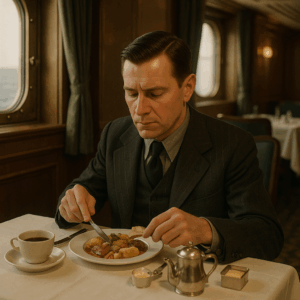
I have met people who enjoy a channel crossing; men who can sit calmly in their deck-chairs and, on arrival, wait until the boat is moored, then gather their belongings together without fuss and disembark.
Personally, I can never manage this. From the moment I get on board I feel that the time is too short to settle down to anything.
ドーヴァー海峡を渡る旅を心から楽しむ人というのが、世の中には確かに存在する。彼らはデッキチェアにゆったりと腰かけ、船が岸に着くのをじっと待ち、それから騒がずに荷物をまとめ、ゆうゆうと下船する。
だが、私にはとても真似できない芸当だった。乗り込んだ瞬間から、私は何をするしても時間が足りない気がして、どうにも落ち着かないのだ。

I move my suit-cases from one spot to another, and if I go down to the saloon for a meal, I bolt my food with an uneasy feeling that the boat may arrive unexpectedly whilst I am below.
Perhaps all this is merely a legacy from one’s short leaves in the war, when it seemed a matter of such importance to secure a place near the gangway, and to be amongst the first to disembark lest one should waste precious minutes of one’s three or five days’ leave.
スーツケースをあちこち動かしたり、食堂に降りて食事をとっても、私が下にいる間に船が着いてしまうのではと、気が気ではないのだ。
たぶん、こうしたことすべては、戦争中の短い休暇の名残にすぎないのだろう。貴重な三日や五日の休みを無駄にしないように、乗客が殺到する前にタラップの近くの場所を確保し、下船する最初の集団に入ることが非常に重要なことのように思われた。
On this particular July morning, as I stood by the rail and watched the white cliffs of Dover drawing nearer, I marvelled at the passengers who could sit calmly in their chairs and never even raise their eyes for the first sight of their native land.
Yet perhaps their case was different from mine. Doubtless many of them had only crossed to Paris for the week-end, whereas I had spent the last year and a half on a ranch in the Argentine.
I had prospered there, and my wife and I had both enjoyed the free and easy life of the South American continent, nevertheless it was with a lump in my throat that I watched the familiar shore draw nearer and nearer.
その朝も同じだった。七月の明るい日差しの下、私は船べりに立って、ドーヴァーの白い崖が徐々に近づいてくるのを眺めていたが、椅子に座ったまま視線も上げず、最初に見るはずの祖国の岸辺に無関心な乗客たちには驚くばかりだった。
もっとも、彼らと私は立場が違うのだろう。彼らの多くは、週末にちょっとパリへ出かけた程度に違いないが、一方でこの私は、この一年半、アルゼンチンの牧場で暮らしていたのだ。
あちらではうまくやっていた。妻とともに、あの南米独特の気楽な生活を楽しんでいたが1、それでもやはり、この見慣れた英国の岸辺が近づいてくるのを見ると、胸がいっぱいになるのだった。

I had landed in France two days before, transacted some necessary business, and was now en route for London.
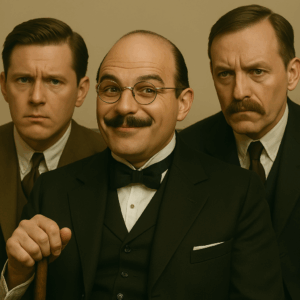
I should be there some months—time enough to look up old friends, and one old friend in particular. A little man with an egg-shaped head and green eyes—Hercule Poirot!
I proposed to take him completely by surprise. My last letter from the Argentine had given no hint of my intended voyage—indeed, that had been decided upon hurriedly as a result of certain business complications—and I spent many amused moments picturing to myself his delight and stupefaction on beholding me.
二日前にフランスへ上陸し、いくつかの用事を片付けて、今こうしてロンドンへ向かっているところだ。
数ヶ月は滞在できそうである。旧友たちにも会えるだろう。中でも、あのひとり——
卵のような頭をした小男で緑色の鋭い眼をしたエルキュール=ポワロ。
私は彼を驚かせるつもりでいた。アルゼンチンから出した最後の手紙にも、予定していた船旅のことは一言も書かなかった。もともとこの船旅は、ある仕事の問題を片付けるために急に決まったものだったし—— そして彼が私を見たときの喜びと唖然とする様子を思い浮かべて、私は何度も愉快な気分になった。
He, I knew, was not likely to be far from his headquarters. The time when his cases had drawn him from one end of England to the other was past. His fame had spread, and no longer would he allow one case to absorb all his time.
He aimed more and more, as time went on, at being considered a “consulting detective”—as much a specialist as a Harley Street physician.
He had always scoffed at the popular idea of the human bloodhound who assumed wonderful disguises to track criminals, and who paused at every footprint to measure it.
彼が本拠地から遠く離れているとは思えなかった。かつては事件に引っ張られて、イングランド中を東奔西走していた時代もあったが、そんな日々はもう終わっていた。彼の名声は広まり、彼はもはや一つの事件にすべての時間を費やすようなことは許されなかった。
むしろ彼は時間が経つにつれ、ハーレー・ストリート2の名医のように、「彼は“顧問探偵”3として、その道の専門家と見なされることをますます目指していた」
世間一般で考えられている——奇抜な変装で犯人を追い、足跡を見つけてはひとつひとつ測るといった——「人間警察犬」を、彼は常に鼻で笑っていた。

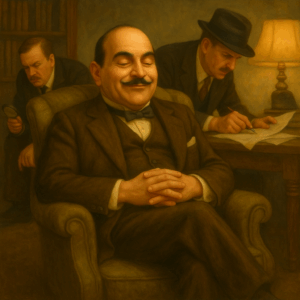
“No, my friend Hastings,” he would say;
“we leave that to Giraud and his friends. Hercule Poirot’s methods are his own. Order and method, and ‘the little gray cells.’
Sitting at ease in our own arm-chairs we see the things that these others overlook, and we do not jump to the conclusion like the worthy Japp.”
「いやいや、我が友、ヘイスティングス」
彼はよくそう言ったものだった。
「そういうことはジローやその仲間たちに任せておけばよいのです。エルキュール=ポワロの方法論は、あくまでポワロ独自のものです。秩序とその方法——それに“小さな灰色の脳細胞”なのですよ。
我々は、安楽椅子にゆったりと腰かけて、他の者たちが見逃すものを見つけ出すのです——あのご立派なジャップ警部のように、すぐに結論に飛びついたりはしません」
No; there was little fear of finding Hercule Poirot far afield.
On arrival in London, I deposited my luggage at an hotel and drove straight on to the old address.
そう、ポワロが家から離れてどこか遠くへ出かけているなどという心配は、まずなかった。
ロンドンに着いてまずホテルに荷物を預けた私は、迷うことなく昔のあの住所へ向かった。
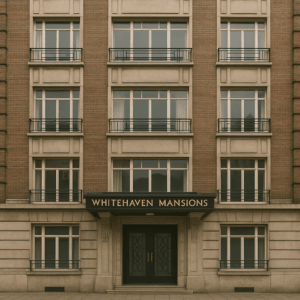
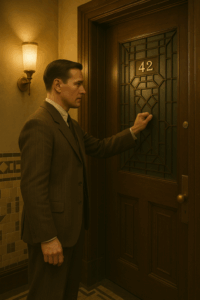
What poignant memories it brought back to me!
I hardly waited to greet my old landlady, but hurried up the stairs two at a time and rapped on Poirot’s door.
“Enter, then,” cried a familiar voice from within.
懐かしい記憶が胸に押し寄せる。
老いた下宿女主人への挨拶もそこそこに、私は階段を二段飛ばしに駆け上がり、ポワロの部屋のドアを勢いよくノックした。
「どうぞ」内側から、聞き慣れた声が響いた。

I strode in. Poirot stood facing me. In his arms he carried a small valise, which he dropped with a crash on beholding me.
“Mon ami, Hastings!” he cried. “Mon ami, Hastings!”
私は部屋に踏み込んだ。ポワロがこちらを向いて立っていた。彼は両腕に小さな旅行鞄を抱えていたが、私を見て、それを床にドサリと落とした。
「モナミ、ヘイスティングス!」と彼は叫んだ。「モナミ、ヘイスティングス!」
And, rushing forward, he enveloped me in a capacious embrace.
Our conversation was incoherent and inconsequent. Ejaculations, eager questions, incomplete answers, messages from my wife, explanations as to my journey, were all jumbled up together.
そして駆け寄ると、彼は私を大きく抱きしめた。
我々の会話は、ちぐはぐでまとまりのないものだった。感嘆の声、矢継ぎ早の質問、途中で途切れる返答、妻からの伝言、私の旅の説明——すべてがごちゃ混ぜになって飛び交った。
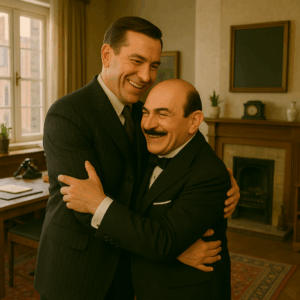

“I suppose there’s some one in my old rooms?” I asked at last, when we had calmed down somewhat. “I’d love to put up here again with you.”
「僕の昔の部屋には、今誰かが入ってるのかい?」ようやく少し落ち着いてから、私は訊いた。「君がいるここに、また泊まれたら嬉しいんだが」

Poirot’s face changed with startling suddenness.
“Mon Dieu! but what a chance épouvantable. Regard around you, my friend.”
そのとたん、ポワロの顔つきが驚くほど変わった。
「モン・デュー!(なんですと!) シャーンス・エプヴァンターブル(なんて運が悪いんだ) 周りを見てごらんなさい、モナミ」
For the first time I took note of my surroundings.
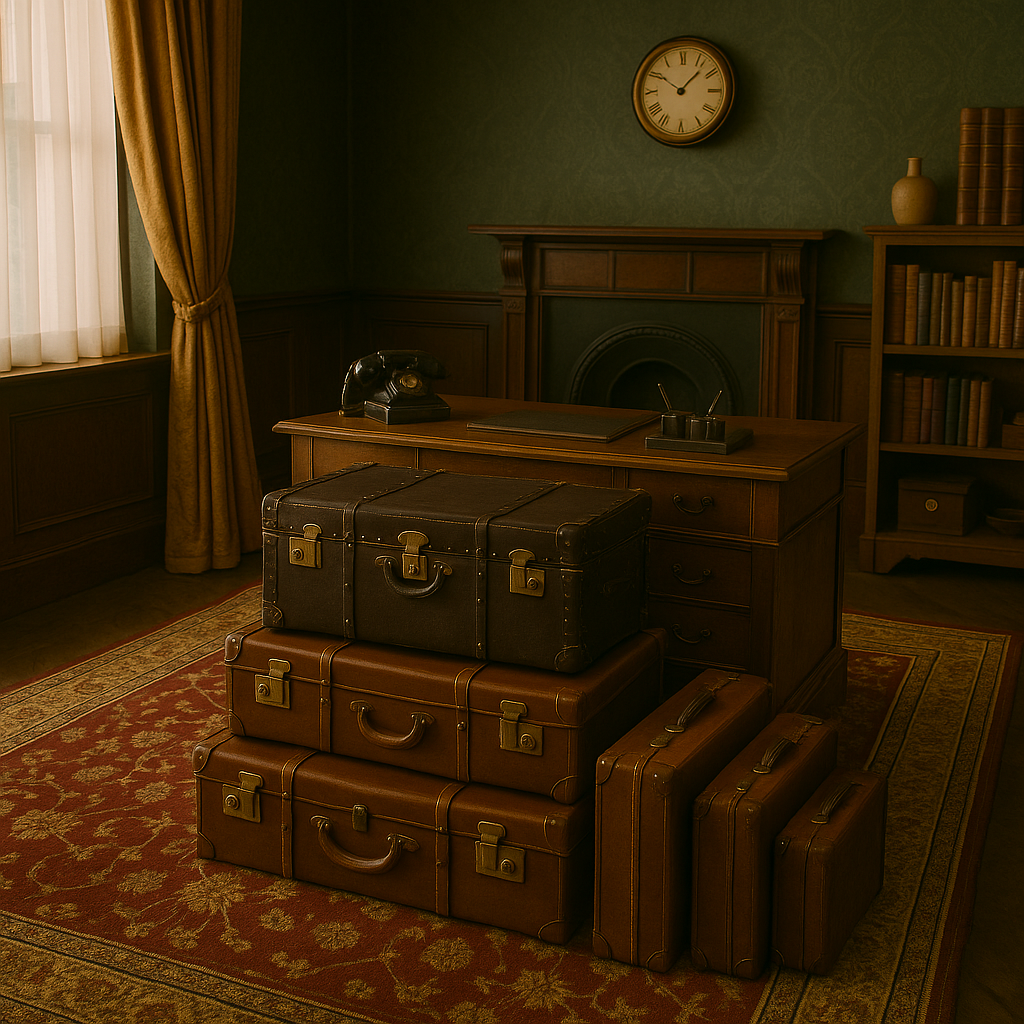
Against the wall stood a vast ark of a trunk of prehistoric design. Near to it were placed a number of suit-cases, ranged neatly in order of size from large to small.
The inference was unmistakable.
私は初めて、自分の周囲に注意を向けた。
壁際には、原始時代の遺物のような巨大なトランクが置かれていた。その近くには、いくつものスーツケースが、大きさ順に整然と並べられている。
すぐに状況が読み取れた。
“You are going away?”
「君、出かけるところだった?」
“Yes.”
「そうです」
“Where to?”
「どこへ?」
“South America.”
「南アメリカですよ」
“What?“
「何だって?」
“Yes, it is a droll farce, is it not? It is to Rio I go, and every day I say to myself, I will write nothing in my letters—but oh! the surprise of the good Hastings when he beholds me!”
「そうです、馬鹿げた茶番劇じゃないですか? リオへ行くんですよ。そして毎日こう言ってました——手紙には何も書かないでおけば——おお! ヘイスティングスが私を見て驚く顔が目に浮かぶ! とね」
“But when are you going?”
「でも、いつ出発するんだい?」
Poirot looked at his watch.
“In an hour’s time.”
ポワロは腕時計を見た。
「一時間後ですよ」
“I thought you always said nothing would induce you to make a long sea voyage?”
「君は、何があっても長い船旅なんてお断りだと、いつも言ってたはずだけど?」
Poirot closed his eyes and shuddered.
“Speak not of it to me, my friend. My doctor, he assures me that one dies not of it—and it is for the one time only; you understand, that never—never shall I return.”
ポワロは目を閉じ、身震いした。
「その話はやめてください、きみ。医者は言ってます、船旅で死ぬ人はいないってね——でもこれは一度きりです。二度目はありません——つまり、絶対に戻って来ないということです」
He pushed me into a chair.
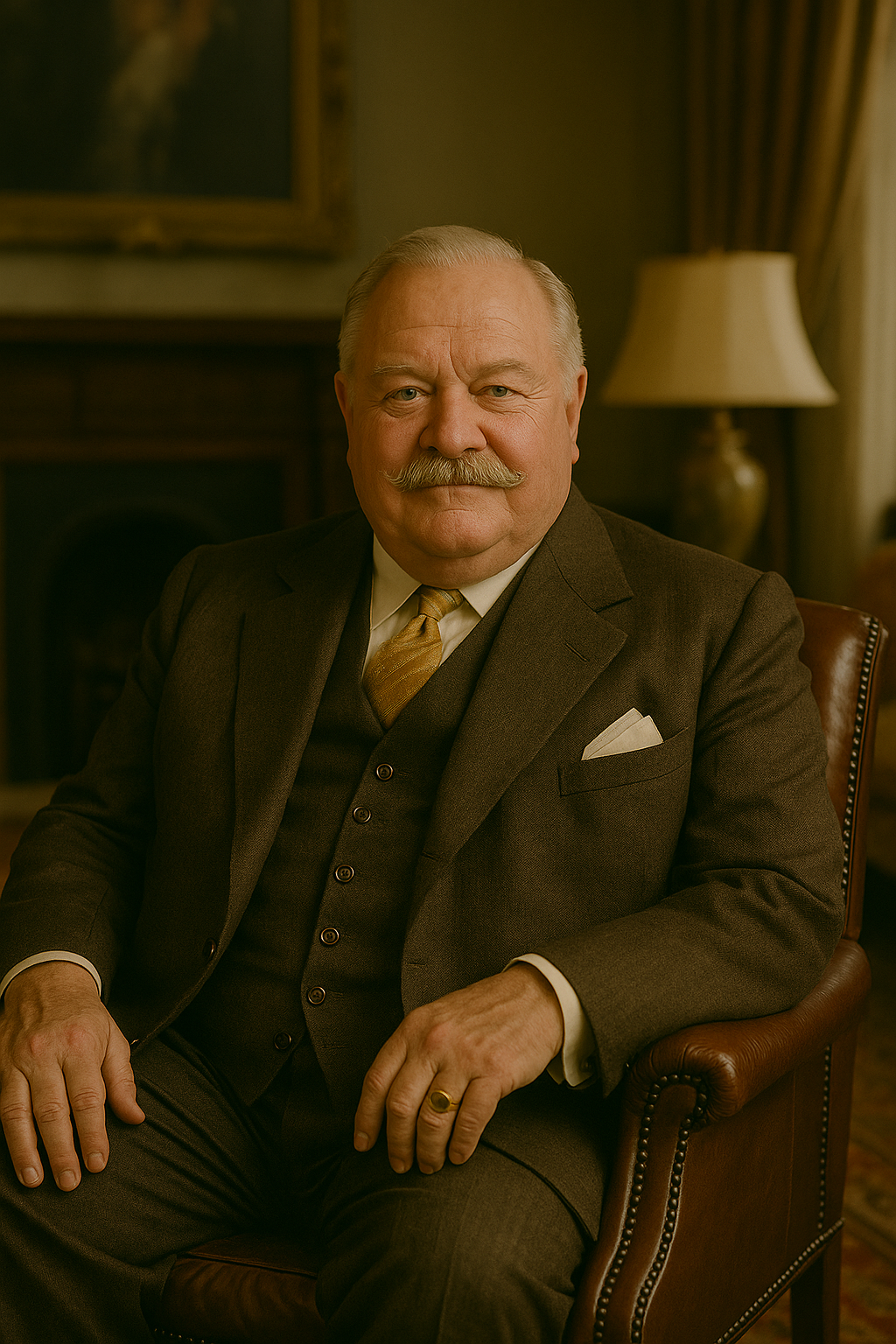
“Come, I will tell you how it all came about. Do you know who is the richest man in the world? Richer even than Rockefeller? Abe Ryland.”
彼は私を椅子に押し込んだ。
「さあ、どうしてこういうことになったのか、すべてお話しましょう。君は世界一の大富豪は誰か知ってますか? ロックフェラーよりも金持ちを?。エイブ・ライランドですよ」
“Precisely. One of his secretaries approached me. There is some very considerable, as you would call it, hocus-pocus going on in connection with a big company in Rio. He wished me to investigate matters on the spot. I refused. I told him that if the facts were laid before me, I would give him my expert opinion.
「その通り。彼の秘書の一人が私のところにやって来たんです。リオにある大きな会社に関連して、君たちの言葉で言う“胡散臭い”話がいくつもあるらしいのです。彼は、私に現地で調査してほしいと言ってきました。私は断りましたよ。私の目の前に事実を並べてもらえれば、専門家として意見を申し上げましょう、とね。
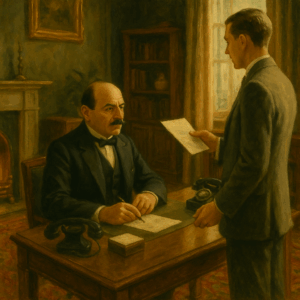
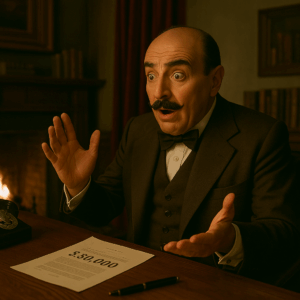
But that he professed himself unable to do. I was to be put in possession of the facts only on my arrival out there. Normally, that would have closed the matter. To dictate to Hercule Poirot is sheer impertinence.
But the sum offered was so stupendous that for the first time in my life I was tempted by mere money. It was a competence—a fortune!
しかし彼は、それはできないとはっきり言いました。私がリオに着いてからでなければ、事実を明かすことはできないと。普通なら、そんな話はそこで終わってます。エルキュール=ポワロに指図するなど、無礼にもほどがあリます。
しかし、提示された報酬が途方もない額だったんです。生まれて初めて、私は単にお金だけでその気にさせられました。それは、一生生活するには十分すぎる金額——いや、それどころか一財産だったんです!
And there was a second attraction—you, my friend. For this last year and a half I have been a very lonely old man.
I thought to myself, Why not? I am beginning to weary of this unending solving of foolish problems. I have achieved sufficient fame. Let me take this money and settle down somewhere near my old friend.”
それに、二番目の楽しみがありました——君ですよ、モナミ。この一年半、私はずっと孤独な老いぼれだったんです。
そしてふと思ったんですよ——うん、そうしよう、くだらない事件ばかり解決するのにも疲れました。名声も十分に得ました。だったらこのお金で、親友のそばで静かに暮らしてみるのもいいんじゃないか?、とね」
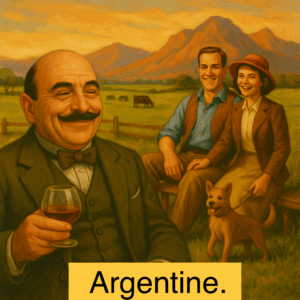
I was quite affected by this token of Poirot’s regard.
ポワロのその好意に胸を打たれ、私はしばし黙った」
“So I accepted,” he continued, “and in an hour’s time I must leave to catch the boat train. One of life’s little ironies, is it not?
But I will admit to you, Hastings, that had not the money offered been so big, I might have hesitated, for just lately I have begun a little investigation of my own. Tell me, what is commonly meant by the phrase, ‘The Big Four’?”
「それで私は、依頼を受けたのです」と彼は続けた。「そしてあと一時間もすれば、ボート・トレイン5に乗るために出発しなければなりません。人生の皮肉ではないですか?
しかし正直に言うと、ヘイスティングス、もし提示された金額があれほど大きくなければ、私は少し躊躇したかもしれません。実は最近、私自身の小さな調査を始めていたところだったのです。君は『ビッグ・フォー』という言葉が、普通は何を言っていると思いますか?」
“I suppose it had its origin at the Versailles Conference, and then there’s the famous ‘Big Four’ in the film world, and the term is used by hosts of smaller fry.”
「ヴェルサイユ会議6で使われたのが最初だと思うよ。それに映画界にも有名な『ビッグ・フォー』ってあるし、あとは小物連中がよく真似して使っているね」

“I see,” said Poirot thoughtfully.
“I have come across the phrase, you understand, under certain circumstances where none of those explanations would apply. It seems to refer to a gang of international criminals or something of that kind; only—”
「なるほど」とポワロは思案顔で言った。
「というのも、私はこの言葉を、そういった説明に当てはまらない、まったく別の状況下で耳にしたのです。国際的な犯罪組織とか、何かそういったものを指しているようなのですが、ただ——」
“Only what?” I asked, as he hesitated.
「ただ、何?」私は彼が躊躇するのに気づいて問いかけた。
“Only that I fancy that it is something on a large scale. Just a little idea of mine, nothing more. Ah, but I must complete my packing. The time advances.”
「ただね、私は、これはもっと大規模な何かではないかと思えるんですよ。私のいつもの、ちょっとした思いつきにすぎませんがね。——さて、荷造りを終えねば。もうすぐ時間です」
“Don’t go,” I urged. “Cancel your passage and come out on the same boat with me.”
「行くのやめなよ」と私は説得した。「その航海はキャンセルして、僕と同じ船で一緒に行こうよ」
Poirot drew himself up and glanced at me reproachfully.
“Ah, it is that you do not understand! I have passed my word, you comprehend—the word of Hercule Poirot. Nothing but a matter of life or death could detain me now.”
ポワロは背筋を伸ばし、私を非難するように見つめた。
「おや、君はわかっていません! 私は、責任を持って言ったのですよ、わかりますか——エルキュール=ポワロの言葉として。命に関わるようなことでもなければ、今さら私を引き止めることはできません」
“And that’s not likely to occur,” I murmured ruefully. “Unless at the eleventh hour ‘the door opens and the unexpected guest comes in.'”
「そんなこと、起こりそうもないしね……」私はがっかりしてつぶやいた。「(12時前の)土壇場になって”扉が開き、思いもよらぬ客が現れる”なんてことが起きない限りね」
I quoted the old saw with a slight laugh, and then, in the pause that succeeded it, we both started as a sound came from the inner room.
私は古い諺を持ち出して軽く笑った——その直後、室内の静けさを破るように、奥の部屋から音がして、我々は二人はビクッとした。
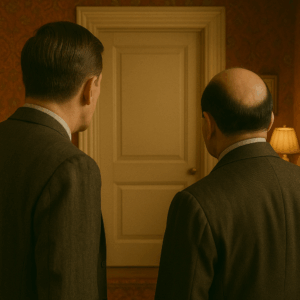
“What’s that?” I cried.
「何だ?」私は叫んだ。
“Ma foi!” retorted Poirot. “It sounds very like your ‘unexpected guest’ in my bedroom.”
「マ・フォワ!(まったく!)」ポワロが応じた。「君の言う“思いがけない客”が、どうやら私の寝室に現れたようですよ」
“But how can any one be in there? There’s no door except into this room.”
「でも、どうやって入ることができるんだ?あそこにはこの部屋に通じるドアしかなかったはずだろ?」
“Your memory is excellent, Hastings. Now for the deductions.”
「記憶力がいいですね、ヘイスティングス。では、推理してみましょう」
“The window! But it’s a burglar then? He must have had a stiff climb of it—I should say it was almost impossible.”
「窓だ! でも、それじゃ強盗ってことか? 壁をよじ登らなければならないが——それはほとんど不可能だ」
I had risen to my feet and was striding in the direction of the door when the sound of a fumbling at the handle from the other side arrested me.
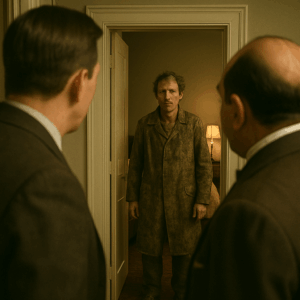
The door swung slowly open. Framed in the doorway stood a man. He was coated from head to foot with dust and mud; his face was thin and emaciated.
He stared at us for a moment, and then swayed and fell.
Poirot hurried to his side, then he looked up and spoke to me.
私は立ち上がり、扉に向かって一歩を踏み出した——そのとき、向こう側から取っ手をまさぐるような音がした。
扉がゆっくりと開いた。まるでその姿が、扉の枠にぴたりと収まるかのように、ひとりの男が立っていた。その男は、全身にほこりと泥をまとい、その顔は痩せて、やつれていた。男は私たちをじっと見つめたかと思うと、よろめき、倒れた。
ポワロがすぐにそばに駆け寄り、そして顔をあげると、私に声をかけた。
“Brandy—quickly.”
「ブランデーを——早く!」
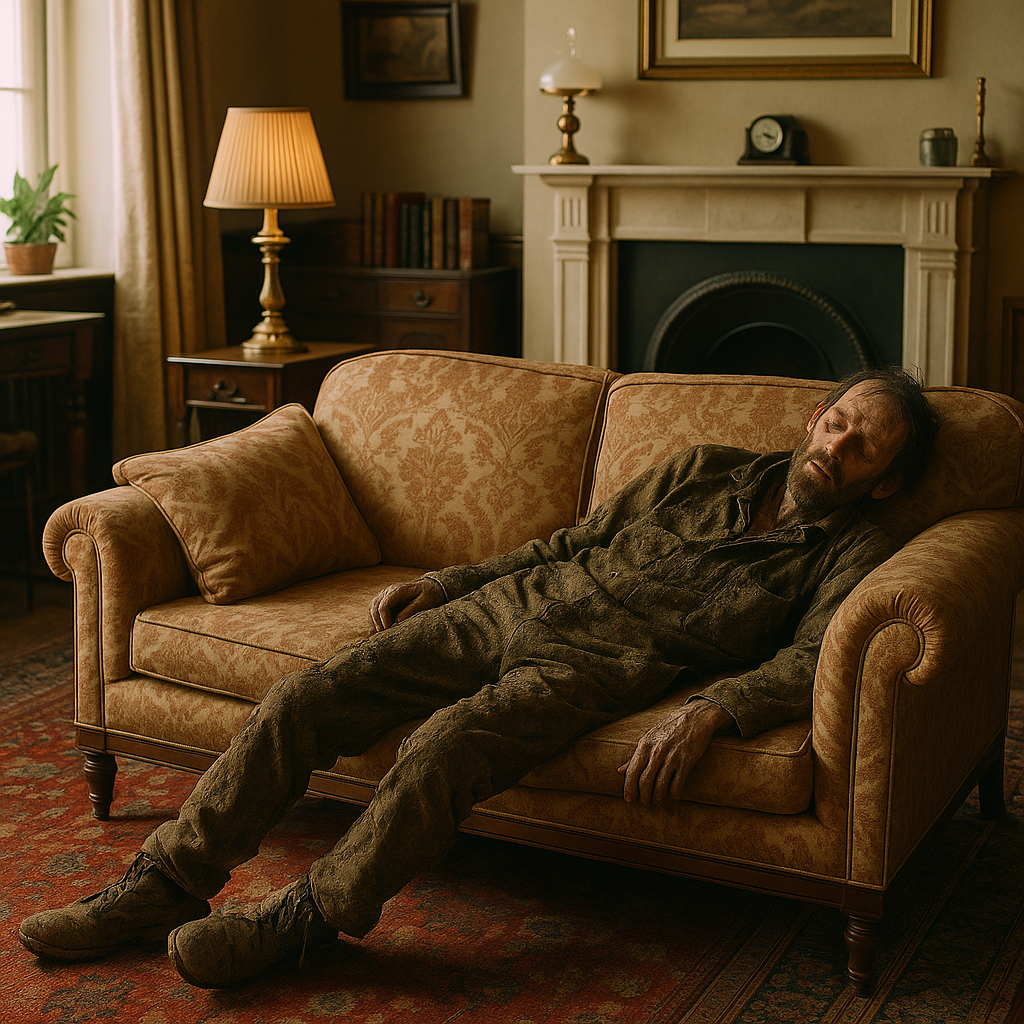
I dashed some brandy into a glass and brought it. Poirot managed to administer a little, and together we raised him and carried him to the couch.
In a few minutes he opened his eyes and looked round him with an almost vacant stare.
私はすぐにグラスにブランデーを注いで持って行った。ポワロはなんとかそれを口に含ませ、私たちは力を合わせて男をソファに運んだ。
数分後、彼は目を開け、ぼんやりと周囲を見渡した。
“What is it you want, monsieur?” said Poirot.
「要件は何ですか、お客さん?」とポワロは穏やかに問いかけた。

The man opened his lips and spoke in a queer mechanical voice.
“M. Hercule Poirot, 14 Farraway Street.”
男は唇を開き、奇妙な機械的な声でしゃべり出した。
「エルキュール=ポワロ氏、ファラウェイ街14番地」
“Yes, yes; I am he.”
「そうだ、そうだ、私がそのポワロです」
The man did not seem to understand, and merely repeated in exactly the same tone:—
“M. Hercule Poirot, 14 Farraway Street.”
だが男は理解していないようで、ただ、まったく同じ口調で繰り返すだけだった。
「エルキュール=ポワロ氏、ファラウェイ街14番地」
Poirot tried him with several questions. Sometimes the man did not answer at all; sometimes he repeated the same phrase.
Poirot made a sign to me to ring up on the telephone.
“Get Dr. Ridgeway to come round.”
ポワロはいくつか質問を試みた。男はまったく答えないか、同じフレーズを繰り返すばかりだった。
ポワロは私に電話をかけるよう合図した。
「リッジウェイ先生を呼んでください」

The doctor was in luckily; and as his house was only just round the corner, few minutes elapsed before he came bustling in.
“What’s all this, eh?”
幸運にも医師は在宅中で、彼の家はすぐ角を曲がったところだったので、数分も経たないうちに、飛んできてくれた。
「これは一体どういうことです、え?」
Poirot gave a brief explanation, and the doctor started examining our strange visitor, who seemed quite unconscious of his presence or ours.
ポワロは手短に説明し、医師はさっそくこの奇妙な訪問者を診察しはじめた。だが男は、私たちの存在など全く意識していない様子だった。
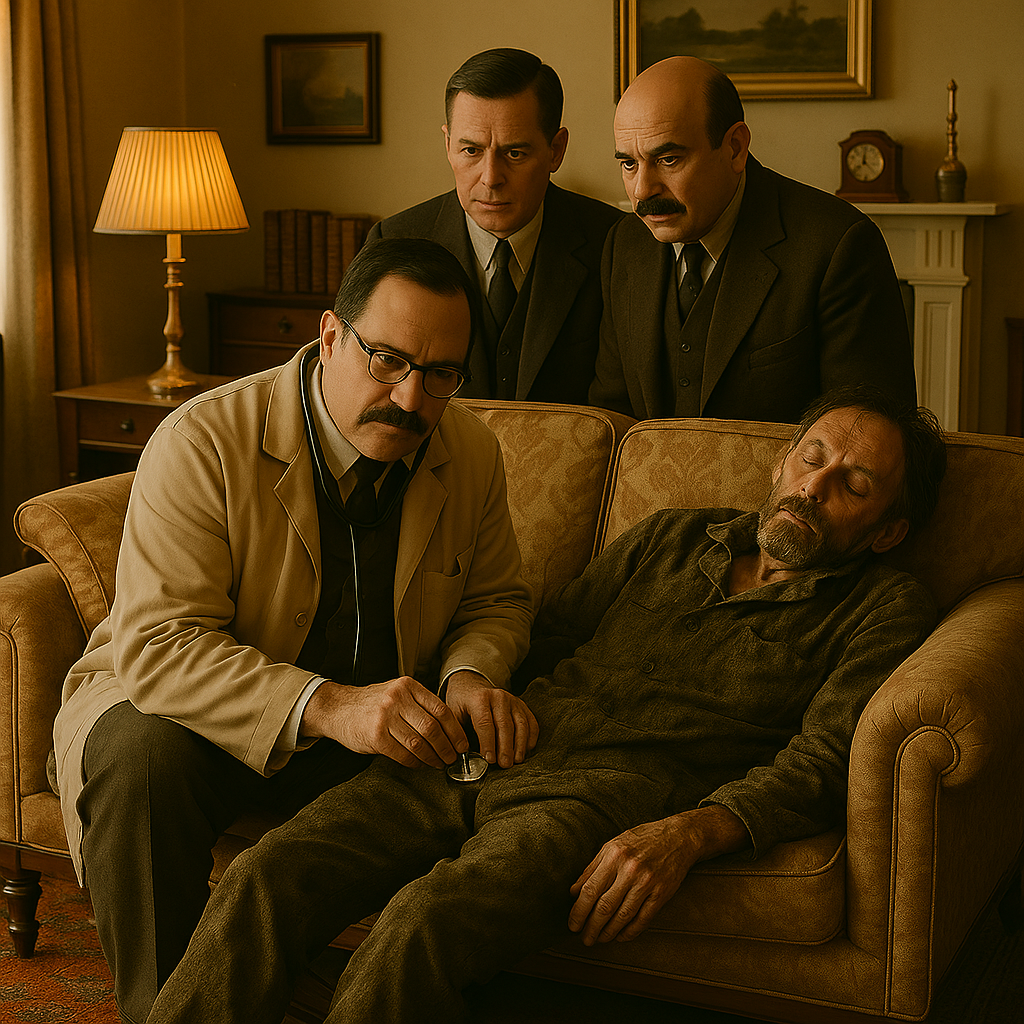
“H’m!” said Dr. Ridgeway, when he had finished. “Curious case.”
「ふむ!」とリッジウェイ医師は診察を終えると口を開いた。「これは奇妙な症状だ」
“Brain fever?” I suggested.
「脳炎でしょうか?」と私は言ってみた。
The doctor immediately snorted with contempt.
“Brain fever! Brain fever! No such thing as brain fever. An invention of novelists.
No; the man’s had a shock of some kind. He’s come here under the force of a persistent idea—to find M. Hercule Poirot, 14 Farraway Street—and he repeats those words mechanically without in the least knowing what they mean.”
医師はすぐさま鼻を鳴らして言った。
「脳炎? 脳炎? そんなものは存在しません。ただの小説家の作り話です。
いいかね、これはショックによるものだ。彼は——エルキュール=ポワロ氏、ファラウェイ街14番地——という強迫観念のもとでここにやって来た。そして意味も分からずに、それをただ機械的に繰り返しているだけだ」
“Aphasia?” I said eagerly.
「失語症では?」と私は食い下がった。
This suggestion did not cause the doctor to snort quite as violently as my last one had done.
He made no answer, but handed the man a sheet of paper and a pencil.
“Let’s see what he’ll do with that,” he remarked.
この提案は、さすがに医者も前ほど乱暴に鼻を鳴らすことはなかった。
彼は返事はしなかったが、男に紙と鉛筆を手渡した。
「これで何か書かせてみましょう」
The man did nothing with it for some moments, then he suddenly began to write feverishly.
With equal suddenness he stopped and let both paper and pencil fall to the ground.
The doctor picked it up, and shook his head.
男はしばらく何もせずにいたが、突然、何かにとり憑かれたように鉛筆を走らせ始めた。
そして、あっけないほど急に手を止め、紙も鉛筆も床に落とした。
医師はそれを拾い上げ、首を振った。
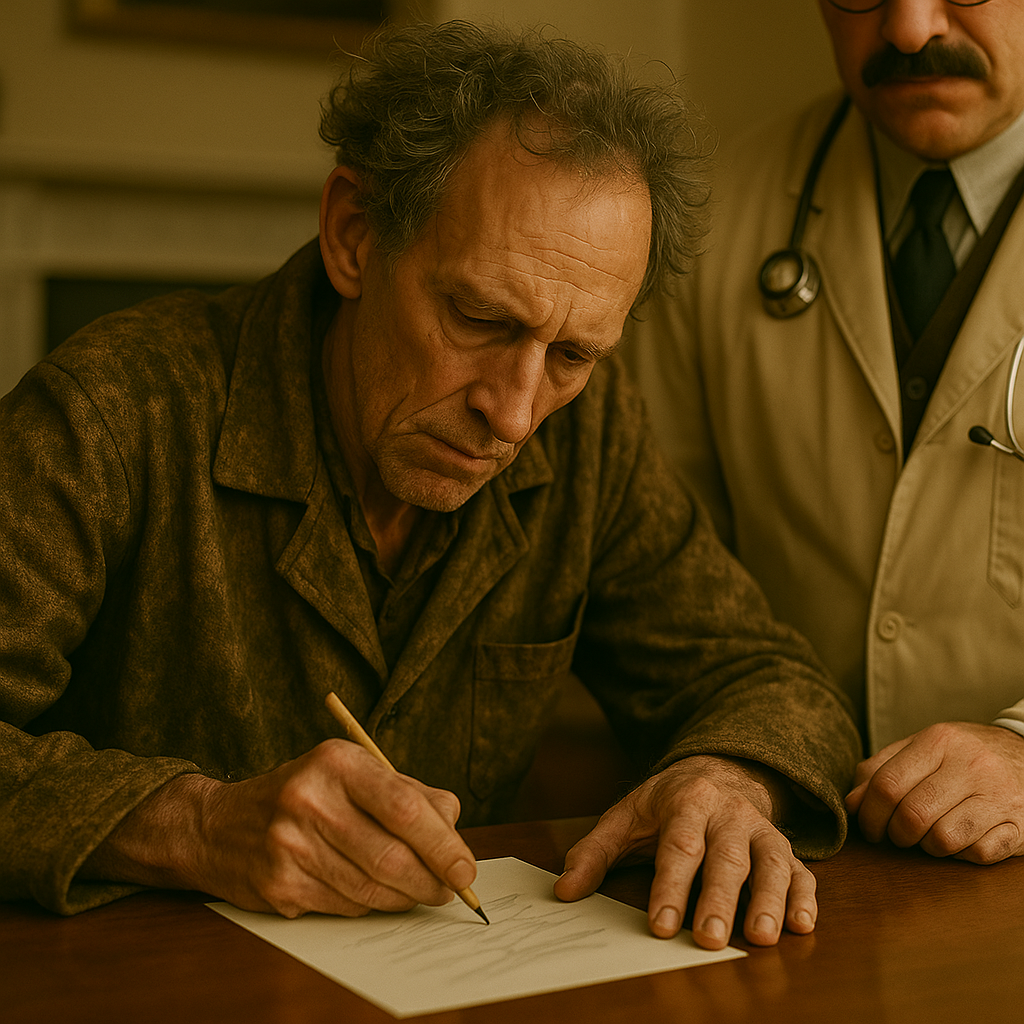
“Nothing here. Only the figure 4 scrawled a dozen times, each one bigger than the last. Wants to write 14 Farraway Street, I expect. It’s an interesting case—very interesting. Can you possibly keep him here until this afternoon? I’m due at the hospital now, but I’ll come back this afternoon and make all arrangements about him. It’s too interesting a case to be lost sight of.”
I explained Poirot’s departure and the fact that I proposed to accompany him to Southampton.
“That’s all right. Leave the man here. He won’t get into mischief. He’s suffering from complete exhaustion. Will probably sleep for eight hours on end. I’ll have a word with that excellent Mrs. Funnyface of yours, and tell her to keep an eye on him.”
And Dr. Ridgeway bustled out with his usual celerity. Poirot hastily completed his packing, with one eye on the clock.
“The time, it marches with a rapidity unbelievable. Come now, Hastings, you cannot say that I have left you with nothing to do. A most sensational problem. The man from the unknown. Who is he? What is he? Ah, sapristi, but I would give two years of my life to have this boat go to-morrow instead of to-day. There is something here very curious—very interesting. But one must have time—time. It may be days—or even months—before he will be able to tell us what he came to tell.”
“I’ll do my best, Poirot,” I assured him. “I’ll try to be an efficient substitute.”
もちろんです。以下に、小説の自然な文体で全体を日本語訳いたしました。
「何も書かれていません。数字の“4”が十数回、だんだん大きくなりながら殴り書きされているだけです。“14 ファラウェイ街”と書こうとしたんでしょうな。興味深い症例ですよ、まったく。——できれば午後までこの男をここに置いておいてもらえますか? 私は病院に行かねばならないのですが、午後には戻ってきて、しかるべく手配をします。こんな面白い症例は見逃すわけにいきません」
私はポワロが旅立つ予定であること、私も一緒にサウサンプトンまで同行するつもりであることを説明した。
「問題ありません。男はここに置いておきなさい。悪さをすることはありません。完全に消耗しきっていますから、おそらく八時間はぐっすり眠るでしょう。あなたのあの、ええと、ミセス・ファニーフェイスでしたかな? 彼女にこの男を見ておくよう伝えておきますよ」
そう言って、リッジウェイ医師はいつもの慌ただしさで出て行った。ポワロは急ぎ足で荷造りを終えつつ、時計に目をやった。
「なんと、時間の進むことの速さよ! ——ヘイスティングス、あなたは“何もすることがない”とは、もう言えませんね。これはたいそうセンセーショナルな謎です。“正体不明の男”ですよ。彼は誰なのか? 何者なのか? ああ、サプリスティ! この船が明日出発だったら、二年の寿命を差し出しても惜しくないのに! 実に興味深い……だが時間が足りない! これが何日か、いや、何ヶ月もかかるかもしれません。彼が何のためにここへ来たのか、それを語れるようになるまでには」
「僕がなんとかします、ポワロ。代理として、できる限りのことをやってみせますよ」
必要であれば、紙に書かれた「4」のイメージや、ミセス・ファニーフェイスの描写なども再現できます。お気軽にどうぞ。
以下はご依頼の英語部分の日本語訳です。小説の自然な地の文体で訳出しました。
ご希望があれば、この続きを翻訳することも可能です。
- 『ゴルフ場殺人事件(The Murder on the Links)』の事件後、ヘイスティングスには以下のような展開があります。
🌟ダルシー・デヴィーンとの結婚と南米への旅立ち
事件の最後で、ヘイスティングスは「シンデレラ」と呼んでいた若い女性、ダルシー・デヴィーン(Dulcie Duveen)と結ばれます。彼は彼女と結婚し、アルゼンチン(南米)へ移住することを決意します。これはヘイスティングスにとって大きな人生の転機です。
🌟ポワロとの別れ
ヘイスティングスはポワロと深い友情を築いてきましたが、この結婚によって一時的にそのパートナーシップを解消する形になります。物語のラストでは、ポワロが祝福しつつも寂しさをにじませて彼を送り出します。
🌟その後のシリーズへの登場
ヘイスティングスはその後しばらくポワロの元を離れて生活しますが、以下のようにいくつかの作品で再登場します。
『ビッグ・フォー(The Big Four)』では、久々にロンドンに戻ったヘイスティングスがポワロと再会し、事件に巻き込まれます。
『カーテン(Curtain: Poirot’s Last Case)』では、ポワロの最後の事件に立ち会うために再び登場します。
つまり、『ゴルフ場殺人事件』の後、ヘイスティングスは愛を見つけ、南米で新しい人生を始めたものの、ポワロとの絆は切れることなく、後年に再び彼のもとに戻ってきます。
しかし、ヘイスティングスの妻(ダルシー・デヴィーン / シンデレラ)は、『ゴルフ場殺人事件』のヒロインでありながら、その後のポワロ・シリーズには登場しません。 ↩︎ - Harley Street(ハーレー・ストリート) は、イギリス・ロンドンの中心部にある通りの名前で、特に次のような意味合いがあります:
✅【意味】
高名な医師や専門医が開業している地域として有名です。
✅【文化的・歴史的背景】
ロンドンの メアリルボーン地区に位置。
19世紀から20世紀にかけて、裕福層向けの医療を提供する医師たちが多くこの通りに開業。
今でも「Harley Street doctor(ハーレー・ストリートの医師)」という表現は、腕の良い・評判の高い専門医という意味で使われます。
✅【文脈例】
He aimed more and more at being considered a “consulting detective”—as much a specialist as a Harley Street physician.
→ 「彼は“コンサルティング・ディテクティブ”として、まるでハーレー・ストリートの名医のように専門家と見なされることをますます目指していた。」
このように、「Harley Street」は単なる通りの名前以上に、「権威ある専門職の象徴」として文学でもよく登場します。 ↩︎ - consulting detective(コンサルティング・ディテクティブ) とは、以下のような意味です:
✅【意味】
「顧問探偵」、つまり
自分自身が捜査に出向くのではなく、他の探偵や警察が助けを求めてきたときに助言や推理を提供する専門家」のことです。
✅【代表的な例】
シャーロック・ホームズが自らを最初に「consulting detective」と名乗ったことで有名です。
ポワロも後年は現場に出るより、助言中心の役割になっていきます。
✅【文脈例】
He aimed more and more, as time went on, at being considered a “consulting detective”—as much a specialist as a Harley Street physician.
→ 「時が経つにつれて、彼は“コンサルティング・ディテクティブ”――つまりハーレー・ストリートの名医と同じくらいの専門家――と見なされることをますます目指すようになった。」
つまり、現場の刑事ではなく、頭脳と経験を生かして事件を解く「知的専門家」としての探偵を指す表現です。 ↩︎ - 「アメリカの石鹸王(Soap King)」と称された実在の人物は歴史上に存在しました。特に有名なのは以下の人物です:
🧼 ウィリアム・プロクター & ジェームズ・ギャンブル
19世紀に Procter & Gamble(P&G) を創業
石鹸とろうそく製造から始まり、世界的な消費財企業に成長
当時のアメリカで「石鹸ビジネスの象徴的存在」とされ、
「Soap Kings(石鹸王たち)」と呼ばれることも
🧼 E.H. Harriman や E. C. Hazard など
他にも地域的に「石鹸王」と呼ばれた実業家は複数存在します。
地元で石鹸工場を持ち、財を成したことでそのように呼ばれた例もあります。
🔍 小説『ビッグ・フォー』の「エイブ・ライランド」との関係
エイブ・ライランドは これら実在の「石鹸王」たちをモデルにした可能性がある架空の人物 です。
しかし名前・人物像・陰謀の背景などはすべて創作です。
✅ まとめ
「石鹸王」と呼ばれる実在の実業家は存在した
エイブ・ライランドはフィクションだが、その着想源はあった可能性が高い
↩︎ - ボート・トレイン(the boat train)とは、
港と都市を結ぶ、船との接続を目的とした列車のことです。
具体的には、
たとえばロンドンと大陸(フランスなど)を結ぶ旅では——
ロンドンを出発した人が
ドーバーやサウサンプトンなどの港に向かう際に使う列車
そして港で船(クロスチャネルフェリーなど)に乗り換える
このように「船旅の乗継ぎ用に特化した列車」が「boat train」と呼ばれます。
つまりこの場面でポワロが言っている「the boat train」とは、
海外に渡るために港へ向かう列車を意味します。
おそらく大陸(ヨーロッパ)へ向かう長旅の出発を指しています。 ↩︎ - 「ヴェルサイユ会議」と「ビッグ・フォー(The Big Four)」
■ ヴェルサイユ会議(1919)
● 背景
第一次世界大戦(1914–1918)の終結後、戦後処理と新しい国際秩序の構築を目的として、1919年にフランスのヴェルサイユ宮殿で開かれた国際会議です。
● 主な目的
敗戦国(特にドイツ)への賠償・責任の追及
新しい国境線の設定
国際連盟の創設
● 主な条約
ヴェルサイユ条約(Treaty of Versailles):ドイツに対して厳しい制裁と領土の割譲を課した。
■ ビッグ・フォー(The Big Four)とは?
● ヴェルサイユ会議における「ビッグ・フォー」
この会議を主導した4大列強の首脳を指して、「ビッグ・フォー(The Big Four)」と呼びます。
🇺🇸アメリカ合衆国
ウッドロウ・ウィルソン大統領
——「十四か条の平和原則」を提唱。理想主義的
🇬🇧イギリス
デイヴィッド・ロイド・ジョージ首相
——現実的でバランス重視の立場
🇫🇷フランス
ジョルジュ・クレマンソー首相
——ドイツへの強硬姿勢。安全保障重視
🇮🇹イタリア
ヴィットーリオ・オルランド首相
——領土拡張を望んだが、後に離脱気味
この4人が事実上、世界の命運を握ったことから「ビッグ・フォー」と呼ばれたのです。
■ その他の「ビッグ・フォー」
「ビッグ・フォー」という語は、後にさまざまな分野でも使われるようになりました:
映画界:「映画業界の四大巨頭」(例:ワーナー、パラマウント、MGM、ユニバーサルなど)
ビジネス界:「四大会計事務所」(Deloitte, PwC, EY, KPMG)
スポーツや音楽の分野でもよく使われます。
■ ポワロの文脈での意味
ポワロは、この「ビッグ・フォー」という言葉を国際的な犯罪組織の呼称として耳にします。つまり、ヴェルサイユ会議や映画界の意味では説明がつかない、陰謀めいた意味合いを感じ取っているのです。
この発想は、その後『ビッグ・フォー』という物語全体に関わる核心となります。
↩︎